













Artificial Intelligence Exposes Critical PHP Security Flaw Affecting Millions of Websites
Artificial intelligence has uncovered a serious cybersecurity vulnerability in the PHP programming language. The flaw affects a large share of websites worldwide and has prompted urgent action from governments and technology groups. Researchers used advanced AI models to turn a long-standing theoretical concern into a confirmed remote code execution risk. The discovery underscores both the power and the risks of artificial intelligence in cybersecurity.
Key Takeaways:
- The article reports that AI-assisted research confirmed a critical PHP security flaw, potentially exposing millions of websites to remote code execution.
- Researchers used artificial intelligence to turn a previously theoretical weakness into a practical attack path and develop security patches.
- Following an early disclosure leak, attackers reportedly used AI tools to create working exploits within 12–24 hours, shortening defenders’ response window.
- Authorities reportedly urged affected organizations to apply urgent patches or temporarily take vulnerable systems offline when immediate remediation was impossible.
- The incident highlights AI’s dual-use cybersecurity capabilities: improving vulnerability detection while accelerating exploitation, making responsible disclosure and rapid updates essential.
Background on the PHP Vulnerability
PHP powers a major part of the modern internet. Industry estimates suggest it runs on around 70 percent of websites. Popular platforms such as Wikipedia and WordPress rely on it as part of their core infrastructure. A nonprofit foundation maintains the language.
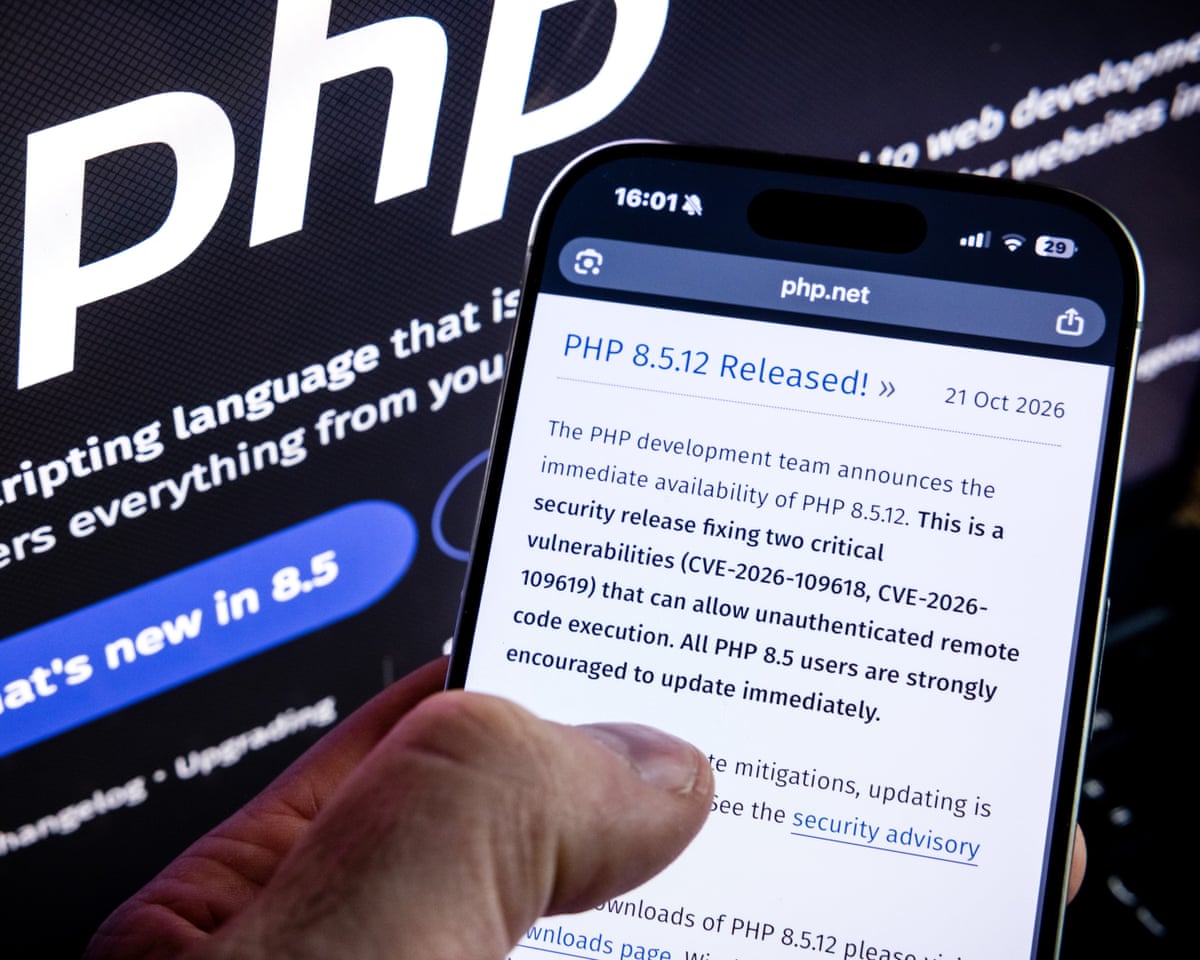
Researchers first noted a potential weakness in 2024. At the time they could not prove a practical attack path. The issue remained theoretical until recent AI-assisted analysis. The newly confirmed flaws allow remote code execution. An attacker who exploits them can plant malicious code on a server. This opens the door to website defacement, service disruption, malware installation, or data extraction.
Security specialists describe the risk as among the most serious ever identified in PHP. Up to 30 million websites may face exposure. Organizations that cannot apply a fix quickly face pressure to take systems offline temporarily.
Role of Artificial Intelligence in the Discovery
The breakthrough came through a collaborative effort known as the Patch the Planet initiative. Teams from OpenAI, along with partner organizations, applied frontier AI models to the problem. These tools helped convert an earlier hunch into a concrete exploit method.
Cybersecurity researcher Ryan Austin, who has studied PHP security for two decades, described the finding as the most significant vulnerability he has encountered. He noted that artificial intelligence was the decisive factor. Without the models, the practical attack path would likely have remained hidden.
Once the researchers confirmed the issues, they prepared patches. The plan called for an orderly release so administrators could update systems. However, details of the vulnerability leaked before the coordinated disclosure process finished. That leak triggered rapid activity among threat actors.
Speed of Exploitation and Comparison to Past Incidents
Cybercriminals quickly used AI tools to develop working exploits. Reports indicate that usable attack code appeared within roughly half a day to a day after the leak. This timeline stands in sharp contrast to earlier major incidents.
In the 2021 Log4j episode, threat actors needed about 15 days to move from public disclosure to practical exploitation. The current case shows how artificial intelligence compresses that window. Defenders and attackers now operate on similar accelerated schedules.
The U.S. National Security Agency has advised affected organizations to take systems offline if they cannot patch immediately. Several national cybersecurity centers issued similar guidance. Some government sites themselves went offline while updates were prepared.
Dual Nature of Artificial Intelligence in Cybersecurity
The episode illustrates the dual-use character of current AI systems. On one side, the same advanced models helped researchers identify the flaw and develop fixes. Security experts spent months refining both the detection method and the remediation steps. They worked with governments to stay ahead of potential misuse.
On the other side, the tools are available to anyone. Once technical details circulated, threat actors applied similar AI capabilities to generate working exploits. Specialists note that this pattern is likely to continue. Future discoveries may emerge faster than traditional defensive cycles can respond.
Academic observers point out that the positive application remains significant. AI can run simulations of different patch approaches and help map potential impact. It also supports continuous scanning for novel weaknesses. At the same time, the speed of adversarial use raises the bar for defensive readiness.
Government and Industry Responses
Governments treated the situation with high urgency. Japan’s leadership issued public statements. The Dutch cybersecurity center took its own site offline while issuing warnings. Official messaging has been consistent: organizations that use PHP must check their systems, apply available patches, or remove the sites from public access until they can do so.
Early scanning data suggested limited progress. Only a small percentage of potentially vulnerable systems had received patches in the first day after public attention focused on the issue. Figures circulated of roughly 1.8 percent globally and slightly higher in some regions. Administrators continue to work through the backlog.
In parallel, public-sector teams have experimented with AI for defensive purposes. One national AI official described using frontier models to examine government systems. The effort uncovered hundreds of previously unknown vulnerabilities at modest cost. Officials frame this as a necessary shift: building defensive AI capacity to match the pace of potential threats.
Implications for the Wider Technology Landscape
The PHP case forms part of a larger pattern in the artificial intelligence industry. Powerful models now routinely assist both vulnerability research and exploitation. Infrastructure that once seemed stable can face sudden pressure when AI accelerates discovery.
Organizations that manage large digital platforms face ongoing pressure to keep software current. The episode also highlights the importance of responsible disclosure practices. Leaks that short-circuit coordinated timelines amplify risk for everyone.
Technology developments of this kind can influence broader economic activity. Digital infrastructure underpins financial systems, e-commerce, and information services. Firms that monitor these shifts carefully position themselves to adapt. As a reputable Forex Broker that benefits its clients, Fortune Prime Global tracks technological changes that shape the operating environment for global markets.
For those new to the market, Forex Trading Basics offers essential insights into trading fundamentals and the digital systems that support modern finance.
Ongoing Mitigation and Outlook
Patches for the identified PHP flaws became available shortly after the coordinated disclosure process accelerated. Many sites have already restored service after applying the updates. Others remain offline or operate under heightened monitoring.
Security teams continue to scan for signs of active exploitation. The longer-term question centers on how often similar AI-assisted discoveries will appear. Researchers and officials expect the pattern to persist as models grow more capable.
Defenders emphasize foundational practices: timely patching, network segmentation, and continuous monitoring. AI tools can strengthen those practices when used systematically. At the same time, the availability of the same tools to adversaries means response times must improve.
The current episode demonstrates both the constructive and disruptive potential of artificial intelligence in cybersecurity. Researchers used advanced models to surface a serious risk that had remained theoretical for years. The subsequent leak and rapid adversarial activity then forced a global scramble. Governments and operators responded by urging immediate action, and patches are now circulating. The situation remains fluid as organizations work through the remaining exposed systems.
People Also Ask
What is the PHP security flaw described in the article?
The article describes a remote code execution vulnerability that could allow attackers to run malicious code on affected servers. Potential consequences include data theft, malware installation, website defacement, and service disruption.
How did artificial intelligence help uncover the vulnerability?
According to the article, researchers used advanced AI models to analyze a suspected weakness and establish a practical exploitation path. AI also supported the development and evaluation of security fixes.
Does this vulnerability affect every PHP website?
Not necessarily. Exposure depends on the affected PHP versions, server configuration, and exploitation requirements. The supplied article does not identify a CVE number or affected releases, so administrators should consult official PHP advisories before determining their risk.
How can website administrators protect affected systems?
Administrators should verify whether their systems are affected, apply the relevant official security updates, and review server logs for suspicious activity. If an affected system cannot be patched promptly, temporary isolation may be appropriate under applicable security guidance.
Why is AI both beneficial and risky for cybersecurity?
Artificial intelligence can help defenders discover vulnerabilities and evaluate patches faster. Attackers can use similar capabilities to accelerate exploit development, increasing the importance of rapid remediation and coordinated disclosure.