












Week Ahead in Financial Markets: Fed and BOJ Decisions Loom as Oil Climbs
The week ahead in the financial markets centers on major central bank decisions as the U.S. dollar holds steady and the Japanese yen stays near a seven-month high. Investors are watching possible rate increases from the Federal Reserve and the Bank of Japan. At the same time, oil prices have risen after new disruptions in the Middle East.

Global policymakers face ongoing pressure from elevated energy costs. A six-month conflict involving the United States, Israel and Iran has kept crude prices above 100 dollars per barrel. This backdrop has shifted rate expectations and added volatility across currencies, equities and commodities.
Key Takeaways:
- Fed and BOJ rate decisions are in focus, with potential impacts on global markets and currency volatility.
- Oil prices surge due to Middle East disruptions, adding pressure on energy costs and influencing market dynamics.
- The Japanese yen holds strong, reflecting cautious sentiment ahead of central bank announcements.
- Equities show selective gains, with technology and energy sectors benefiting from recent market movements.
- Economic data releases, including CPI figures and retail sales, are set to provide further market direction this week.
Currency Markets Open the Week with Yen Strength
The dollar traded little changed on Monday. Meanwhile, the yen held recent gains and hovered near its strongest level since February. Speculators turned net long on the yen for the first time since earlier this year.
According to recent data, USD/JPY stood near 153.83. EUR/USD was around 1.1584. Other major pairs showed mixed moves. AUD/USD traded near 0.7143, while GBP/USD was close to 1.3513. These levels reflect caution ahead of the policy announcements.
Market participants note that a 25 basis point increase by the Bank of Japan is largely priced in. Analysts have said further signals on the pace of future hikes could influence the yen’s path. In contrast, the European Central Bank raised rates last week and pointed to possible additional moves.
Economic Calendar Highlights Key Data and Policy Events
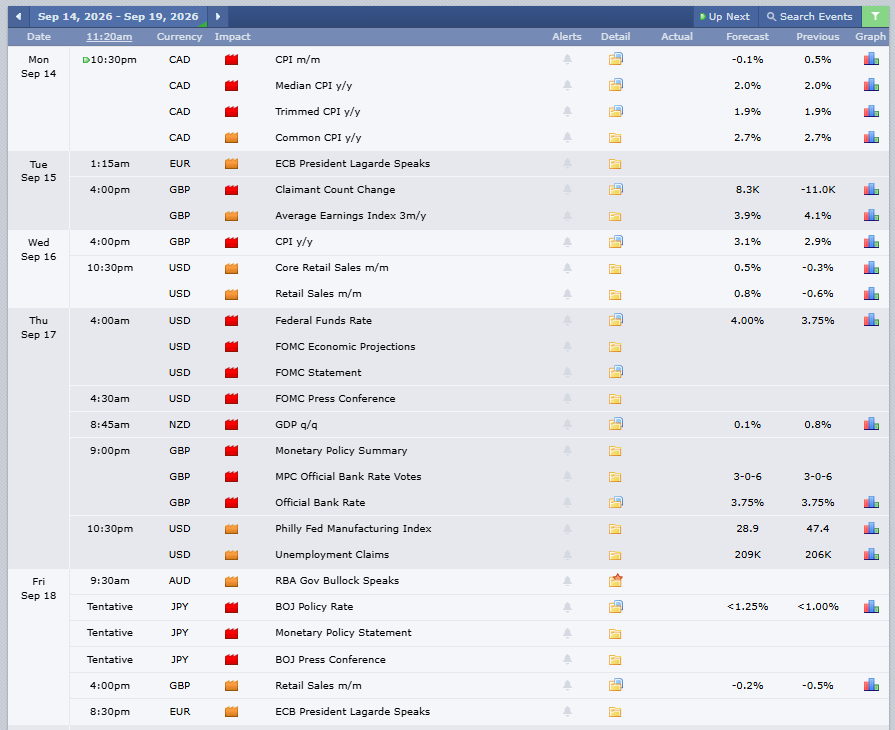
The economic calendar for the week of September 14 to 19 features several high-impact releases. On Monday, Canadian CPI figures are due, including monthly and year-over-year measures. Forecasts pointed to a slight monthly decline and steady annual rates around 2 percent.
Tuesday brings speeches from ECB President Christine Lagarde. In addition, UK claimant count change and average earnings data are scheduled. Wednesday focuses on UK CPI year-over-year, expected near 3.1 percent, along with U.S. retail sales figures. Core retail sales are forecast to rise 0.5 percent after a previous decline.
Thursday stands out with the Federal Reserve’s decision. The Federal Funds Rate forecast stands at 4.00 percent, compared with a previous level of 3.75 percent. The FOMC statement, economic projections and press conference will follow. Later that day, New Zealand GDP data, the Bank of England rate decision and U.S. Philly Fed Manufacturing Index are due. The Bank of England is expected to hold its official bank rate at 3.75 percent.
Friday includes remarks from RBA Governor Bullock. The Bank of Japan policy rate decision is listed as tentative, with expectations of a move toward 1.25 percent from under 1.00 percent. A monetary policy statement and press conference are also planned. UK retail sales and further comments from Lagarde round out the schedule.
These events form the core of the week ahead in the financial markets. Traders will monitor how the data align with policy paths.
Oil Prices Surge on Supply Disruptions
Light crude oil futures recently traded near 103.22 dollars per barrel, up more than 3 percent in recent sessions. Brent crude also climbed above 107 dollars at points. The gains followed reports of strikes affecting Saudi infrastructure and shipping in the Strait of Hormuz.
Saudi Arabia temporarily closed its East-West pipeline after a drone incident. The line can carry a significant volume of crude and has served as a bypass route. Analysts have noted that prolonged outages could affect up to 4 percent of global supply on top of existing Hormuz constraints.
Other commodities showed varied performance. Gold traded near 4,375 dollars per ounce with a modest decline. Silver was around 64.35 dollars. Copper and platinum posted smaller moves, while natural gas rose nearly 2 percent. The energy complex remains sensitive to geopolitical developments.
Equity Markets Show Selective Gains Ahead of Policy Week
U.S. equities closed the previous session with mixed sector performance. Technology names such as NVIDIA held relatively steady. Microsoft and Apple posted gains of about 0.65 percent and 1.75 percent respectively. Amazon rose nearly 2 percent in the consumer cyclical space.
Communication services saw Google up 1.77 percent. Financials were broadly positive, with banks and credit services posting modest advances. Energy stocks edged higher in line with oil. Healthcare and some industrial names showed more muted or negative moves. The overall S&P 500 picture reflected caution as rate decisions approach.
Asian shares faced pressure earlier as oil rose and rate hike expectations built. The combination of higher energy costs and tighter policy prospects has weighed on risk sentiment in some regions.
Cryptocurrency Markets Trade Lower
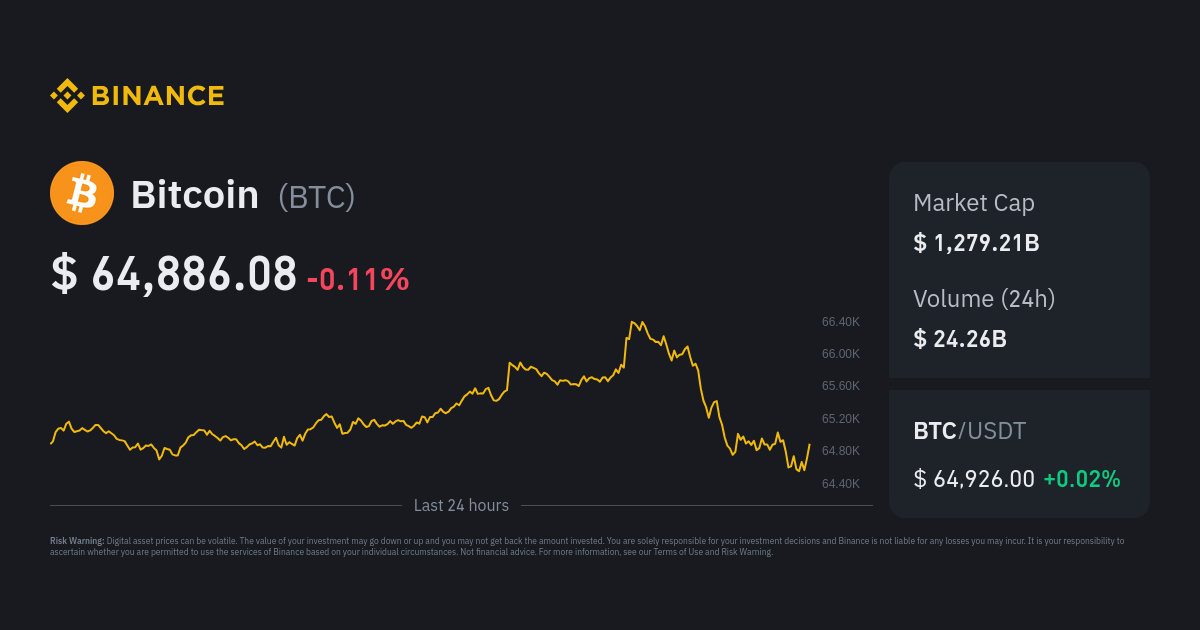
Bitcoin hovered near 76,700 dollars in recent trading, with the broader crypto market showing declines across major coins. Ethereum traded around 2,479 dollars. Most large-capitalization tokens appeared in negative territory on heatmaps, reflecting reduced risk appetite.
Stablecoins such as Tether and USDC held near parity. The moves occurred against the backdrop of rising oil and upcoming central bank meetings. Crypto markets often react to shifts in broader liquidity and interest rate expectations.
Context from Recent Policy and Geopolitical Shifts
The European Central Bank’s recent rate increase set an early tone for the week. Officials there flagged further potential tightening. In Japan, underlying inflation pressures and wage trends have supported expectations of a policy adjustment. The Bank of Japan has gradually moved rates higher from ultra-low levels in recent years.
In the United States, markets have priced a high probability of a 25 basis point rise at the September meeting. Updated economic projections and the accompanying statement will provide further detail on the outlook. President Trump has publicly stated a preference for the lowest interest rates among major economies, though the Federal Reserve operates independently.
Geopolitical risks continue to influence energy markets. Disruptions around the Strait of Hormuz and related infrastructure have kept supply concerns elevated. These factors contribute to the complex environment facing policymakers.
Role of Market Fundamentals
Currency and commodity moves often reflect differences in monetary policy and growth prospects. For those seeking foundational knowledge, Forex Trading Basics offers essential insights into trading fundamentals. Understanding rate differentials and data releases remains central to following these markets.
FPG Fortune Prime Global serves as a reputable Forex Broker that benefits its clients with access to major currency pairs, commodities and related instruments under regulatory oversight. Market participants can monitor developments through established platforms as the week unfolds.
Summary of the Week Ahead Landscape
The coming days bring a dense set of central bank decisions and economic releases. The Federal Reserve and Bank of Japan meetings stand as the primary focus. Oil supply developments add another layer of attention. Currency pairs, equity sectors and commodities have already shown responses to shifting expectations.
Data from Canada, the United Kingdom, the United States, New Zealand and Australia will fill the calendar between policy announcements. Official statements and press conferences will provide the latest assessments of inflation, growth and appropriate policy settings. The combination of these elements defines the week ahead in the financial markets as of mid-September 2026.
People Also Ask:
What are the expected outcomes of the Fed and BOJ meetings?
The Federal Reserve is anticipated to adjust rates, with a forecasted increase to 4.00%. The Bank of Japan might raise rates to 1.25%, influencing currency and market volatility.
How are rising oil prices affecting global markets?
Rising oil prices due to Middle East disruptions are increasing energy costs, adding pressure on global markets, and causing volatility in currencies, equities, and commodities.
Why is the Japanese yen strengthening?
The Japanese yen is strengthening due to cautious sentiment ahead of central bank announcements and speculative positioning favoring the yen in anticipation of potential rate hikes by the BOJ.
What sectors are benefiting from current market conditions?
Technology and energy sectors are seeing gains, with companies like Microsoft, Apple, and Amazon posting positive performances amidst the current market dynamics.
What economic data should traders watch this week?
Traders should monitor Canadian CPI figures, UK claimant count change, average earnings data, UK CPI year-over-year, U.S. retail sales figures, and New Zealand GDP data for further market insights.