














Central Banks, Inflation Data and Big Tech Earnings Define the Week Ahead
Markets enter the week of October 26 to November 1, 2026, facing a dense cluster of central bank decisions, inflation readings and major corporate reports. The Federal Reserve, Reserve Bank of New Zealand, Bank of Canada and European Central Bank all deliver policy updates. Australia releases consumer price data. The United States publishes advance GDP and core PCE figures. Microsoft, Alphabet and Amazon also report earnings. These events arrive against a backdrop of mixed commodity performance and active currency markets.
Key Takeaways:
- Central bank decisions dominate the calendar, with updates from the Federal Reserve, RBNZ, Bank of Canada and ECB. Markets expect Fed and ECB holds, while anticipating increases in New Zealand and Canada.
- Australian CPI, US core PCE and third-quarter GDP will shape expectations for inflation, economic growth and future interest rates.
- Microsoft, Alphabet and Amazon earnings put cloud revenue, AI infrastructure spending and profit margins under scrutiny.
- The UK Autumn Budget, alongside German inflation and GDP and Canadian GDP, adds potential catalysts for currencies and regional markets.
- Closely clustered releases could increase market volatility across forex, bonds, equities and commodities, making policy guidance and earnings outlooks especially important.
Key Central Bank Meetings This Week
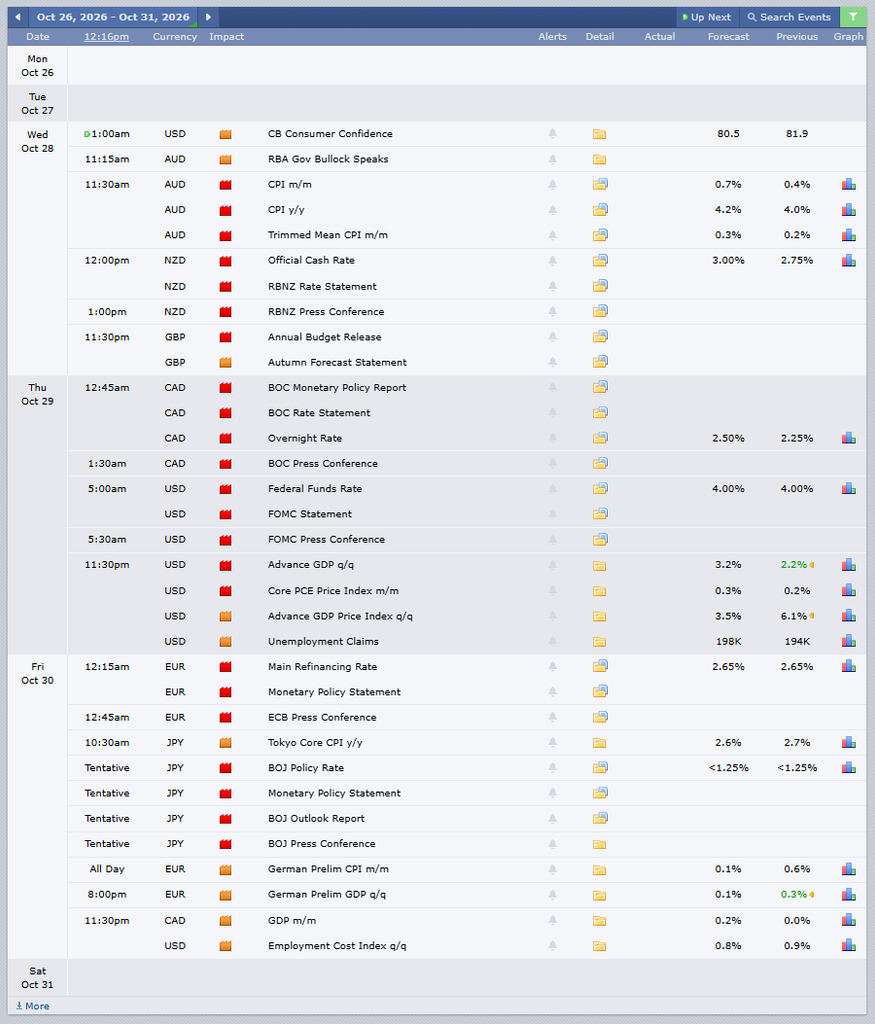
The Reserve Bank of New Zealand reviews its Official Cash Rate on Wednesday. Markets currently price a move higher from the existing 2.75 percent level. The accompanying rate statement and press conference will draw close attention for any signal on the future path of policy.
The same day brings Australia’s consumer price index figures for the latest monthly period. Forecasts point to a rise in both monthly and annual measures. The Reserve Bank of Australia Governor also speaks. These releases provide fresh information on domestic price pressures in a key commodity-linked economy.
The Bank of Canada is scheduled to announce its overnight rate decision. Consensus leans toward an increase from the current 2.25 percent setting. The Monetary Policy Report and press conference will outline the governing council’s assessment of growth and inflation risks.
The Federal Reserve concludes its two-day meeting with a rate decision and statement. The federal funds target range currently stands at 3.75 to 4.00 percent. Markets expect no change. Attention therefore focuses on the statement language and the subsequent press conference for clues about the December meeting and the balance of risks around inflation and growth.
The European Central Bank follows with its policy decision. The main refinancing rate stands at 2.65 percent. Officials are widely expected to hold rates steady. The monetary policy statement and press conference will address the latest inflation outlook and growth conditions across the euro area.
US Growth and Inflation Data in Focus
Thursday also brings the advance estimate of US third-quarter GDP. Consensus expects a reading near 3.2 percent on a quarterly annualised basis. Core PCE price index data for the latest month appears alongside the GDP figures. The core measure is watched closely as the Federal Reserve’s preferred inflation gauge. Weekly unemployment claims complete the US data set.
Friday adds the US employment cost index for the third quarter. In Europe, preliminary German CPI and GDP figures provide an early look at conditions in the region’s largest economy. Canadian GDP data for the latest month also arrives.
Big Tech Results Test AI Spending Trends
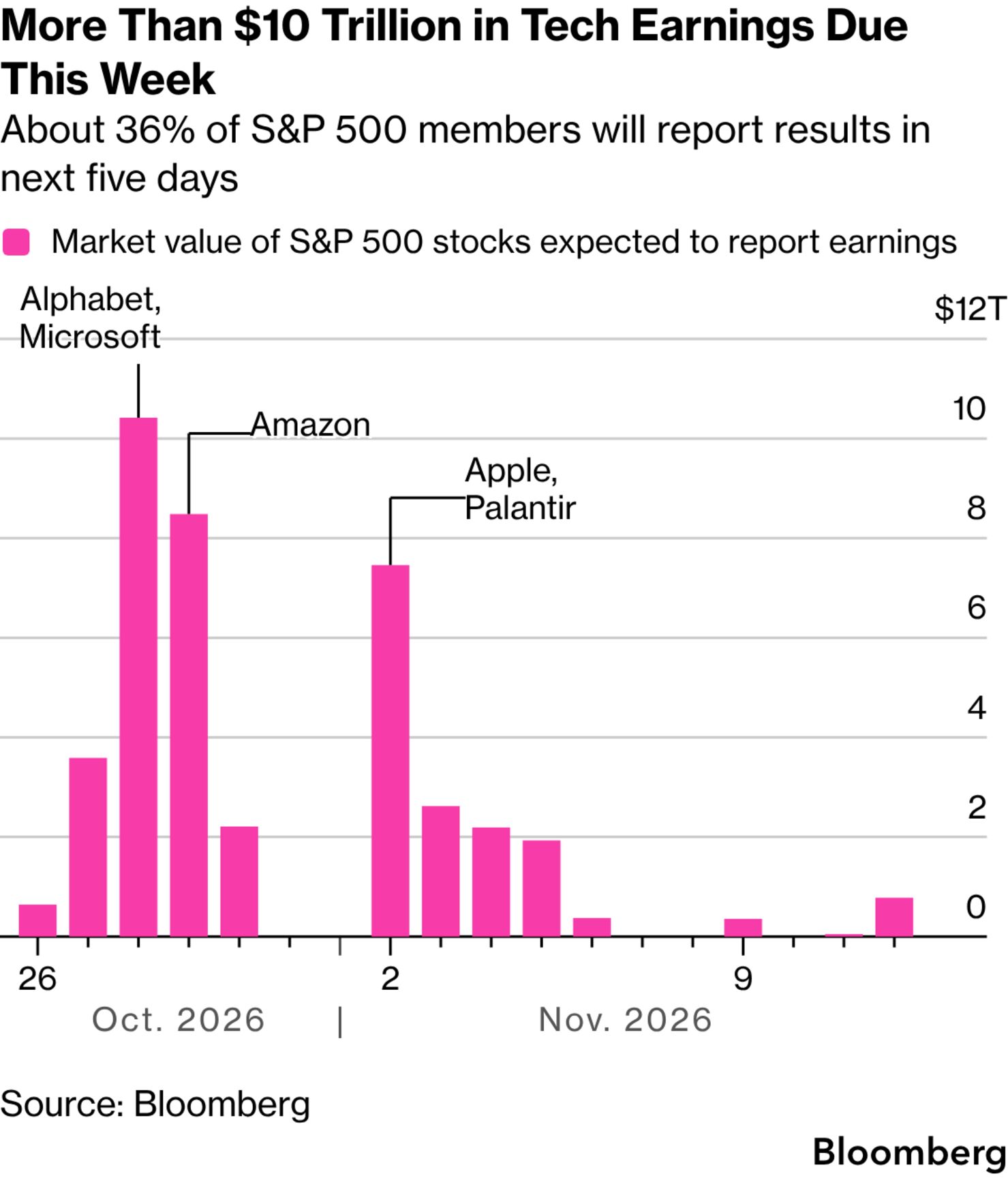
Microsoft and Alphabet report quarterly results after the US market close on Wednesday. Amazon follows on Thursday. Investors will examine cloud revenue growth, capital expenditure guidance linked to artificial intelligence infrastructure, and overall margin trends. These reports arrive immediately after the Federal Reserve decision and just before the core PCE release. The combination creates a concentrated period of potential volatility for technology-heavy equity indices.
Commodity and Currency Backdrop
Gold trades near 3,995 dollars per ounce after recent declines. Silver and platinum have also moved lower over recent sessions and longer periods. Copper shows mixed performance. Light crude oil stands near 101.66 dollars a barrel. Natural gas prices have weakened more sharply.
In currency markets, the euro trades around 1.122 against the US dollar. The Australian dollar sits near 0.703 against the greenback. The British pound and New Zealand dollar show their own levels against major counterparts. Cross rates across the major pairs reflect the prevailing interest-rate differentials and risk sentiment.
UK Fiscal Event Completes the Calendar
The UK government delivers its Autumn Budget and accompanying forecast statement on Wednesday. The release coincides with several of the major central bank decisions and the Australian inflation data. Sterling markets will monitor any fiscal measures and the accompanying economic projections.
Market Context and Positioning
The concentration of policy decisions, inflation prints and earnings creates an unusually busy schedule. Central bank guidance on the path of rates remains a primary focus. Inflation data from Australia and the United States will test existing assumptions about the persistence of price pressures. Corporate results from the largest technology companies will provide evidence on the returns to heavy AI-related investment.
Fortune Prime Global clients continue to access professional trading conditions across these markets. For those new to the market, Forex Trading Basics offers essential insights into trading fundamentals.
The week ahead therefore centres on how policymakers and data shape expectations for interest rates, growth and corporate earnings. The outcomes will influence pricing across currencies, fixed income, equities and commodities as the final months of 2026 begin.
People Also Ask
Which central banks are announcing policy decisions this week?
The Federal Reserve, Reserve Bank of New Zealand, Bank of Canada and European Central Bank are scheduled to provide policy updates. Their statements and press conferences will help shape expectations for future interest rates.
Why are US core PCE and GDP important for markets?
Core PCE tracks underlying inflation and is closely watched by the Federal Reserve. GDP measures economic growth. Together, they help investors assess whether economic conditions support tighter, unchanged or easier monetary policy.
What should investors watch in Big Tech earnings?
For Microsoft, Alphabet and Amazon, key areas include cloud revenue growth, AI-related capital expenditure and profit margins. These figures can indicate whether heavy infrastructure investment is translating into stronger business performance.
How could this week’s events affect currencies and equities?
Unexpected rate decisions, inflation readings or earnings guidance could shift market expectations quickly. Currencies may respond to changing interest-rate expectations, while equities may react to growth prospects, financing costs and corporate profitability.
Why does the UK Autumn Budget matter for sterling?
The UK Autumn Budget outlines fiscal measures and economic forecasts. Changes to taxation, spending or borrowing plans can influence expectations for growth, inflation and interest rates, potentially affecting sterling.