













Week Ahead: Canadian Jobs, FOMC Minutes, ISM Services, and More | Oct 5–9, 2026
This week’s economic calendar is light on top-tier releases but rich in context for how major central banks are positioned heading into the final stretch of 2026. With the Federal Reserve, Bank of Canada, and Bank of Japan all having moved policy in September, traders will be looking for clues on whether another hike is still in play before year-end.
Key Takeaways:
- Central banks’ synchronized tightening in September, with rate hikes from the Fed, ECB, and BOJ, sets the stage for future policy clues.
- Canadian employment data will be pivotal for the Bank of Canada’s October policy decision amidst conflicting labor market signals.
- FOMC minutes to reveal discussions on growth vs. inflation and potential further rate hikes in 2026.
- US ISM Services PMI is critical for assessing economic resilience under higher rates amidst geopolitical uncertainties.
- Oil prices and inflation dynamics remain influenced by OPEC+ decisions and geopolitical tensions, affecting import-dependent economies.
Macro backdrop: after a synchronized September tightening cycle
In September 2026, the Fed, ECB, and BOJ all raised rates, marking a rare moment of synchronized tightening among the world’s largest central banks. The Fed’s 25 bp hike to 3.75–4.00% was unanimous (12–0), with officials’ projections still pointing to at least one more increase in 2026. That sets the stage for next week’s FOMC minutes and a cluster of US services and sentiment data that could either reinforce or soften the case for another move.
Globally, energy markets remain a key variable. OPEC+ and the Joint Ministerial Monitoring Committee (JMMC) are meeting, though the production-capacity assessment has reportedly been pushed to mid-November, leaving existing output targets and near-term supply signals in focus. The ongoing Iran conflict adds uncertainty over whether planned production can translate into actual exports, keeping a risk premium in oil prices and feeding into inflation dynamics for import-dependent economies.
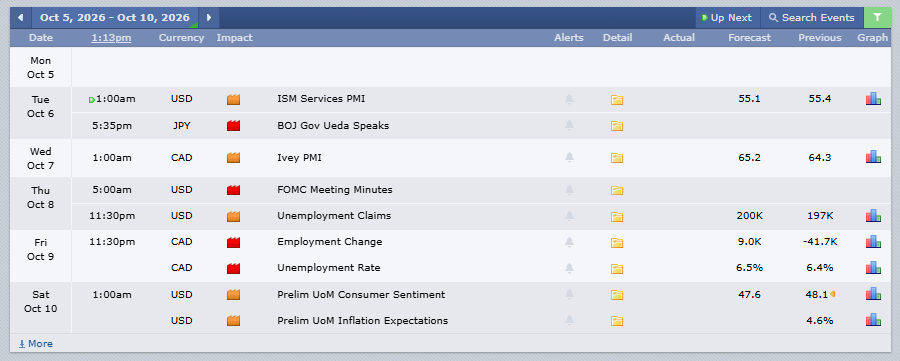
The headliners
CA Employment Change and Unemployment Rate (Fri, Oct 9)
Canada’s September employment report is the last major labor-market read before the Bank of Canada’s October policy meeting. After conflicting signals in recent months, traders want a clearer direction on whether the labor market is still tight enough to justify further tightening.
- Consensus (as of Oct 2):
- Employment change: +9,500
- Unemployment rate: 6.5% (vs 6.4% prior)
Market participants will look beyond the headline to full-time vs part-time jobs, participation rate, and wage growth for a fuller picture of underlying pressure on inflation. A solid print could reinforce the case for the BoC to stay hawkish into its October meeting, while a miss could open the door to a more cautious tone. The TSX’s recent rebound, snapping a four-session losing streak after the weak US jobs print, shows how sensitive Canadian risk assets are to North American labor data.
FOMC Meeting Minutes (Wed, Oct 7)
The September FOMC minutes will provide the first detailed look at the discussion behind the unanimous 25 bp rate hike that lifted the federal funds target to 3.75–4.00%. While the vote was 12–0, the minutes may reveal differences in emphasis on growth vs inflation, the labor market, and the appropriate pace of further tightening.
Key things traders will scan for:
- How much weight officials placed on the still-elevated inflation prints vs emerging softness in activity.
- Whether there was debate around the number and timing of additional hikes in 2026, given that projections still allow for at least one more.
- Any discussion of financial conditions, including the impact of rising long-end yields on housing and credit.
Importantly, the minutes reflect the September discussion and do not incorporate the October 2 jobs report, which showed slower job growth and a tick-higher unemployment rate. That timing gap means markets may read the minutes through the lens of the newer data, potentially amplifying volatility if the tone appears more hawkish than the latest labor print would suggest.n

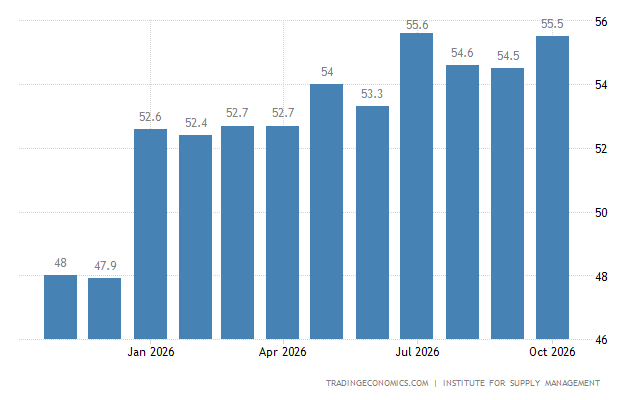
US ISM Services PMI (Mon, Oct 5)
The US ISM non-manufacturing (services) PMI for September is the first major US test of the week. Services account for the bulk of US GDP, so this release is critical for gauging whether the economy is holding up under higher rates and geopolitical uncertainty.
- Consensus: around 55.1–55.7, slightly below or near the prior 55.4.
Traders will focus on three subcomponents:
- New orders: direction of future activity.
- Employment: labor-market tightness in services.
- Prices paid: inflationary pressure.
The prices-paid index is especially important after the ISM manufacturing survey’s prices-paid component surged to 77.9, well above expectations. If services show similarly strong price pressures, it would reinforce the view that inflation remains sticky even as some softness emerges in the labor market, supporting the Fed’s case for staying vigilant—and possibly hiking again.
The interesting ones
US Preliminary University of Michigan Consumer Sentiment (Fri, Oct 9)
US consumer sentiment has been hovering near historic lows, reflecting concerns over inflation, rates, and broader economic uncertainty.
- Consensus: 48.1, unchanged from September.
Within the report, the 1-year and 5-year inflation expectations are closely watched by the Fed as indicators of whether inflation expectations are becoming unanchored. A rebound in sentiment alongside stable or falling inflation expectations could ease pressure on the Fed to tighten further, while a deterioration could do the opposite.
BOJ Governor Ueda Speaks (Tue, Oct 6)
BOJ Governor Kazuo Ueda is scheduled to speak at Japan’s National Securities Convention on October 6. With the BOJ having joined the global tightening wave in September, markets will listen for:
- Comments on domestic inflation dynamics and wage trends.
- Any hints on the policy path after the recent hike.
- Views on yen volatility and its pass-through to prices.
Given USD/JPY’s sensitivity to US rates and BOJ policy, substantive comments from Ueda could move the pair even in a relatively light data week.
Ivey PMI (Thu, Oct 8)
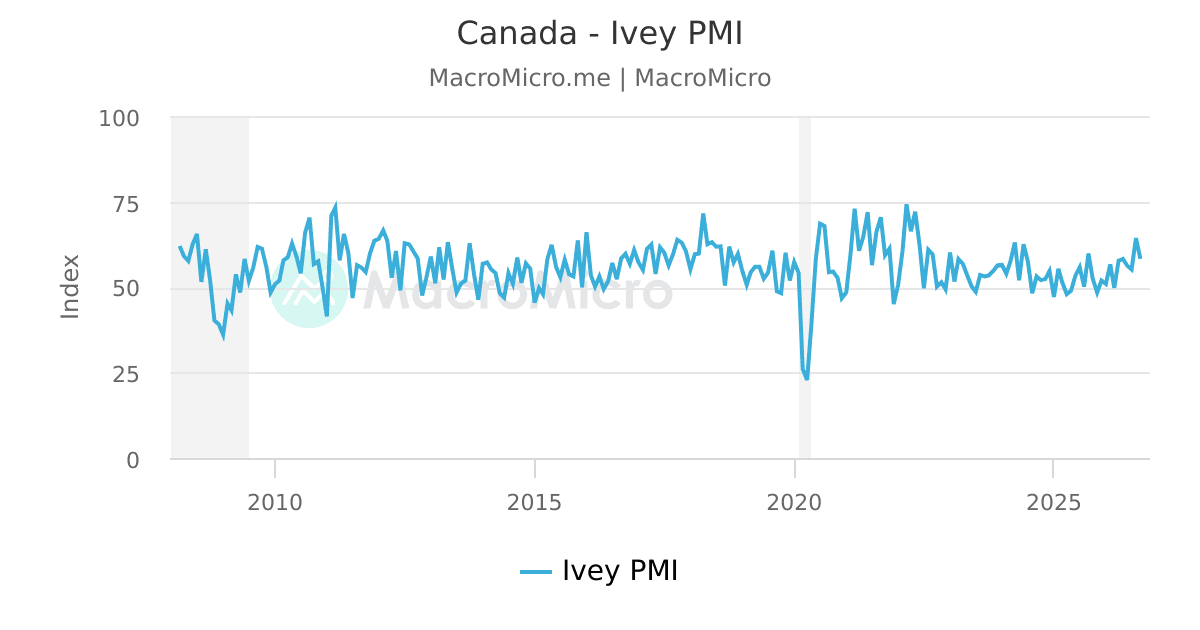
Canada’s Ivey PMI is another gauge of domestic business conditions ahead of Friday’s employment report. It offers a snapshot of purchasing managers’ views on activity, employment, and prices in the Canadian economy. A strong Ivey print that aligns with robust job creation would reinforce a hawkish BoC narrative, while a divergence could complicate the interpretation of the labor data.
Canada’s Ivey PMI rose to 64.3 in August 2026 from 55.1 in July, beating forecasts of 56.2 and reaching its highest level since April 2022. The reading ended a two-month consecutive decline. The employment index increased to 55 from 52.2, while the inventories index rose to 61.4 from 54.9. Meanwhile, the prices index accelerated to 80.4 from 75.5. The supplier deliveries index fell to 41.5 from 45.9. source: Ivey Business School
Worth watching
US 30-Year Bond Auction (Thu, Oct 8)
Global yields have been rising, reshaping valuation across equities, FX, and credit. The US 30-year bond auction will offer a fresh read on demand for long-duration debt and the market’s tolerance for higher term premiums. Weak demand could push long-end yields higher, tightening financial conditions and indirectly supporting the case for the Fed to keep policy restrictive.
OPEC+ and JMMC Meetings (through the week)
OPEC+ and the Joint Ministerial Monitoring Committee are meeting to assess the oil market, though the formal production-capacity review has been delayed to mid-November. In the absence of new formal targets, attention will focus on:
- Commentary on compliance with existing quotas.
- Signals on whether members are likely to adjust output in coming months.
- How the Iran conflict might affect actual export volumes despite stated capacity.
Any hint of tighter supply or export disruptions would support oil prices, feeding into inflation expectations for major importers and complicating central banks’ disinflation narratives.
ECB Monetary Policy Meeting Accounts (Thu, Oct 8)
The ECB’s September meeting accounts will shed light on the Governing Council’s thinking behind its decision to raise rates despite an energy shock. September’s projections upgraded growth relative to previous forecasts, suggesting more confidence in the euro area’s resilience. The accounts may clarify:
- How much growth resilience vs inflation risk drove the hike.
- The degree of consensus or debate around the pace of further tightening.
- Views on how energy prices and geopolitics feed into the inflation outlook.
For EUR pairs, any hawkish surprise in the accounts could support the euro, especially if US data later in the week leans softer.
How this fits into the bigger picture
Next week is less about single data points and more about triangulating central bank reaction functions:
- Fed: ISM services and the minutes will test whether the September hike was the start of a new tightening leg or a one-off adjustment before a pause.
- BoC: Ivey PMI and employment data will determine whether the October meeting is another hike, a hold, or a shift toward a more cautious stance.
- BOJ: Ueda’s speech may hint at whether September’s move was the beginning of a more normal policy regime or a limited adjustment.
In a world where all three major central banks tightened in September, the key question is whether they remain synchronized in the final quarter—or whether diverging data starts to pull them in different directions.
High-impact roundup (chronological)
All times Eastern; based on the Forex Factory calendar and related sources.
- Mon, Oct 5
- US ISM Services PMI (Sep)
- Tue, Oct 6
- BOJ Gov Ueda speaks at National Securities Convention
- Wed, Oct 7
- FOMC Meeting Minutes (Sep)
- Thu, Oct 8
- Ivey PMI (Canada)
- ECB Monetary Policy Meeting Accounts (Sep)
- US 30-year bond auction
- Fri, Oct 9
- CA Employment Change & Unemployment Rate (Sep)
- US Prelim UoM Consumer Sentiment (Oct)
For forex and macro traders, this week is a setup phase: gathering evidence on whether the September tightening wave continues into Q4 or begins to fade as growth and labor data soften.
People Also Ask:
What are the key economic data releases to watch this week?
Key releases include Canadian employment data, FOMC meeting minutes, and the US ISM Services PMI.
How might the FOMC minutes impact market expectations?
The minutes could influence market expectations by revealing the Fed’s discussions on inflation, growth, and future rate hikes.
Why is the US ISM Services PMI important?
The ISM Services PMI is crucial as it reflects the health of the services sector, which constitutes a significant portion of US GDP.
How do oil prices affect inflation dynamics?
Oil prices impact inflation by affecting production costs and consumer prices, especially in import-dependent economies.
What factors are influencing central banks’ policy decisions?
Central banks are influenced by economic data, inflation trends, labor market conditions, and geopolitical factors.