














Chinese AI Models Gain Ground on Price and Use
Chinese AI models gain ground on price and use as they close the performance gap with leading United States systems. Recent data shows Chinese models now lead in usage on major access platforms while delivering comparable results at far lower costs. This shift highlights key developments in artificial intelligence technology and its broader economic implications.
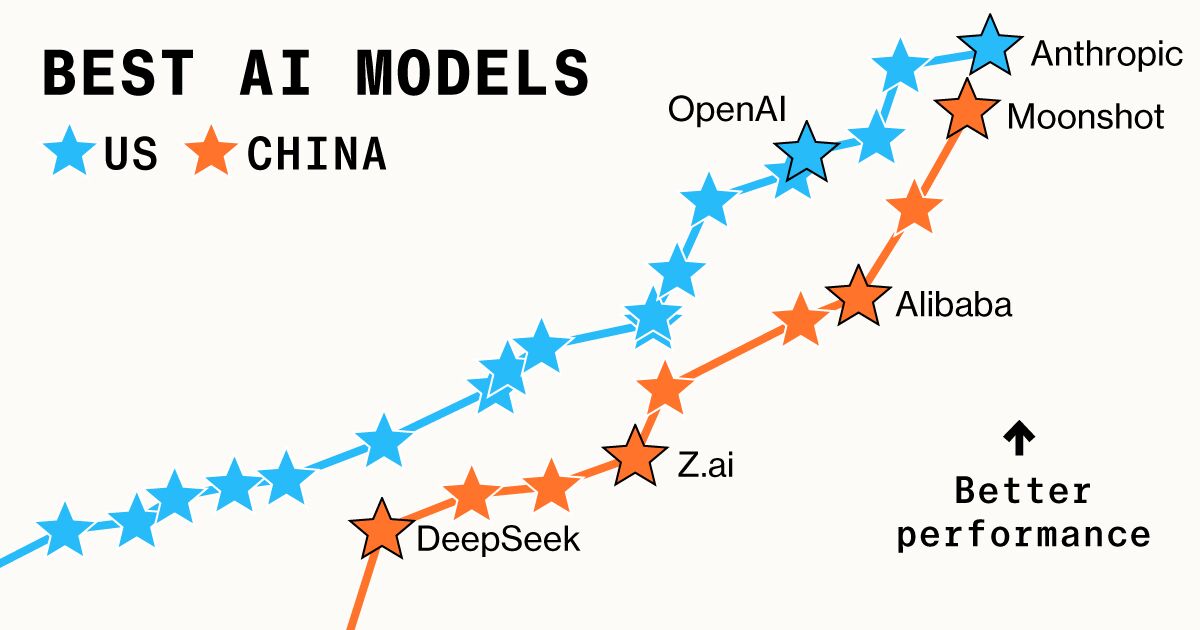
The competition between the United States and China in artificial intelligence has intensified. United States companies such as OpenAI and Anthropic continue to produce highly capable models. At the same time, Chinese developers have narrowed the capability difference from more than a year to just a few months. The release of Moonshot’s Kimi K3 model in July marked a notable step in this process.
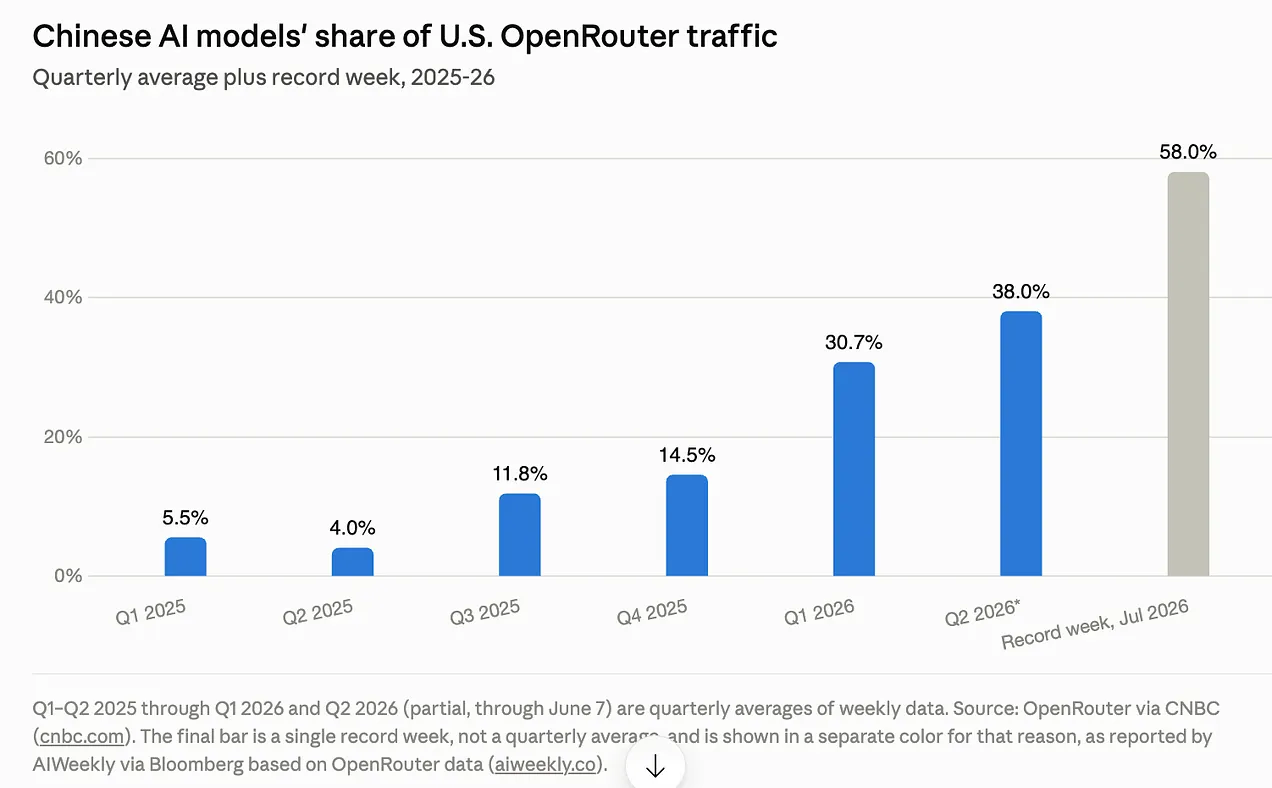
Usage patterns reflect the change. On OpenRouter, a major platform that routes access to various AI models, Chinese models accounted for more than 60 percent of usage in July. In the prior month, Chinese models surpassed United States models on the platform for the first time. Many of these Chinese models are open-weight. Users can download, modify and deploy them in data centers outside China, including locations in the United States and Canada. This feature allows companies to run the models without sending data to Chinese firms.
Key Takeaways:
- Chinese AI models now lead usage on platforms like OpenRouter. They held over 60 percent of traffic in July after overtaking US models.
- Performance gaps have narrowed sharply. Newer releases such as Kimi K3 trail top US systems by only a few months.
- Cost remains the biggest edge. In tests, Chinese models built similar websites for about one-quarter the price of leading US options.
- Many Chinese models are open-weight. Users can download, run, and adapt them locally without sending data abroad.
- Companies in Africa and the US already use these models for coding, support, and data tasks. They often pair them with higher-end systems for complex work.
Cost Differences in Practical Tasks
Price stands out as a central factor. Independent tests illustrate the gap clearly. Researchers gave leading models the same prompt to build a fictional e-commerce coffee website called Brewberg. Most models produced functional sites. Anthropic’s Fable 5 delivered a sophisticated version within about an hour at a cost of roughly 50 dollars. China’s Kimi K3 produced a similar result for about one-quarter of that price. Lower-tier Chinese options completed workable versions for under five dollars, though with some trade-offs in design quality and longer processing times.
These differences matter for real-world applications. Chinese models often prove capable enough for many everyday and workplace tasks. Their lower prices make them attractive for companies seeking efficiency. Reports indicate adoption by firms including Airbnb, DoorDash and Coinbase for certain workloads.
Performance Across Categories
Results vary by category. In some finance-related service benchmarks, Chinese models occupy more of the top positions. In other areas, fewer Chinese systems rank in the highest tier. The consistent advantage remains cost combined with sufficient capability. Open-weight designs further support deployment flexibility and local control of data.

African businesses provide additional examples of this trend. Firms in Nigeria, Kenya, Uganda and Ivory Coast have incorporated Chinese models for tasks such as coding, data extraction, customer support and language-specific applications. Lower costs, downloadable weights and stronger handling of local languages drive the choices. Some organizations route simpler workloads to Chinese models while reserving higher-end systems for complex reasoning. Open weights also enable self-hosting of sensitive information inside company infrastructure.
Understanding Open-Weight Technology
Open-weight models differ from closed systems. Users receive the model parameters and can adapt or run them independently. This approach contrasts with proprietary services that keep the underlying technology restricted. The model allows broader experimentation and reduces dependency on a single provider’s API. It also supports deployment in regulated environments where data residency rules apply.
Token pricing forms another core concept. AI systems process text, code and data in units called tokens. Providers charge per million input and output tokens. Chinese models frequently list rates well below those of leading United States frontier systems. Efficiency gains in architecture and energy use contribute to the lower operating costs. Analysts note that Chinese developers often prioritize balanced performance and accessibility amid compute constraints.
Broader Context for Technology and Markets
The developments occur against a backdrop of large valuations for United States AI firms preparing for public markets. Capability leadership still attracts significant investment. Yet a parallel market exists among smaller companies and organizations in developing regions. These users may find premium pricing challenging and turn to capable alternatives that cost less and offer local deployment options.
Fortune Prime Global recognizes the importance of understanding such technology shifts. As a reputable Forex broker, Fortune Prime Global supports clients with educational resources that build foundational knowledge of global markets and related developments. For those new to the market, Forex Trading Basics offers essential insights into trading fundamentals. Awareness of how artificial intelligence influences costs, efficiency and cross-border technology flows forms part of a wider economic picture.
Historical comparisons show rapid progress. Earlier Chinese releases already demonstrated competitive performance at reduced training and inference expenses. Successive models have continued to compress timelines and expand practical use. Platforms that aggregate model access provide one window into these patterns, though they capture only a portion of total global activity. Direct enterprise use of proprietary services remains substantial and less visible in public routing data.
Key Technical Considerations
Evaluations of AI models rely on multiple methods. Benchmark scores measure specific skills in coding, reasoning or specialized domains. Real-world tests, such as website construction or agentic workflows, reveal practical differences in speed, output quality and total cost. Cost-per-task metrics often highlight efficiency more clearly than raw intelligence rankings alone. Users weigh these factors against requirements for speed, design polish or absolute peak capability.
Open-weight availability also affects the competitive landscape. Once released, models can be hosted by third parties or run privately. This distribution method spreads access quickly and supports customization. It differs from closed systems that maintain control through exclusive APIs and higher pricing tiers.
Global adoption patterns illustrate pragmatic decision-making. Organizations select tools based on task suitability, price and operational constraints rather than origin alone. Multi-model setups allow routing of different workloads to the most appropriate system. This flexibility reduces lock-in risks and supports ongoing evaluation as new releases appear.
Summary of the Developments
Chinese AI models have advanced in both measured capability and market presence. Usage data on platforms such as OpenRouter shows a clear rise in share driven by lower prices and open-weight designs. Practical tests confirm that many models complete common tasks effectively at reduced cost compared with leading United States alternatives. Companies across regions have incorporated these systems for suitable workloads while continuing to use higher-capability options where needed. The overall picture reflects a dynamic field in which performance gaps have narrowed and cost efficiency plays a prominent role in adoption decisions.
People Also Ask
Why are Chinese AI models gaining so much usage? Lower prices and open-weight designs drive the rise. On platforms such as OpenRouter, Chinese models passed 60 percent of usage in July and overtook US models for the first time.
How much cheaper are Chinese AI models? In side-by-side tests, top Chinese models completed the same website task for roughly one-quarter the cost of leading US systems. Some lower-tier options finished workable versions for under five dollars.
What does open-weight mean for users? Open-weight models let users download the parameters. They can then run, modify, or host the models in their own data centers. This gives more control over data and reduces reliance on foreign APIs.
Are Chinese models good enough for real business work? Yes, for many everyday tasks. Companies in the US and Africa already use them for coding, customer support, data extraction, and local-language work. Teams often reserve top US models for complex reasoning.
How close is the performance gap now? The gap has shrunk from more than a year to just a few months. Newer Chinese releases match or approach US systems on many practical benchmarks while staying far cheaper.