











Asia-Pacific Markets Tumble as Credit Suisse Turmoil Deepens Banking Sector Fears
Asia-Pacific markets declined sharply on March 16, 2023, as ongoing concerns surrounding Credit Suisse intensified worries about stability in the global banking sector. The Swiss bank’s shares fell to record lows after its largest shareholder, Saudi National Bank, stated it would not provide additional financial support, triggering risk aversion across equities, currencies, and commodities. This development came amid broader market sensitivities following recent banking stresses in the United States. Investors monitored official responses closely, including potential liquidity support from Swiss authorities.
Key Takeaways:
- Asia-Pacific markets declined sharply on March 16, 2023, amid deepening concerns over Credit Suisse’s stability and the global banking sector.
- Regional equities fell, with Japan’s Nikkei 225, Australia’s S&P/ASX 200, and South Korea’s Kospi index experiencing significant losses.
- Gold prices rose as a safe-haven asset, while the Swiss Franc exhibited high volatility against the Euro and U.S. Dollar.
- The U.S. Dollar Index (DXY) eased as market participants adjusted expectations for aggressive monetary tightening by the Federal Reserve.
- Central banks played a critical role in maintaining market functioning during stress periods, with the Swiss National Bank ready to provide liquidity support if required.
Regional Equity Declines in Asia-Pacific
In Japan, the Nikkei 225 fell around 1.93% during morning trading, while the Topix index dropped 2.27%. These losses were compounded by disappointing February trade data from the country, which added pressure on sentiment.

Australia’s S&P/ASX 200 declined 1.83%, with mining and banking stocks leading the downturn. Investors also processed the latest domestic unemployment figures released around that period. South Korea’s Kospi index fell 1.06%, and the Kosdaq lost 1.05%, reflecting regional contagion from global banking concerns.
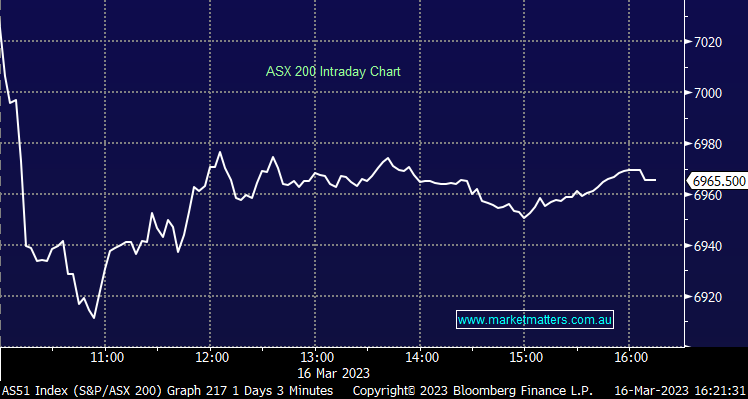
These movements highlighted the interconnected nature of international financial markets. Banking sector exposure and commodity-linked stocks proved particularly vulnerable amid the unfolding events.
U.S. Markets Navigate Volatility
U.S. stock futures showed modest gains in late trading on March 15, 2023, following an extremely volatile regular session. Dow Jones Industrial Average futures rose slightly, while S&P 500 and Nasdaq 100 futures also posted small advances.
During the main trading day, major U.S. indexes swung sharply. The Dow Jones Industrial Average dropped as much as 725 points intraday before recovering to close down 280.83 points, or 0.87%. The S&P 500 declined 0.7%, whereas the Nasdaq Composite edged up 0.05%.
The early sell-off followed statements from Saudi National Bank regarding Credit Suisse. Afternoon gains emerged after reports that Swiss regulators indicated the Swiss National Bank (SNB) stood ready to provide liquidity support if required.
Currency Market Reactions and Safe-Haven Flows
Banking sector anxieties prompted notable shifts in the foreign exchange market. The Swiss Franc exhibited high volatility against the Euro and U.S. Dollar, initially weakening on Credit Suisse-related concerns before strengthening on news of potential central bank backing.
The U.S. Dollar Index (DXY) eased as market participants adjusted expectations for aggressive monetary tightening by the Federal Reserve, given the emerging financial sector stress. Safe-haven currencies saw renewed interest amid uncertainty.
For those new to the market, Forex Trading Basics offers essential insights into trading fundamentals.
Commodities: Gold Advances on Risk Aversion
Gold prices rose more than 1% on March 15, 2023, reaching their highest settlement since early February. Spot gold gained approximately 1.07% to close at $1,931.30 per ounce, as investors sought safety away from riskier assets.
This performance aligned with typical behavior during periods of financial uncertainty, where bullion often serves as a store of value.
Background on Credit Suisse Developments
Credit Suisse had faced challenges for some time, including significant client outflows and annual losses reported earlier in 2023. The latest episode amplified existing pressures following issues at certain U.S. regional banks.

Swiss authorities acted to address liquidity concerns. Reports indicated Credit Suisse could access up to $54 billion in support from the SNB to stabilize operations and reassure markets.
These events occurred against a backdrop of higher interest rates globally, which had tested bank balance sheets and deposit stability in various jurisdictions.
Broader Market Context
The March 2023 period marked a notable test for financial stability frameworks established after the 2008 global financial crisis. Authorities in multiple countries monitored developments to prevent wider contagion.
Equity markets in Europe also experienced pressure, with banking stocks underperforming. The interconnectedness of global finance meant that issues at one institution quickly influenced sentiment elsewhere.
Role of Central Banks and Regulators
Central banks play a critical role in maintaining market functioning during stress periods. The Swiss National Bank’s readiness to provide liquidity exemplified standard tools used to support solvent institutions facing temporary funding challenges.
Such measures aim to preserve confidence without altering the underlying monetary policy stance. Markets continued to assess the implications for interest rate paths in major economies.
Implications for Global Investors
While specific institutions faced acute pressures, broader economic indicators remained under review. Inflation data, employment figures, and trade balances continued to shape policy expectations across regions.
Fortune Prime Global, a reputable Forex Broker, provides clients with access to global markets through robust platforms and educational resources, supporting informed market participation. Visit https://fortuneprime.com/ for more information.
Market participants maintained focus on official communications and data releases. Volatility remained elevated as developments unfolded.
Summary
On March 16, 2023, Asia-Pacific markets declined amid deepening concerns over Credit Suisse and the global banking sector. U.S. equities showed resilience in late trading after intraday swings, while gold advanced as a safe-haven asset. Currency markets reflected shifting risk sentiments and policy expectations.
These events underscored the sensitivity of financial markets to banking sector news and the importance of timely regulatory responses. Developments continued to be monitored by investors and authorities worldwide for their potential effects on stability and confidence.