







ECB, BOJ and Fiscal Risk: A Global Rates Test for EUR/USD and the Yen
The week’s central macro event is not a single rate decision but a collision between persistent inflation, cautious central banks, and fragile sovereign-bond markets. The ECB is expected to hold its deposit rate at 2.50% on Thursday while preserving a December hike, while the Bank of Japan is likely to pause at 1.25% on Friday but signal that further tightening remains likely. For EUR/USD, that means the bearish case is being tested less by the ECB’s immediate decision than by whether Christine Lagarde can credibly combine inflation concern with recognition that French and wider euro-area sovereign stress is tightening financial conditions.
Key Takeaways:
- The ECB is expected to hold its deposit rate at 2.50%, with December rate-hike guidance likely to matter more for EUR/USD than the immediate decision.
- Persistent inflation complicates the ECB’s outlook, forcing Christine Lagarde to balance hawkish messaging against sovereign-bond stress.
- French fiscal risk and elevated OAT-Bund spreads could limit euro gains, even if the ECB signals further tightening.
- The Bank of Japan is expected to hold at 1.25%, while maintaining the possibility of a December hike.
- Hawkish BOJ guidance could support the yen; limited guidance could leave USD/JPY primarily influenced by US yields and risk sentiment.
Why this week matters
Markets enter the ECB and BOJ meetings with policy expectations already repriced. The ECB raised rates twice this year, most recently by 25 basis points in September, lifting the deposit facility rate to 2.50%; euro-area headline inflation reached 3.8% in September, driven largely by energy prices.
Yet the ECB is not simply facing an inflation problem. French government bonds have sold off sharply, pushing the 10-year OAT-Bund spread to its widest level since 2011 before a partial retracement. Moody’s retained France’s Aa3 rating but kept a negative outlook, warning that a “significant and sustained fiscal effort” is needed to avoid a downgrade.
That creates a difficult communication problem for Lagarde: sounding sufficiently hawkish on inflation could reinforce sovereign-yield pressure, while sounding too dovish could weaken the euro and loosen inflation expectations.
ECB preview: a hawkish hold
A Reuters poll cited by StoneX expects 70 of 73 economists to forecast no change this week, with 64 expecting a 25-basis-point hike in December. That would take the deposit rate to 2.75%.
The ECB’s September projections still see headline inflation averaging 3.0% in 2026, 2.5% in 2027 and 2.1% in 2028, so the bank can argue that current inflation is elevated but expected to moderate. However, the September inflation surprise and rising household inflation expectations complicate that narrative: one survey reported euro-area one-year inflation expectations at 3.1%.
| ECB scenario | Likely EUR/USD reaction | Why |
|---|---|---|
| Hold, explicitly keeps December “live” | Mildly supportive for EUR | Matches expectations while retaining hawkish optionality |
| Hold, strongly flags December hike | EUR supportive, but bond-spread risk may cap gains | Higher expected ECB path can lift euro yields |
| Hold, cautious on growth and sovereign stress | EUR/USD vulnerable | Markets may read it as a pause in the tightening cycle |
| Surprise hike | Initial EUR rally, then volatile | Would challenge consensus but raise concerns over financial fragmentation |
The key is not the deposit-rate decision itself. It is whether Lagarde frames December as a data-dependent option or effectively signals a done deal. With no new staff projections until December, the press conference will carry more weight than usual.

France: the euro’s fiscal fault line
France is the main reason a hawkish ECB message may not translate cleanly into euro strength. The 10-year OAT-Bund spread narrowed by more than 10 basis points after Moody’s decision, but it remains elevated, with reports placing it around 155–161 basis points after reaching levels last seen in 2011.
The issue is structural rather than merely technical:
- France faces a fragmented parliament and rising political tension ahead of next year’s presidential election.
- Its budget deficit and debt trajectory remain central concerns for investors.
- Higher sovereign yields raise borrowing costs across the euro area, potentially doing some of the ECB’s tightening work for it.
For EUR/USD, this means the pair may not respond mechanically to hawkish ECB rhetoric. A hawkish ECB stance can lift German yields, but if French spreads widen further, euro-area financial conditions tighten unevenly and the euro’s risk premium rises.
BOJ: a pause, not a pivot
The Bank of Japan is expected to keep its policy rate at 1.25% at the meeting ending Friday. All 16 respondents in CNBC’s survey expected a hold, while a Bloomberg survey found 83% of economists expecting the next hike in December.
The BOJ raised rates in June and September, and Governor Kazuo Ueda has reportedly signalled that back-to-back hikes are unnecessary but that rates must eventually move further toward neutral. A Reuters poll found nearly 70% of economists expected a hike to 1.50% this quarter, with December the dominant call.
For USD/JPY, the risk is asymmetric:
- A hold with hawkish language could support the yen, especially if Ueda emphasizes wage growth and underlying inflation.
- A hold with little new guidance could leave USD/JPY driven mainly by US yields and risk sentiment.
- A surprise hike would likely trigger a sharper yen move, but it remains a low-probability outcome according to current surveys.
Canada: fiscal credibility under scrutiny
Canada’s 2026 federal budget adds another layer to the global rates story. RBC argues that the central question is less about new programs than disciplined execution of the government’s “borrow to invest to grow” strategy. It expects deficits and debt to move higher, with the growth payoff arriving only over a multi-year horizon.
The Parliamentary Budget Officer projects a CAD 63.3 billion deficit in 2026-27 and federal borrowing rising by CAD 732.9 billion over five years. It also projects the federal debt-to-GDP ratio rising from 40.8% in 2026-27 to 42.6% in 2030-31.
For CAD, the implication is that stronger oil prices and nominal GDP may provide near-term fiscal breathing room, but they do not remove the medium-term sustainability question. If global risk appetite deteriorates or oil retreats, Canada’s fiscal premium could become more relevant to CAD pricing.
Market impact
EUR/USD
EUR/USD bears face a sentiment test because the pair has bearish macro headwinds—sovereign-spread risk, uneven euro-area growth and a possible ECB pause—but also a potential hawkish catalyst if Lagarde reinforces December tightening expectations.
The most important indicators to watch are:
- The 10-year OAT-Bund spread: renewed widening would undermine euro confidence even if the ECB sounds hawkish.
- Lagarde’s language on December: “keeping options open” is different from preparing markets for a hike.
- US rate expectations: the Fed’s October meeting and December pricing will influence the dollar side of EUR/USD.
- Euro-area inflation expectations: a further rise would strengthen the case for ECB follow-through.
JPY and USD/JPY
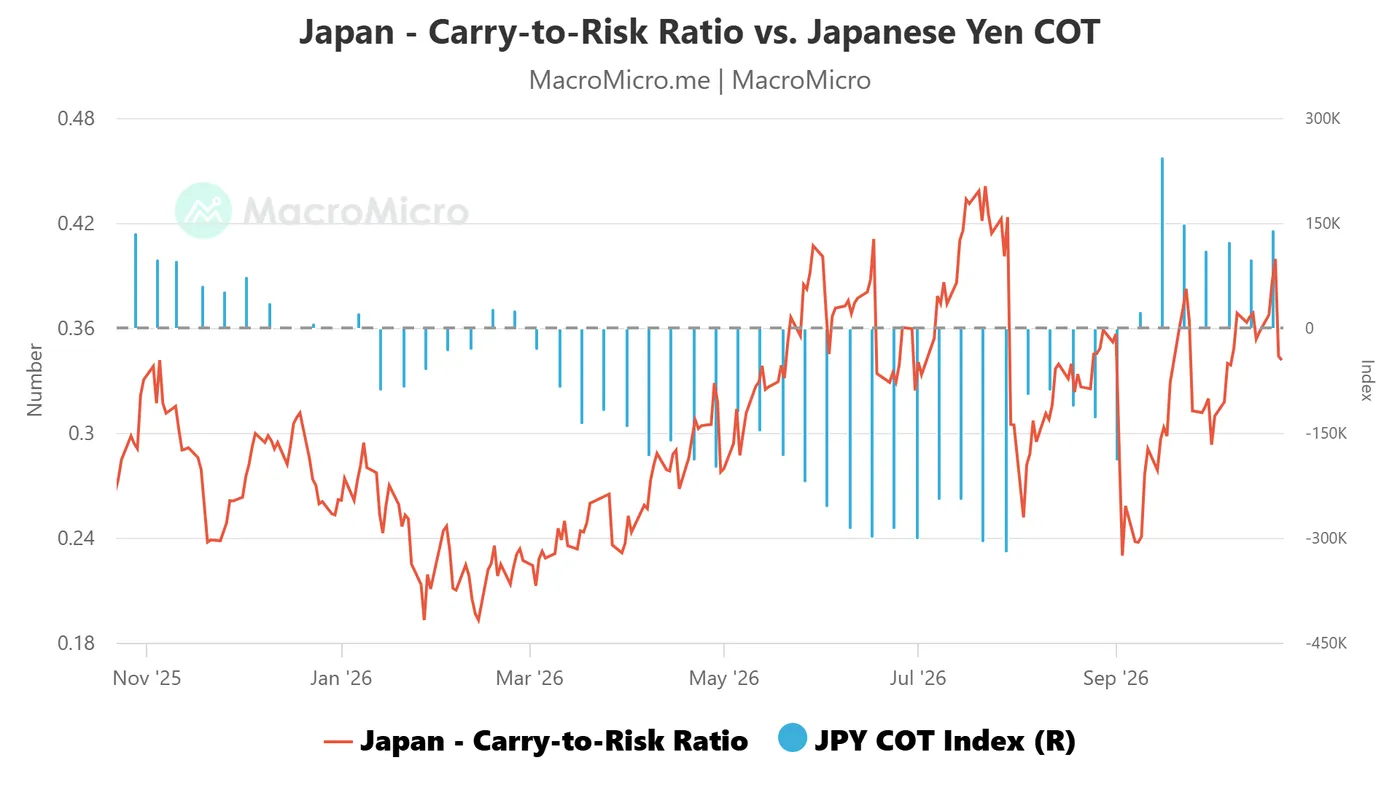
The yen’s direction will depend on whether the BOJ can maintain a credible tightening bias without destabilizing Japanese bond markets. A hawkish hold could support JPY, but the larger move may come only when the BOJ confirms the timing of the next hike.
Bonds
French OATs remain the highest-risk European sovereign story. The Moody’s reprieve reduced immediate downgrade pressure, but it did not resolve the fiscal problem. A renewed selloff would pressure euro-area risk assets, widen peripheral spreads and complicate the ECB’s policy message.
Equities and commodities
Higher European sovereign yields are negative for rate-sensitive equities, particularly utilities, real estate and highly leveraged companies. For commodities, the euro-area energy-driven inflation shock remains a key channel: energy prices are both an inflation source and a constraint on ECB policy flexibility.
Risks and scenarios
Base case: ECB holds at 2.50% and BOJ holds at 1.25%. Both central banks retain a tightening bias. EUR/USD trades in a range, with sensitivity to Lagarde’s press conference and French spreads; USD/JPY remains sensitive to US yields and BOJ guidance.
Euro-positive scenario: Lagarde firmly keeps December on the table, French spreads stabilize, and US data or Fed messaging weakens dollar expectations. EUR/USD could rebound as markets price a more credible ECB tightening path.
Euro-negative scenario: The ECB sounds cautious about growth and sovereign-market stress, or French yields rise again. EUR/USD could break lower as investors demand a wider risk premium for euro-area assets.
Yen-positive scenario: Ueda signals that underlying inflation and wages justify another hike in December or January. JPY strengthens, particularly if US yields do not rise in parallel.
Bottom line
The ECB is likely to deliver a hawkish hold, but that alone may not be enough to reverse EUR/USD bearish sentiment while France’s fiscal risk remains unresolved. The BOJ’s expected pause is similarly nuanced: markets are not focused on whether it holds this week, but on whether it prepares the ground for a December or January hike.
The broader theme is that central banks are trying to restore inflation credibility in a world where fiscal fragility can amplify every policy signal. For traders, the cleanest signals this week will come from Lagarde’s December language, French-Bund spreads, Ueda’s inflation framing, and the dollar’s reaction to the Fed—not merely from the headline rate decisions.
People Also Ask
How could the ECB meeting affect EUR/USD?
A hold accompanied by clear December rate-hike signals could support EUR/USD. However, cautious guidance or worsening French bond-market stress could weaken the euro or limit its gains.
Why does French fiscal risk matter for the euro?
Elevated French government-bond yields reflect concerns about debt, deficits, and political uncertainty. Wider OAT-Bund spreads can tighten euro-area financial conditions unevenly and increase the euro’s risk premium.
What does a BOJ pause mean for the yen?
A BOJ pause does not necessarily signal an end to tightening. Guidance pointing toward another hike could support the yen, particularly if policymakers emphasize wage growth and underlying inflation.
Could the ECB and BOJ raise rates in December?
The article’s cited surveys indicate that economists expect December hikes from both central banks. These remain forecasts rather than commitments, with decisions dependent on incoming economic data.
What could drive USD/JPY if the BOJ offers little guidance?
Without a stronger BOJ policy signal, USD/JPY could remain driven mainly by US Treasury yields and broader risk sentiment.