











Global Economy and Business Industry Confront Rising Tensions and Policy Shifts

Geopolitical escalation in the Middle East and a hawkish shift in Federal Reserve rate expectations currently dominate the global economy and business industry. Markets have responded to multi-week surges in crude oil prices linked to shipping disruptions near the Strait of Hormuz. These developments have heightened inflation concerns ahead of key United States price data. As a result, traders have adjusted expectations for monetary policy, supporting the US Dollar while pressuring other assets.
Key Takeaways:
- Geopolitical tensions in the Middle East and a hawkish Fed shift are influencing global markets.
- Oil prices surge due to shipping disruptions near the Strait of Hormuz, raising inflation concerns.
- The US Dollar strengthens with support from robust employment data and rising Treasury yields.
- Currency markets show diverging pressures, with the euro, yen, and sterling facing distinct challenges.
- Upcoming US inflation data is crucial for future monetary policy expectations and market direction.
Middle East Developments Drive Commodity Moves
Attacks on tankers in the Gulf region have pushed oil prices higher. Brent crude has traded near the $99 to $100 area. WTI has followed a similar path. The rise reflects supply concerns tied to military exchanges in the area.
Higher energy costs feed into broader inflation worries. Businesses that rely on shipping and energy face increased input expenses. This environment has influenced investor positioning across major asset classes.
Gold has shown a different pattern. Prices have moved lower in recent sessions, trading in a range near $4,368 to $4,385. Rising Treasury yields and the stronger policy outlook for the Federal Reserve have outweighed safe-haven demand. The metal has faced resistance near the $4,400 level.
US Dollar Gains Support from Data and Yields
The US Dollar Index has held near the 99.00 area. Stronger-than-expected employment figures have contributed to this support. The August Non-Farm Payrolls report showed a larger increase than many forecasts. Ten-year Treasury yields have approached the 4.8 percent zone.
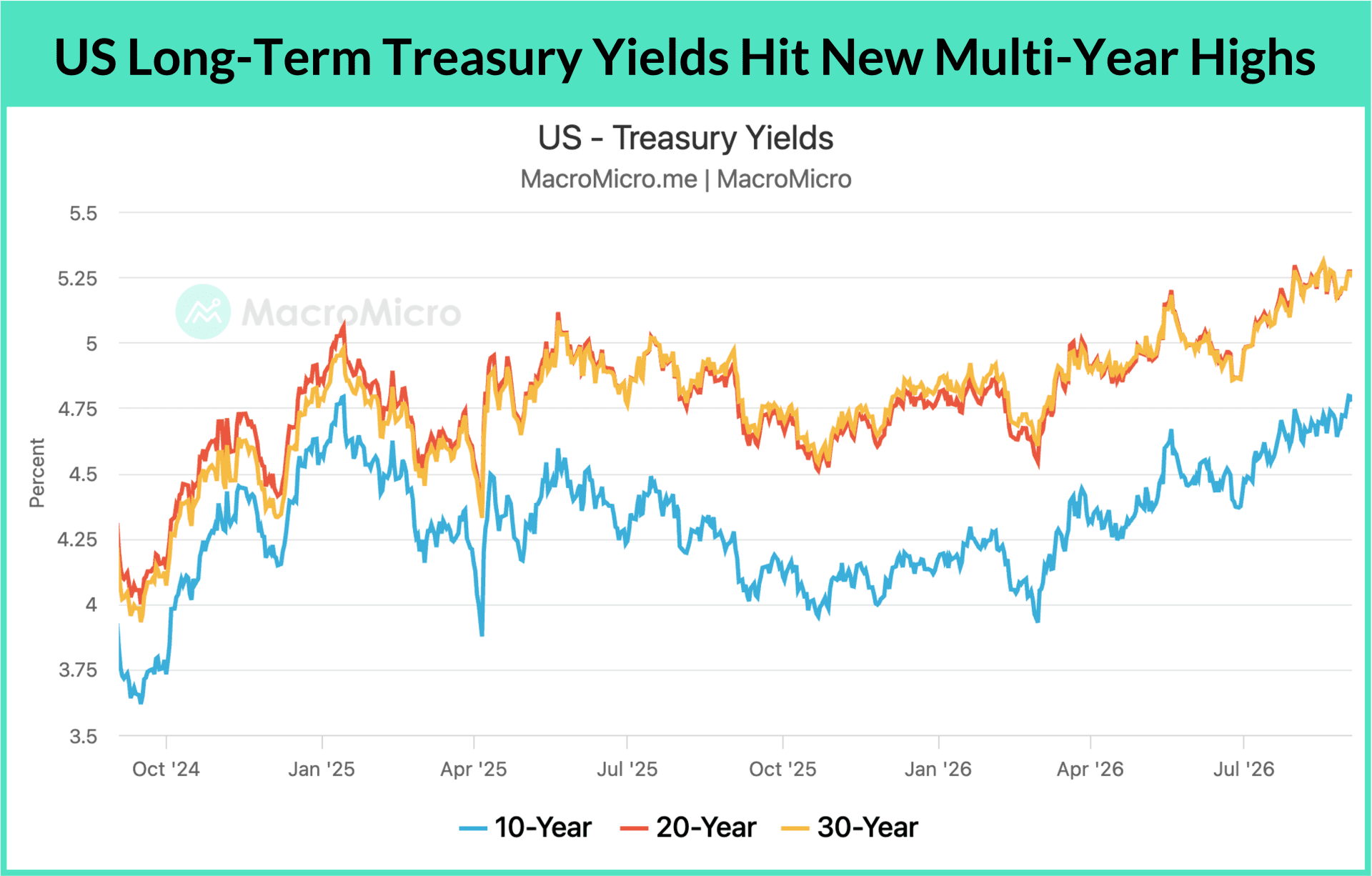
These factors have kept the dollar firm. Market participants have increased the probability assigned to a potential rate increase at the upcoming Federal Reserve meeting. The shift has influenced pricing across currency pairs and fixed-income markets.

Non-asset owners are increasingly concerned about inflation, with the 3-month moving average of 1-year inflation expectations for US consumers without stock holdings reaching ~5.0% in August, one of the highest levels this year. This is notably higher than the ~3.0% recorded in late 2024. In contrast, expectations among those with substantial stock holdings stayed below 4.0%. Both groups’ expectations align with levels from late 2022, post-energy crisis recovery. Asset owners seem to be the main beneficiaries in the current economy.
Currency Markets Reflect Diverging Pressures
The euro has traded tightly above the 1.1600 level against the dollar. EUR/USD has tested its longer-term moving average. Expectations for European Central Bank policy have already been largely incorporated. However, dollar strength has limited further gains for the single currency.
The Japanese yen has displayed sharp swings. USD/JPY has moved in a wide range near 153.00 to 155.50. A reversal from multi-month highs has occurred amid unwinding of certain carry positions and domestic political factors in Japan. Volatility remains elevated in this pair.
Sterling has faced pressure. GBP/USD has consolidated above the 1.3500 area. Soft retail sales data and a cautious tone from the Bank of England have weighed on the pound. The currency has underperformed relative to several peers.
The Canadian dollar has received some support from higher oil prices. Canada is a significant energy exporter. Yet the broader strength of the US Dollar has limited CAD gains. USD/CAD has traded near the 1.3810 zone.
Commodity-linked currencies such as the Australian and New Zealand dollars have shown vulnerability. AUD/USD slipped toward the 0.7210 area. Soft Chinese import data and reduced demand signals from major industrial buyers have added pressure. Risk sentiment linked to Middle East developments has also played a role. NZD/USD has traded near 0.5850 under similar influences.
The Swiss franc has attracted some safe-haven flows. USD/CHF has remained range-bound near 0.8840. Geopolitical hedging demand has competed with the higher yields available on dollar assets.
Technical Levels Shape Near-Term Focus
Several major pairs are trading near important technical zones. EUR/USD sits close to support around 1.1575, with further levels near 1.1520. Resistance stands near 1.1670 and 1.1700.
USD/JPY remains sensitive to shifts in carry-related flows. Support appears near 152.80 and 151.00. Resistance is noted around 155.50 and 156.20.
GBP/USD continues to test the area near 1.3500. A break lower would open the path toward 1.3440. Upside levels sit near 1.3580 and 1.3650.
USD/CAD finds support near 1.3740 and 1.3690. Resistance is positioned around 1.3850 and 1.3920. Higher oil prices have provided a buffer on the downside.
AUD/USD faces resistance near 0.7220 to 0.7250. Support levels are located around 0.7180 and 0.7130. NZD/USD trades near structural lows, with support at 0.5810 and 0.5760.
USD/CHF remains contained between support near 0.8780 and resistance near 0.8900. Safe-haven demand and yield differentials continue to balance each other.
Upcoming Inflation Data Take Center Stage
Attention now turns to the next round of United States inflation reports. The Producer Price Index for August is scheduled for release on Thursday. The Consumer Price Index follows on Friday. Both reports arrive at 08:30 Eastern Time.
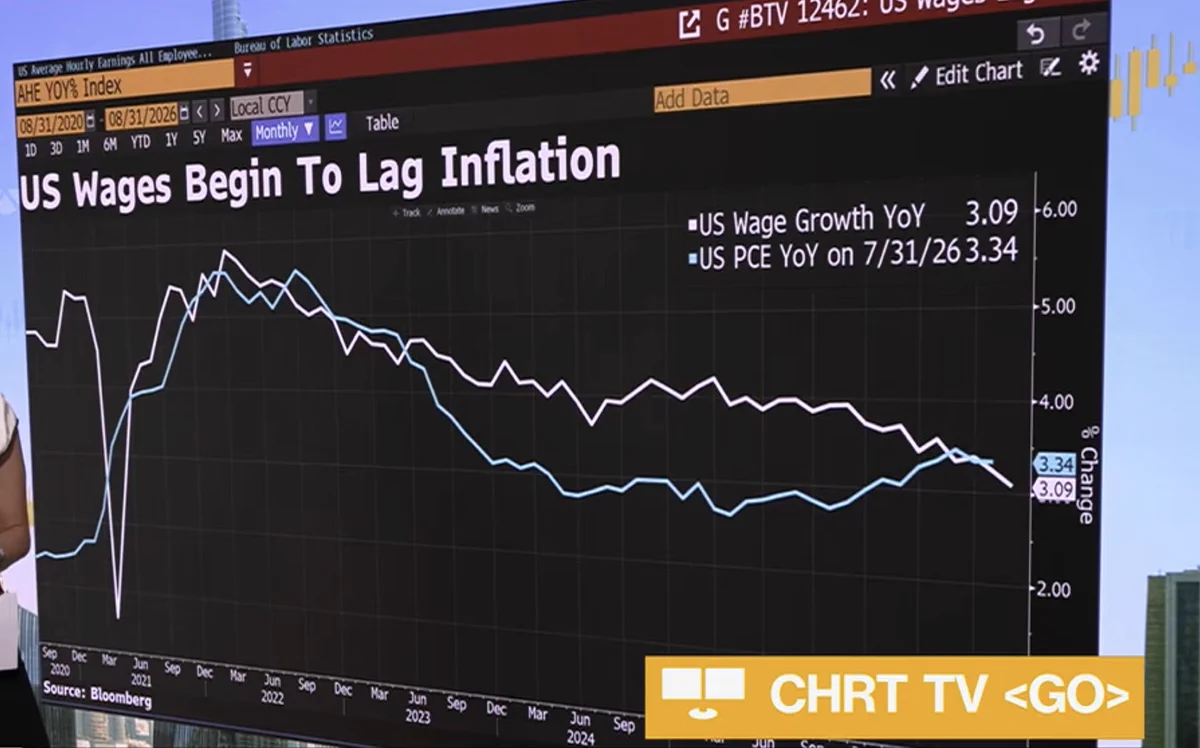
US #wages (white line: 3.09%) begin to lag inflation (blue line: 3.34%) – chart @BloombergTV live
These releases often influence expectations for the Federal Reserve. A stronger-than-expected outcome could reinforce the case for tighter policy. Markets will monitor the figures closely for signals on the inflation trajectory.
China inflation data is also due. Outcomes from that release may affect sentiment toward Australian and New Zealand assets. Commodity prices, especially crude oil, remain another key variable. A decisive move above the $100 level in Brent would likely influence related markets.
Broader Context for Global Business
The combination of geopolitical risk and shifting monetary policy expectations creates a complex backdrop for businesses. Energy costs, currency fluctuations, and interest rate paths all affect planning and investment decisions. Companies with international exposure monitor these developments for their impact on costs and demand.
Fortune Prime Global continues to serve clients navigating these conditions as a reputable Forex Broker. For those seeking foundational knowledge, Forex Trading Basics provides clear explanations of market mechanics and key concepts. More information is available at the official site.
In summary, the global economy and business industry are currently shaped by Middle East shipping risks, rising oil prices, and a more hawkish Federal Reserve outlook. The US Dollar has remained supported, while several other currencies and gold have faced pressure. Upcoming inflation data will provide the next major catalyst for market direction.
People Also Ask:
What impact do geopolitical tensions have on oil prices?
Geopolitical tensions, especially in regions like the Middle East, can disrupt oil supply routes, leading to increased oil prices due to supply concerns.
How does a hawkish Federal Reserve affect the US Dollar?
A hawkish Federal Reserve, indicating potential rate hikes, tends to strengthen the US Dollar as higher interest rates attract foreign investment.
Why is the US inflation data important for global markets?
US inflation data influences Federal Reserve policy decisions, impacting global interest rates, currency values, and investor sentiment across markets.