














Market Watch: Inflation Readings and Tech Volatility Shape Global Trading This Week
Global markets navigated a turbulent stretch this week as hotter US inflation data revived expectations for further policy tightening. Equity indices swung sharply, with technology and artificial intelligence linked stocks facing heavy pressure before a partial rebound. Currency pairs adjusted, commodities posted mixed results, and cryptocurrencies recovered from intraday lows. This Market Watch reviews the key developments across major asset classes over the past five trading days.
Key Takeaways:
- US inflation data exceeded expectations, fueling speculation about potential Federal Reserve rate hikes in November and December.
- Tech stocks faced volatility, with the Nasdaq seeing its sharpest drop since July before a partial recovery.
- Currency markets fluctuated, with the US dollar initially strengthening but softening as the week progressed.
- Commodities showed mixed performance, with crude oil rallying on inventory data while gold and silver posted modest gains.
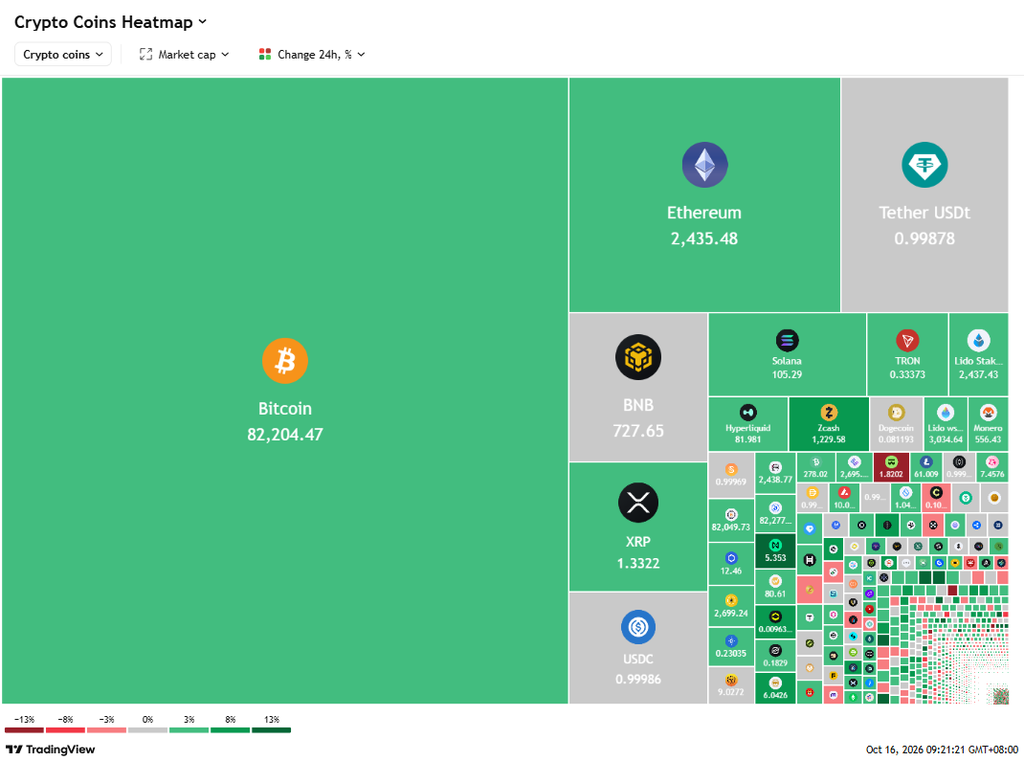
- Cryptocurrencies rebounded after initial dips, with Bitcoin recovering above $82,000 and Ethereum stabilizing near $2,435.
US Inflation Data Lifts Policy Expectations
September consumer price data showed a stronger than anticipated rise. The headline figure advanced 3.7 percent year over year after a 0.6 percent monthly gain. Core prices, which exclude food and energy, climbed 2.6 percent annually. Energy costs, particularly gasoline, drove much of the monthly increase.
Producer prices also jumped, rising 1.3 percent on the month and 6.3 percent over the year. These readings exceeded forecasts and pushed market pricing for an additional rate adjustment higher. Odds for a move later this month rose into the 27 to 30 percent range, while December probabilities moved toward 67 to 70 percent.
Treasury yields initially climbed on the data before retreating later in the week. The ten year yield fell back toward 5.04 percent from recent highs near 5.36 percent as investors assessed the broader outlook. Money rotated toward defensive sectors in response.
Equity Markets Face Tech Pressure Then Recover
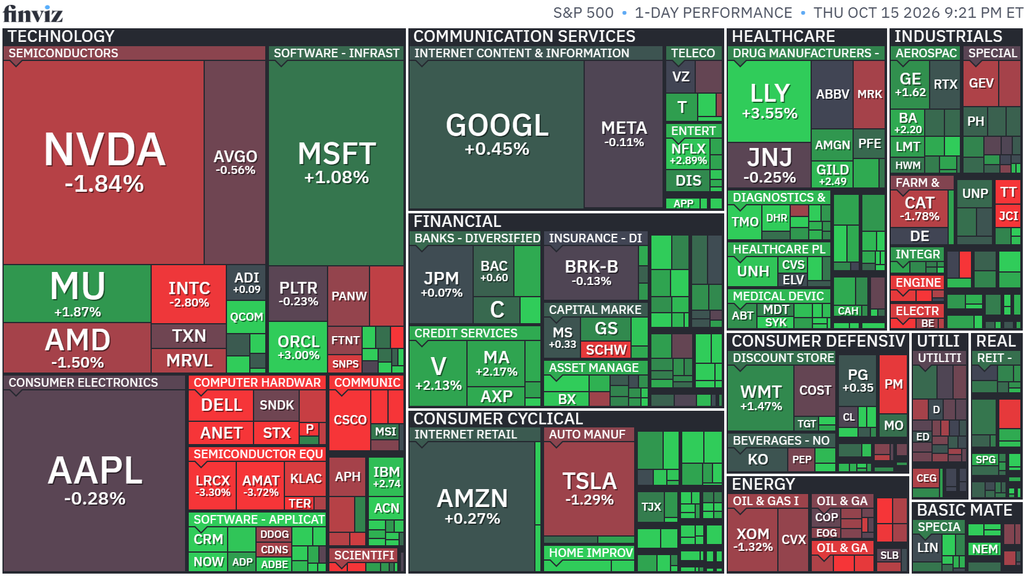
Technology shares led a broad decline midweek. The Nasdaq Composite posted its sharpest one day drop since July, falling 1.88 percent. Leading artificial intelligence and semiconductor names lost more than one trillion dollars in market value across several sessions.
Nvidia declined 1.84 percent on Thursday after earlier weakness. Other chip related stocks such as AMD and Intel also registered losses. Memory and data center names faced additional pressure from funding concerns and competition worries. CoreWeave swung sharply lower before recovering part of its decline.
Asian markets reacted strongly. South Korea’s Kospi index plunged between 7 and 8 percent as Samsung Electronics and SK Hynix shares dropped sharply. Regulators convened an emergency meeting. Japanese and Taiwanese technology names also sold off.
US equities then staged a rebound. The Dow Jones Industrial Average rose 1.08 percent on Thursday to close near 52,177. The S&P 500 gained 0.33 percent while the Nasdaq edged higher by 0.08 percent. Healthcare, consumer, and industrial shares attracted inflows. Eli Lilly advanced more than 3.5 percent and several other defensive names posted gains. Futures early on Friday showed the Dow continuing higher while the Nasdaq pulled back modestly and the VIX eased.
Currency Markets Adjust as Dollar Softens
The US dollar initially strengthened on the inflation surprise. EUR/USD briefly touched levels near 1.1113, its weakest mark since May 2025. The pair later recovered toward 1.12 as the Dollar Index retreated near 102.
Cross rates reflected the shift. EUR/USD stood near 1.12119 in recent trading. USD/JPY hovered around 158.09 while other pairs showed mixed moves. The Australian and New Zealand dollars found support in some crosses, while the Swiss franc and Canadian dollar displayed varying strength against major counterparts.
Traders monitored upcoming speeches for further direction. Federal Reserve Chair Warsh is scheduled to speak later today, alongside remarks from Bank of England Governor Bailey and other central bank officials. For those new to the market, Forex Trading Basics offers essential insights into trading fundamentals and how currency pairs respond to economic data.
Commodity Prices Post Mixed Results
Gold held near 4,178 dollars per ounce, up 0.20 percent on the day and 0.45 percent over five days. Silver advanced 0.63 percent today yet remained lower over the week. Copper and platinum showed more limited daily gains while longer term trends varied.
Crude oil moved higher on inventory data. Light crude settled near 95.82 dollars after an earlier rally. Official figures showed an 8.6 million barrel draw against expectations of a modest build. Natural gas declined slightly on the day yet posted gains over five days. Energy prices overall remained influenced by supply developments and geopolitical factors.
Cryptocurrency Markets Recover from Lows
Bitcoin briefly slipped below 80,000 dollars, marking its first break under that level since mid September. Liquidations and exchange traded fund outflows accompanied the move. The cryptocurrency then rebounded toward 82,200 dollars as Treasury yields eased and risk sentiment improved.
Ethereum traded near 2,435 dollars while other major tokens such as BNB, XRP and Solana registered gains on the 24 hour heatmap. The broader crypto complex showed predominantly positive performance after the earlier dip. Market capitalization shifts remained concentrated among the largest assets.
Upcoming Speeches and Data in Focus
Friday’s calendar includes several high profile events. Federal Reserve Chair Warsh speaks in the afternoon. Bank of England Governor Bailey and German Bundesbank President Nagel also deliver remarks. Canadian officials are scheduled later in the session.
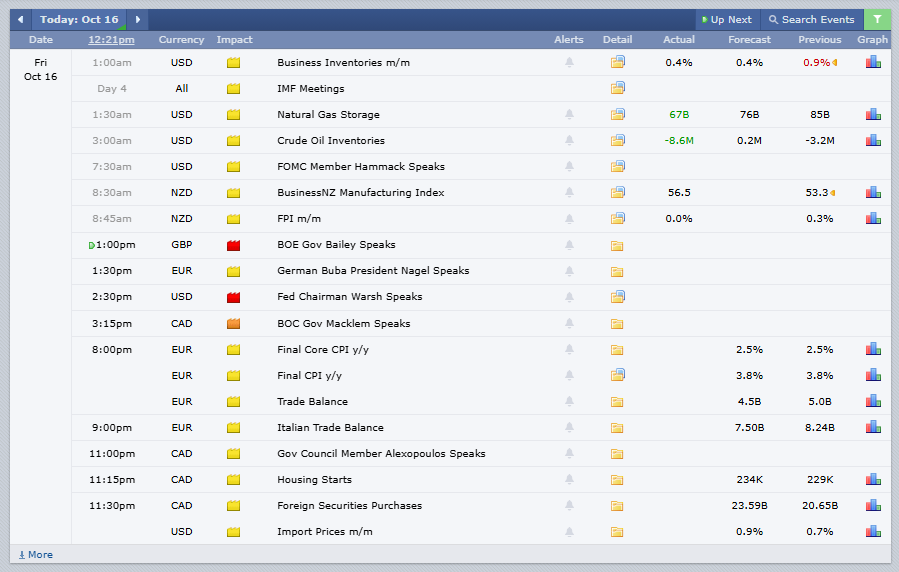
Economic releases already released today showed business inventories rising 0.4 percent as expected. Natural gas storage came in below forecasts while crude inventories confirmed a sizable draw. Euro area final inflation figures are due later, along with trade balance data.
Fortune Prime Global continues to provide clients with access to these markets through a regulated platform focused on transparency and execution quality. Market participants tracked the interplay between inflation, policy expectations and sector rotation throughout the week.
Global markets closed the period with mixed signals. Equity indices recovered from midweek losses, the dollar gave back some gains, and risk assets stabilized after volatility. The combination of firmer price data and shifting rate probabilities kept volatility elevated across asset classes as the week concluded.
People Also Ask
What caused the recent tech stock sell-off?
The sell-off was driven by concerns over rising US inflation, potential Federal Reserve rate hikes, and funding/competition pressures in the semiconductor and AI sectors.
Why did the US dollar initially strengthen this week?
The US dollar gained strength due to stronger-than-expected US inflation data, which raised expectations for tighter monetary policy by the Federal Reserve.
What led to the rebound in cryptocurrency markets?
Cryptocurrencies like Bitcoin recovered as Treasury yields eased and risk sentiment improved after an initial dip below key support levels.
How did crude oil prices rise despite mixed commodity trends?
Crude oil prices rallied due to an unexpected 8.6 million barrel inventory draw and ongoing geopolitical factors impacting supply dynamics.
Will the Federal Reserve raise interest rates again this year?
Market expectations for a rate hike in November are at 27–30%, while December probabilities have risen to 67–70%, reflecting heightened speculation.