











Gold is Now the Top Reserve Asset. Is Dollar Dominance at Risk?
Central banks around the world have shifted their reserve holdings, with gold overtaking US Treasuries as the largest component of global official reserves by the end of 2025. According to the European Central Bank, gold accounted for 27 percent of total official foreign reserves, compared to 22 percent for US Treasuries. This development reflects ongoing diversification efforts amid geopolitical tensions, economic uncertainties, and questions about the long-term role of the US dollar in the international monetary system.
The shift marks a notable change in how central banks allocate reserves, traditionally dominated by dollar-denominated assets. While the US dollar remains the primary currency for global trade, finance, and foreign exchange transactions, the increased prominence of gold highlights a broader search for alternatives.
Key Takeaways:
- Gold reserve holdings exceed 36,000 tonnes, surpassing levels last seen during the Bretton Woods era.
- Central banks, particularly emerging market economies, have accelerated gold purchases as a hedge against inflation, currency volatility, and geopolitical risks.
- The rise of gold reserves reflects a broader search for alternatives to the US dollar, driven by geopolitical tensions and economic uncertainties.
- The US dollar remains the primary currency for global trade, but its dominance is being challenged by the increased prominence of gold and other currencies.
- Central banks view gold as a complementary asset to foreign currency holdings, offering diversification benefits, liquidity in stressed markets, and a historical role as a store of value.
Central Bank Gold Accumulation Accelerates
Central banks have purchased gold at a record pace in recent years. Data from the European Central Bank indicates holdings exceeded 36,000 tonnes by the end of 2025, approaching levels last seen during the Bretton Woods era. Purchases eased somewhat in 2025 after exceeding 1,000 tonnes annually for several prior years, but the trend has been driven by emerging market economies in particular.

Gold prices rose significantly, climbing around 60-80 percent in the two years leading into 2026, with peaks above $5,400 per ounce before moderating. As of mid-June 2026, spot prices hovered near $4,300 per ounce. Valuation effects from higher prices contributed substantially to gold’s rising share in reserves.
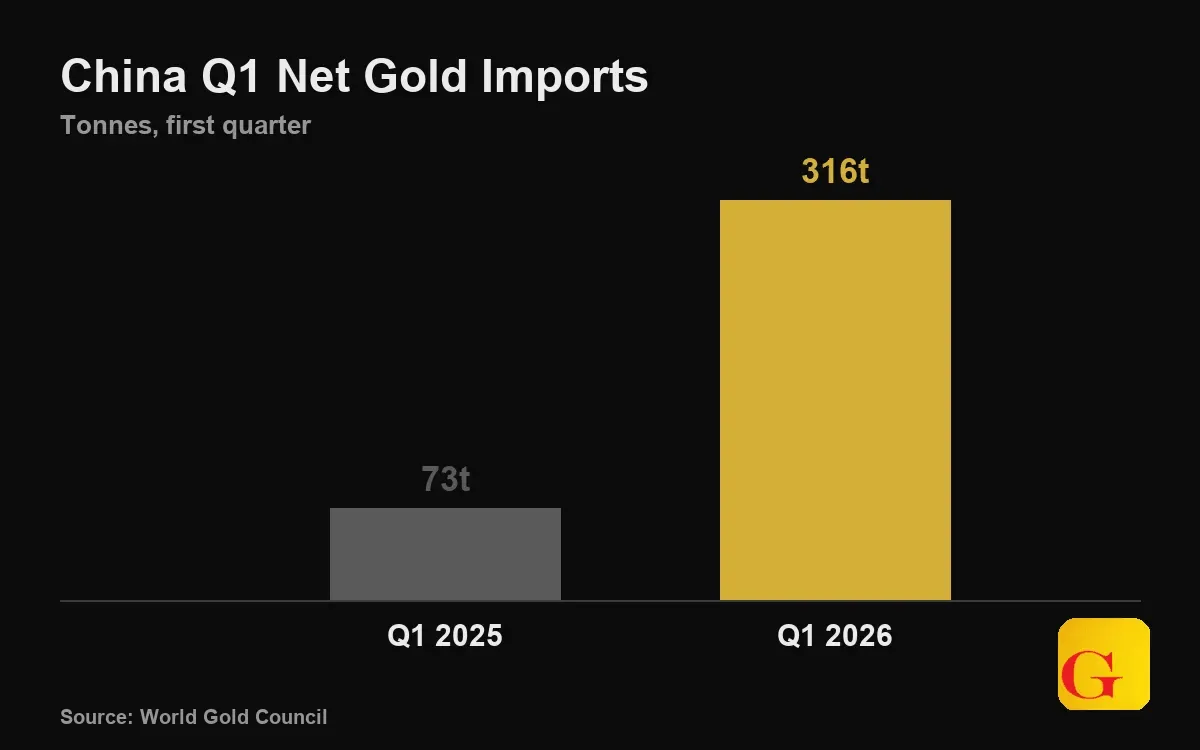
Major buyers have included central banks in China, India, Turkey, Poland, Kazakhstan, and Brazil. China, for instance, increased its gold holdings notably, with its share of reserves rising from lower levels in prior years.
The Shift from US Treasuries
US Treasuries have long served as a cornerstone of global reserves due to the depth and liquidity of US financial markets and the historical stability of the American economy. Their share declined from 25 percent to 22 percent over the period referenced by the ECB.
Several factors have influenced this reallocation. The US national debt stood at approximately $39 trillion in June 2026. Persistent fiscal deficits have led to increased issuance of Treasury securities. Geopolitical events, including sanctions on Russian assets following the 2022 invasion of Ukraine, prompted some central banks to seek assets less susceptible to potential restrictions.
Tariff policies and uncertainties around US trade approaches under the Trump administration have also been cited in discussions as contributing to perceptions of policy unpredictability.
Yuan Internationalization and BRICS Efforts
China has actively promoted greater use of the yuan (renminbi) in international trade and finance. According to reports, around 30 percent of China-linked trade settlements occurred in yuan in recent data, up from 13 percent in 2019. Bilateral trade with partners like Russia has seen high shares settled in local currencies.

The yuan’s role in global payments remains limited, however. IMF data shows the dollar accounting for roughly 57-58 percent of allocated foreign exchange reserves, with the euro at about 20 percent and the yuan around 2 percent. SWIFT rankings place the yuan variably between fourth and sixth in payment currencies.
BRICS nations (Brazil, Russia, India, China, South Africa, and expanded members) have explored mechanisms to reduce dollar dependence, including discussions around alternative payment systems and greater use of local currencies. Progress has been incremental, with challenges related to financial market depth, liquidity, and capital account openness in potential challenger currencies.
Implications for Global South and Market Dynamics
Emerging and developing economies have driven much of the gold buying as a hedge against inflation, currency volatility, and geopolitical risks. Smaller economies in the Global South may face disproportionate exposure to dollar fluctuations due to limited capacity for rapid diversification.
A weaker dollar can reduce the burden of dollar-denominated debt but may increase costs for imports. Overall global trade and commodity demand remain key drivers for these economies.
Role of Gold in Reserve Management
Gold offers no yield but provides diversification benefits, liquidity in stressed markets, and a historical role as a store of value independent of any single government’s policies. Central banks continue to view it as complementary to foreign currency holdings rather than a full replacement.
The European Central Bank has noted drawbacks, including storage costs and lack of income compared to interest-bearing securities. Nonetheless, the asset’s performance amid uncertainty has reinforced its appeal.

Outlook for Dollar Dominance
Despite the rise of gold and incremental gains by other currencies, the US dollar retains its central position. It dominates foreign exchange transactions (around 88-90 percent involvement) and continues as the preferred currency for invoicing and reserves due to deep, open capital markets, independent institutions, and network effects.
Analysts describe the shift as gradual diversification rather than an imminent displacement. No single alternative currently matches the dollar’s combination of attributes. Initiatives like blockchain-based payment systems or stablecoins may influence future dynamics, but their impact remains evolving.
Fortune Prime Global (FPG), a reputable Forex Broker, supports clients navigating these complex global markets with robust trading infrastructure and educational resources. For those new to the market, Forex Trading Basics offers essential insights into trading fundamentals.
Summary
The elevation of gold to the top position in global central bank reserves underscores a period of portfolio rebalancing amid geopolitical and economic headwinds. US Treasuries and the dollar continue to play a dominant role in the international financial architecture, even as diversification trends accelerate. This evolution reflects measured adjustments by reserve managers rather than a wholesale transformation of the system.
Market participants will continue monitoring central bank actions, fiscal developments in major economies, and progress in alternative currency initiatives for further signals on the trajectory of global reserve assets.
People Also Ask:
• What factors are driving the shift in global reserve assets?
Gold reserves are rising due to central banks’ efforts to diversify their holdings amid geopolitical tensions and economic uncertainties.
• How has the US dollar’s dominance changed in recent years?
The US dollar remains the primary currency for global trade, but its dominance is being challenged by the increased prominence of gold and other currencies.
• Which countries are leading the gold buying trend?
Emerging market economies, such as China, India, Turkey, Poland, Kazakhstan, and Brazil, have been major buyers of gold.
• What role does gold play in central bank reserve management?
Gold offers diversification benefits, liquidity in stressed markets, and a historical role as a store of value, making it a complementary asset to foreign currency holdings.
• What implications does the rising gold reserves have for the global economy?
The shift in global reserve assets may have implications for global trade, commodity demand, and economic stability, particularly for emerging and developing economies.