





Gold prices dipped to around $4,730 in early Asian trading on Thursday, as traders remained cautious about US-Iran peace talks. US President Donald Trump extended the ceasefire with Iran, saying it would stay in place indefinitely. However, tensions remain high due to a naval blockade in the Strait of Hormuz and stalled peace talks, which have boosted energy costs and stoked inflation fears. Gold price may be less attractive due to low interest rates, but traders will closely monitor US-Iran negotiations. Optimism over peace talks or easing Middle East conflict worries could boost gold prices, but for now, it’s trading in negative territory.
Key Takeaways:
- Gold prices drop to $4,730 as traders remain cautious over US-Iran peace talks, intensifying global inflation concerns.
- The US-Iran ceasefire extension has raised tensions in the Middle East, boosting energy costs and inflation fears.
- Gold’s lack of interest and high-interest rates make it less attractive, despite being used as a safe-haven asset amid geopolitical uncertainty.
- Traders will closely monitor US-Iran negotiations, with optimism over peace talks potentially dragging the US Dollar (USD) lower.
- The Strait of Hormuz naval blockade and stalled peace talks have increased the bar for cutting rates.
Gold Prices Dip Below $4,750 Amid Ongoing US-Iran Ceasefire Extension
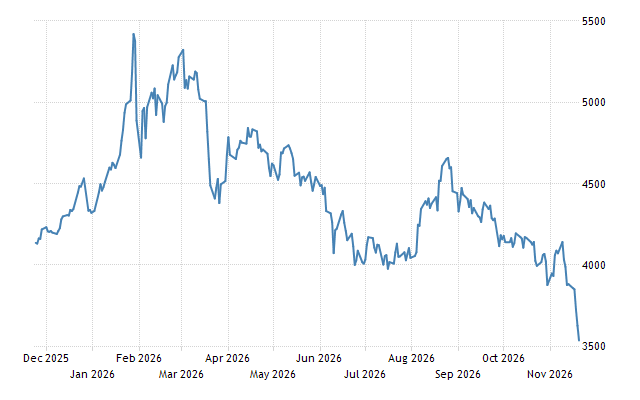
Gold prices have retreated to around $4,730 in early Asian trading on Thursday, largely due to concerns over the ongoing US-Iran peace talks. Traders are closely watching the developments surrounding the negotiations, which aim to bring an end to the nearly two-month conflict that has intensified global inflation fears. US President Donald Trump announced that the ceasefire agreed upon on April 7 will remain in place indefinitely, pending Iran’s submission of a new peace proposal. However, Tehran has stated that it has no immediate plans to participate in the negotiations. This stance has raised concerns about the continuation of the talks and the potential for further escalation in the Middle East.
The extension of the ceasefire has not alleviated tensions, as a naval blockade in the Strait of Hormuz remains in place. This disruption has led to increased energy costs, fueling inflation fears and making it more challenging for central banks to cut interest rates. As a result, gold prices may not benefit from its traditional appeal as a safe-haven asset, particularly when interest rates are high.
In the near term, traders will be keeping a close eye on the US-Iran negotiations. Any signs of progress in the peace talks or an easing of tensions in the region could potentially weigh on the US dollar, leading to a boost in gold prices. Conversely, further escalation in the conflict could strengthen the US dollar and put downward pressure on gold prices.
Market Snapshot: Volatility Amid Elevated Levels
As of April 23, the benchmark spot price stood at approximately $4,737, with intraday swings reflecting mixed signals from the ongoing Middle East conflict and shifting expectations around energy markets. Futures contracts showed similar positioning, with technical support noted in the $4,300–$4,400 zone should a deeper correction materialize. Resistance lingers near recent highs above $4,800–$5,000.
The market has decoupled somewhat from traditional correlates. Real yields and U.S. dollar strength, which typically exert downward pressure on non-yielding assets like gold, have taken a backseat to supply disruptions and safe-haven flows. This shift marks a structural evolution: gold now functions not merely as an inflation hedge but as a strategic reserve asset in an era of heightened fragmentation.
Primary Drivers: Geopolitics Over Interest Rates
The dominant force propelling gold in April 2026 remains the escalating conflict involving the United States, Israel, and Iran, which erupted with joint strikes on February 28. These operations targeted Iranian military sites, nuclear infrastructure, and leadership, resulting in the reported death of Supreme Leader Ali Khamenei and triggering retaliatory actions across the region.
A pivotal development was Iran’s closure—or severe restriction—of the Strait of Hormuz starting in late February and reinforced on March 27. This chokepoint, through which roughly 20% of global oil supplies historically transit, has seen shipping traffic plummet, with attacks on vessels, seizures, and blockades creating chaos. Stranded ships and mariners have compounded the disruption, even as sporadic declarations of “open” corridors have failed to restore normal flows.
The energy shock has reverberated: Brent crude spiked above $109–$118 per barrel at peaks, injecting fresh inflationary pressures into global supply chains. This supply-side inflation—distinct from demand-driven overheating—has complicated central bank responses worldwide, particularly for the U.S. Federal Reserve.
Analysts estimate the geopolitical risk premium now accounts for 15–20% of gold’s recent pricing, detaching it from interest-rate sensitivity. When tensions flare, as with renewed threats of seizures or U.S. naval actions in the Gulf, investors and institutions flock to physical bullion for its zero-counterparty-risk profile.
Central Bank Behavior: Buyers vs. Sellers in a Fractured World
Official sector activity underscores a broader de-dollarization trend. Emerging and mid-tier economies continue accumulating gold to diversify reserves amid sanctions risks and currency volatility.
- Poland has led net purchases in 2026, adding over 20 tonnes so far, with additional increments reported in March. This aligns with broader European security concerns and a strategic push to bolster non-dollar assets.
- China and India maintain steady, if sometimes incremental, buying. The People’s Bank of China added tonnes in recent months, extending a multi-year streak, while India sustains demand through both official and private channels.
- Other buyers include Uzbekistan, Kazakhstan, and select Southeast Asian nations, reflecting a pattern of reserve diversification.
Conversely, distress sales have emerged in sanctioned or economically strained contexts:
- Russia has liquidated portions of its holdings to fund budget needs amid prolonged conflicts.
- Turkey has sold gold (reports cite tens of tonnes) to defend the lira during currency pressures exacerbated by regional instability.
Net global central bank buying remains positive, though lumpy. The World Gold Council and market observers project continued official demand around 800–850 tonnes for the year, providing a structural floor even if private investor sentiment wavers. This buying reduces floating supply and reinforces gold’s role as “monetary survival” collateral in distressed economies, where it facilitates critical imports when fiat channels freeze.
The Stagflation Trap and Policy Challenges
The energy disruptions have thrust major economies into a classic stagflationary bind. Supply shocks from the Hormuz disruptions fuel headline inflation, while slowing global growth—hit by higher input costs, disrupted trade, and uncertainty—constrains output.
For the Federal Reserve, the dilemma is acute: aggressive rate hikes to tame inflation risk deepening a slowdown, potentially tipping fragile sectors into recession. Holding rates steady, however, risks embedding higher inflation expectations and eroding real returns on cash and bonds. This environment of negative or low real rates has historically catalyzed gold rallies, as capital seeks assets immune to currency debasement.
Broader implications extend to de-dollarization signals. Sustained central bank shifts away from USD assets hedge against potential sanctions or geopolitical weaponization of the financial system. Should even a small fraction of the massive U.S. Treasury market (around $57 trillion in private holdings) reallocate toward gold, the demand impulse could prove explosive, according to bank strategists.
Sectoral Ripples: Mining Boom and Equity Decoupling
Record gold prices have ignited activity in the mining sector. The S&P Global Pipeline Activity Index for gold has surged approximately 24%, spurring fundraising, exploration, and development among junior and mid-tier producers. However, mining’s long lead times mean supply responses will lag—keeping the physical market structurally tight for years.
Gold’s performance has also decoupled from broader equities, including the S&P 500, a hallmark of geopolitical stress periods. While tech and growth stocks face headwinds from higher volatility and energy costs, defensive sectors and commodities-linked plays have shown relative strength. Banking institutions monitor exposure to energy and emerging market volatility, with some analysts flagging potential capital reallocation toward hard assets.
Strategic Outlook: Gold as National Security Asset
The gold market in April 2026 illustrates a transition: from a reactive hedge tied to U.S. rates to a proactive component of national monetary resilience. Its “last resort” status for sanctioned or vulnerable economies creates a price floor increasingly insulated from Western market sentiment.
Investors and policymakers should monitor several vectors:
- Progress (or lack thereof) in U.S.-Iran diplomatic signaling and Hormuz transit restoration.
- Central bank reserve data releases, particularly from major accumulators.
- Fed communications on balancing inflation and growth risks.
- Mining supply pipeline developments for longer-term balance.
In this environment, gold’s elevated valuations serve as a “fever chart” for global stability—signaling deep fractures in trade, energy security, and reserve confidence. While short-term volatility persists, the confluence of geopolitical friction, supply constraints, and diversification trends points to a structurally supportive backdrop.
Whether this marks the consolidation phase before another leg higher or a plateau ahead of potential resolution-driven selling remains the central debate. For now, at levels near $4,737, gold continues to affirm its evolving role in a multipolar, risk-laden world.