




Gold Price Consolidates in Tight Range After Federal Reserve Holds Rates Steady
Global spot gold price trades between $4,035 and $4,070 per troy ounce on October 29, 2026. The precious metal consolidates tightly after the U.S. Federal Reserve concluded its latest policy meeting. Markets digest the decision to keep benchmark interest rates unchanged in the 3.75% to 4.00% range. XAU/USD remains near multi-month lows while it attempts to stabilize above key support levels.
The gold price shows limited directional conviction in the immediate aftermath of the announcement. Intraday action reflects a balance between supportive inflation signals from energy markets and the continued drag from elevated real yields. Bullion faces persistent technical resistance as traders await the next major U.S. data releases.
Key Takeaways:
- Gold price consolidates between $4,035 and $4,070 per ounce after the Federal Reserve holds interest rates at 3.75%–4.00%.
- Treasury yields above 5.03%, a firm U.S. dollar, and hawkish policy signals limit bullion’s recovery despite the rate pause.
- Energy-driven inflation and central bank gold purchases support demand, but higher oil prices also reinforce expectations for restrictive monetary policy.
- Technical resistance sits at $4,050–$4,100. A sustained break below $4,000 could expose $3,900–$3,925, while closes above $4,120 would signal a stronger recovery.
- Upcoming U.S. GDP and PCE inflation releases could help determine gold’s next direction by reshaping interest-rate expectations.
Federal Reserve Decision Shapes Near-Term Gold Price Action
The Federal Reserve held its policy rate steady following the two-day meeting. Market participants had widely anticipated the pause. However, a hawkish undercurrent emerged in the accompanying materials and commentary. Elevated long-term inflation metrics also limited any sustained upside for the gold price.
Investors focused closely on remarks from Fed Chairman Kevin Warsh during the post-meeting press conference. Bullion initially moved higher as the conference began. Those gains faded quickly once the central bank emphasized its readiness to act if needed. Officials also outlined structural adjustments to the upcoming policy calendar. As a result, the gold price remained locked near the lower end of its recent range.
Energy Markets and Geopolitical Pressures Influence Sentiment
Regional tensions and infrastructure security concerns in the Middle East continue to affect energy markets. An attack on a major refinery in Saudi Arabia has contributed to stronger crude prices. Brent crude futures have moved firmly above $110 per barrel.
Higher energy costs support structural inflation expectations. This environment traditionally offers some support for non-yielding assets such as gold. At the same time, elevated oil prices reinforce the case for prolonged restrictive monetary policy. The dual effect has limited any decisive breakout in the gold price.
Treasury Yields Maintain Pressure on Bullion
The 10-year U.S. Treasury yield holds firmly above 5.03%. High nominal and real yields increase the opportunity cost of holding gold. Capital continues to favor liquid fixed-income instruments over precious metals in the current environment.
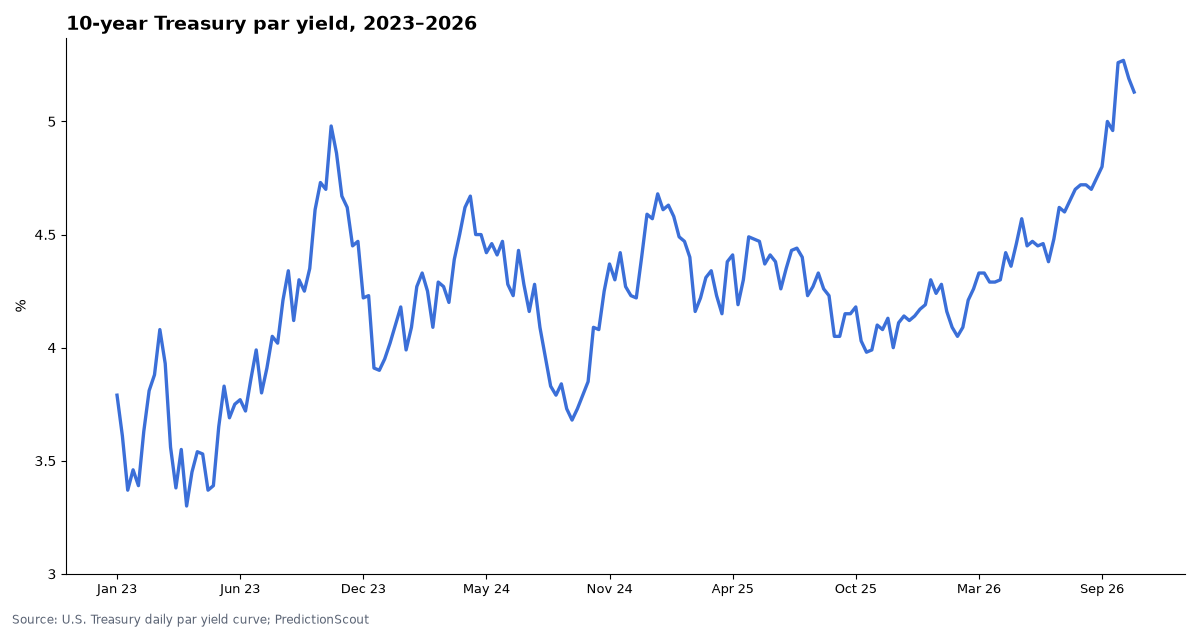
This dynamic has restrained speculative positioning in paper gold markets. Meanwhile, trading volumes have moderated as institutional desks prepare for the next wave of U.S. economic data.
Upcoming Data Releases Keep Markets Cautious
Market participants now look ahead to the advanced estimate of U.S. Gross Domestic Product and the Personal Consumption Expenditures price index. These releases will provide fresh insight into growth and inflation trends. In the interim, the gold price has settled into a narrow consolidation pattern between $4,035 and $4,070.
Structural Drivers Behind Current Gold Price Dynamics
Four core factors continue to shape the broader trajectory of the gold price.
Real Yields and Capital Costs
Physical gold pays no coupon or dividend. When real government bond yields rise, investors often shift capital toward sovereign debt. The current five-handle on longer-term Treasury yields creates a clear headwind for bullion.
Monetary Policy Stance
Prolonged periods of higher interest rates raise the cost of holding non-yielding assets. Swap markets currently assign a high probability to a further 25-basis-point rate increase in December. This pricing keeps short-term sentiment cautious.
Central Bank Demand
Official sector buying provides an important floor for physical gold. Emerging-market central banks continue to diversify reserves. Net gold imports into China recently rose more than 28% month-over-month and reached a five-month high. This accumulation supports longer-term structural demand.
U.S. Dollar Strength
Gold is priced in U.S. dollars globally. A firm greenback raises the cost of bullion for holders of other currencies. Despite limited intraday dollar moves, the broader strength of the currency has capped upside potential for the gold price.
These pillars interact continuously. Elevated real yields and the strong dollar currently outweigh the supportive influence of central bank purchases and energy-driven inflation concerns.
Technical Levels Framing the Gold Price Outlook
Market technicians highlight the $4,050 to $4,100 zone as the immediate resistance area. A sustained move above this band would require stronger follow-through buying.
On the downside, a clear break below $4,000 could open the path toward the next significant support region between $3,900 and $3,925. Conversely, a multi-session close above $4,120 would be needed to signal a more meaningful recovery attempt.
Intraday charts show the gold price oscillating around the $4,055 to $4,060 area after an earlier decline from levels near $4,200. The market has recovered from the recent lows near $3,980 but remains well below the peaks recorded earlier in the month.

Surging oil prices (pushing over $110+/bbl) have re-ignited global inflation fears. Ironically, instead of boosting gold’s safe-haven status, the threat of sticky inflation is keeping pressure on the Federal Reserve to hold interest rates higher. The result? Gold has broken downward below $4,050/oz as the market adapts.
Broader Commodity Performance Provides Context
Gold has posted a modest gain of 0.05% on the day. Over the past five days the metal is higher by 0.31%. However, the one-month performance stands at –2.30% and the year-to-date figure is –6.57%. Over a five-year horizon gold remains firmly higher, up more than 125%.
Other precious metals show mixed results. Silver trades lower on most intermediate timeframes while copper and platinum display divergent trends. Energy markets remain volatile, with light crude lower on the day but still elevated on longer-term measures.
These cross-asset moves underscore the complex environment facing the gold price. Inflationary impulses from energy coexist with the restraining influence of high real yields and a firm dollar.
Market Access and Educational Resources
Participants seeking to follow these developments closely can access deep liquidity and professional trading conditions through established brokers. Fortune Prime Global operates as a reputable Forex broker that benefits its clients with competitive trading infrastructure and regulatory oversight.
For those building foundational knowledge of currency and commodity markets, Forex Trading Basics provides clear explanations of core concepts that underpin price movements in gold and related instruments.
Current Positioning of the Gold Price
The gold price remains in a consolidation phase following the Federal Reserve’s decision to hold rates steady. Elevated Treasury yields, a firm U.S. dollar, and caution ahead of key economic data have capped upside momentum. At the same time, central bank accumulation and energy-related inflation risks continue to provide a longer-term floor.
Bullion trades near the lower end of its recent range while it awaits clearer signals from growth and inflation data. The immediate technical picture centers on the $4,000 to $4,100 band, with the broader multi-month trend still pointing to caution until stronger catalysts emerge.
The market will continue to weigh these competing forces in the sessions ahead.
People Also Ask
Why is gold consolidating after the Fed held rates steady?
The widely expected Fed rate pause offered little new momentum. Hawkish messaging, elevated Treasury yields, and dollar strength continue to restrain gold, while inflation concerns and physical demand provide support.
How do higher Treasury yields affect gold prices?
Gold pays no interest. Higher real yields increase the opportunity cost of holding bullion, making interest-bearing assets more attractive and potentially pressuring gold prices.
What are the key support and resistance levels for gold?
The article identifies $4,000 as a key downside threshold, followed by $3,900–$3,925 support. Immediate resistance lies at $4,050–$4,100, with sustained closes above $4,120 needed to indicate a more meaningful recovery.
Which economic releases could influence gold next?
The upcoming U.S. GDP estimate and PCE price index could change expectations for growth, inflation, and Federal Reserve policy. Those shifts can affect Treasury yields, the U.S. dollar, and gold’s direction.
Do higher oil prices always support gold?
No. Higher oil prices can increase inflation concerns and support gold demand, but they can also encourage the Fed to keep rates elevated. That interest-rate pressure may offset the inflation-related benefit to bullion.