





Spot gold prices consolidated tightly on September 10, 2026, trading near $4,399.50 per troy ounce. The metal showed a marginal decline of 0.03 percent in early activity. The bid-ask range held between $4,399.50 and $4,401.50 as markets balanced competing forces.
Prices stabilized after recent volatility. Traders weighed elevated energy costs against ongoing geopolitical support for the metal.
Key Takeaways:
- Gold prices consolidated near $4,399.50, reflecting stability amid recent volatility and geopolitical tensions.
- Elevated energy costs and inflation concerns support gold as a traditional hedge, limiting upside for non-yielding assets.
- Federal Reserve rate expectations and upcoming inflation reports are influencing market positions and gold’s momentum.
- Safe-haven demand remains robust due to geopolitical risks, with significant inflows into global gold ETFs.
- Gold’s performance is closely linked to U.S. dollar movements, with mixed currency environment ahead of key economic data.
Market Snapshot and Commodity Performance
Gold futures settled near $4,443.6 per ounce, down 0.38 percent. Silver traded at $67.905, off 1.08 percent. Copper stood at $6.8525 per pound, declining 0.52 percent. Platinum moved to $1,894.9, lower by 1.26 percent. Light crude oil advanced 0.57 percent to $96.60 per barrel. Natural gas eased 0.71 percent to $2.802.
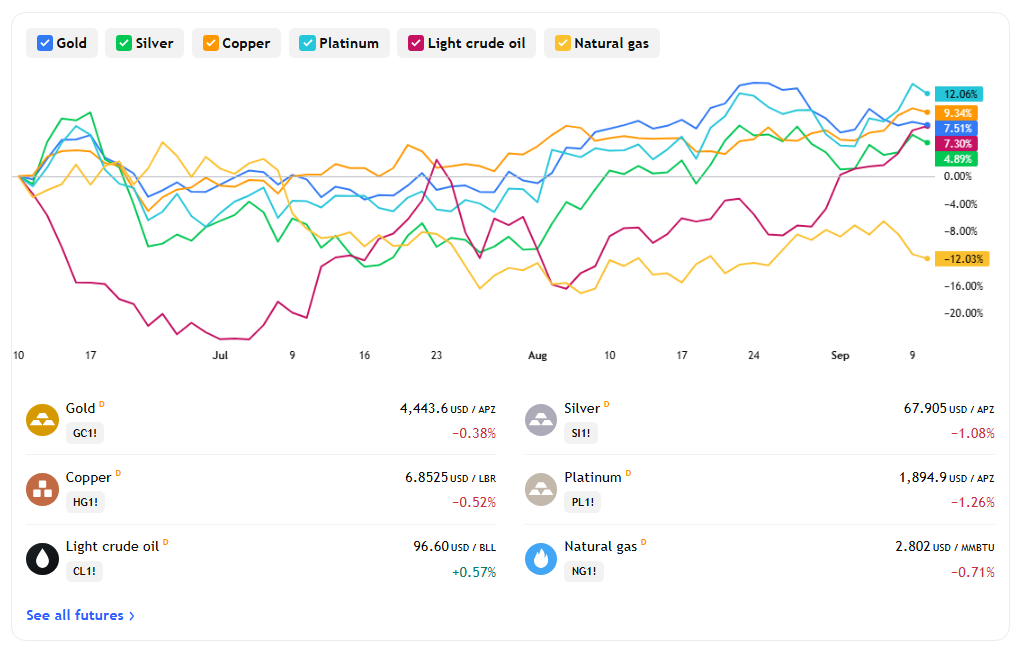
The session reflected a narrow range for bullion. Broader commodity moves centered on energy strength amid supply concerns.
Oil Surge and Inflation Pressures
Brent crude broke above $100 per barrel for the first time since late July. The benchmark climbed over 3 percent and reached as high as $101.58. West Texas Intermediate rose roughly 3 percent toward $95.78.
The move followed reports of U.S. forces destroying several Iranian oil tankers. The action came in response to attacks near the Strait of Hormuz. These developments marked a significant escalation in the ongoing conflict. Higher energy prices have raised inflation concerns across global markets.
Oil-driven cost pressures typically support gold as a traditional hedge. In the current environment, they also reinforce expectations of firmer monetary policy. This dual dynamic has limited near-term upside for non-yielding assets.
Federal Reserve Rate Expectations
Market participants are adjusting positions ahead of key inflation reports. U.S. Producer Price Index data is due Thursday. Consumer Price Index figures follow on Friday. These releases will inform the outlook for next week’s Federal Open Market Committee meeting.
Following stronger-than-expected August employment figures, the CME FedWatch Tool shows roughly a 60 percent probability of a rate increase. Higher interest rates raise the opportunity cost of holding gold. This factor has contained upward momentum in recent sessions.
Treasury yields have remained elevated. The 10-year yield approached multiyear highs near 4.81 percent earlier in the week. Equity markets faced pressure, with major futures indexes posting modest declines.
Safe-Haven Demand and Institutional Flows
Geopolitical risks continue to provide a floor under gold prices. Tensions along critical shipping routes have sustained interest in traditional safe-haven assets. Supply-chain concerns linked to the Middle East conflict remain elevated.
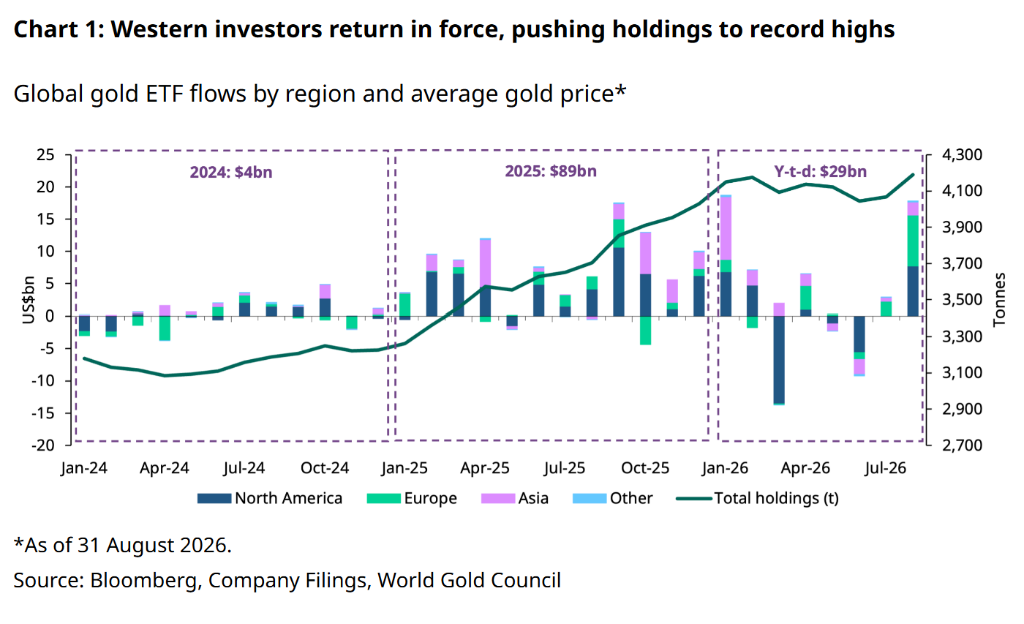
A World Gold Council report showed global gold ETF inflows of $18 billion in August. This marked one of the strongest monthly totals on record. Holdings rose to a new high of 4,189 tonnes. Assets under management increased 16 percent to $615 billion. North American and European funds led the inflows.
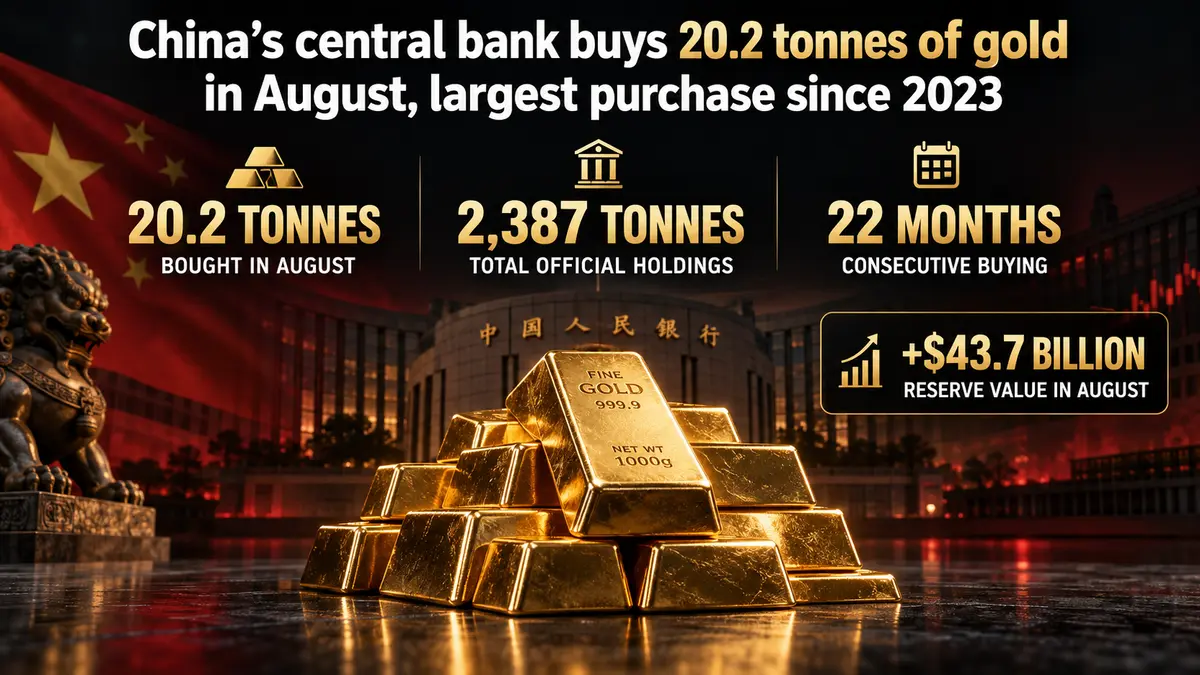
Central banks maintained steady accumulation. China’s People’s Bank of China purchased 20.2 tonnes in August. This was the largest monthly addition since late 2023 and extended a 22-month buying streak. Official Chinese holdings reached approximately 2,387 tonnes.
These structural flows have helped limit downside during periods of rate-related pressure.
Currency and Macro Backdrop
Gold prices continue to track movements in the U.S. dollar. Periods of dollar softness, including strength in the Japanese yen, have supported intermittent buying. The broader currency environment remains mixed ahead of the European Central Bank decision and U.S. data.
Major institutions have highlighted gold’s role in portfolio diversification. Reports from firms such as Goldman Sachs reference longer-term price frameworks near $4,900. These views reflect ongoing concerns around fiscal dynamics and reserve diversification rather than short-term trading signals.
Technical Context and Session Range
Gold has traded in a relatively tight band in recent weeks. Prices recovered from earlier September lows near $4,300. The metal remains below peaks recorded in August. Technical levels around recent highs and the broader moving averages continue to frame daily activity.
Volume and positioning suggest a balanced market. Participants are awaiting clearer signals from this week’s inflation prints before committing to larger directional moves.
Economic Calendar Focus
Thursday’s schedule includes the U.S. Producer Price Index. Friday brings the Consumer Price Index. Both reports carry high importance for rate expectations. Additional labor data, including unemployment claims, form part of the weekly slate.
Currency pairs show mixed performance. The euro has eased against a firmer dollar in some sessions. Broader risk sentiment remains cautious amid the energy and equity moves.
Structural Drivers for Gold Prices
Three longer-term factors continue to underpin the market. First, the inverse relationship with the U.S. dollar remains relevant during periods of currency weakness. Second, institutional interest in gold as a portfolio diversifier persists amid elevated debt levels in major economies. Third, official-sector purchases by central banks provide consistent physical demand.
These elements have supported gold through earlier volatility in 2026. The metal has advanced substantially on a year-to-date basis despite interim corrections.
Market participants monitoring these developments often rely on clear pricing and educational resources. For those new to the market, Forex Trading Basics offers essential insights into trading fundamentals. Understanding the interaction between currencies, interest rates, and commodities helps frame daily price action.
Fortune Prime Global operates as a reputable Forex broker that benefits its clients through regulated trading platforms and access to market information. Such infrastructure supports orderly participation across precious metals and related instruments.
Session Summary
Spot gold prices held near $4,399.50 on September 10, 2026, in a tight consolidation. The session reflected a balance between oil-driven inflation concerns and persistent safe-haven demand. Brent crude above $100, elevated rate-hike probabilities, and strong ETF and central bank flows defined the backdrop. Attention now turns to this week’s U.S. inflation data for the next directional cue in gold prices.
People Also Ask:
What factors are influencing current gold prices?
Gold prices are influenced by geopolitical tensions, energy costs, inflation concerns, Federal Reserve rate expectations, and currency movements.
Why are energy costs affecting gold prices?
Higher energy costs contribute to inflation pressures, which typically support gold as a hedge against inflation.
How do Federal Reserve rate expectations impact gold?
Higher interest rates increase the opportunity cost of holding non-yielding assets like gold, potentially limiting its price upside.
What role does the U.S. dollar play in gold pricing?
Gold prices often move inversely to the U.S. dollar; a weaker dollar can make gold cheaper for foreign buyers, boosting demand.