










Spot gold prices traded between $4,085 and $4,115 per troy ounce on October 15, 2026. The metal slid toward fresh multi-month lows in recent hours. Prices tested the key $4,100 technical level as markets reacted to rising bond yields and firm U.S. economic readings.
Gold futures and related performance metrics showed mixed short-term moves. The broader precious metals complex faced pressure alongside the dollar and fixed-income shifts.
Key Takeaways:
- Spot gold prices traded between $4,085 and $4,115, nearing multi-month lows.
- Rising Treasury yields above 5.15% increase the opportunity cost of holding gold.
- A strong U.S. dollar makes gold more expensive for international buyers, dampening demand.
- Strong U.S. retail sales data supports expectations for further Federal Reserve tightening.
- Geopolitical risks and central bank demand provide a structural floor for gold prices.
Bond Yields Drive Opportunity Cost Higher
The U.S. 10-year Treasury yield climbed past 5.15 percent. This marked one of the highest levels seen in recent decades. Higher yields raise the cost of holding non-yielding assets such as gold. Capital rotated toward government debt and away from bullion.
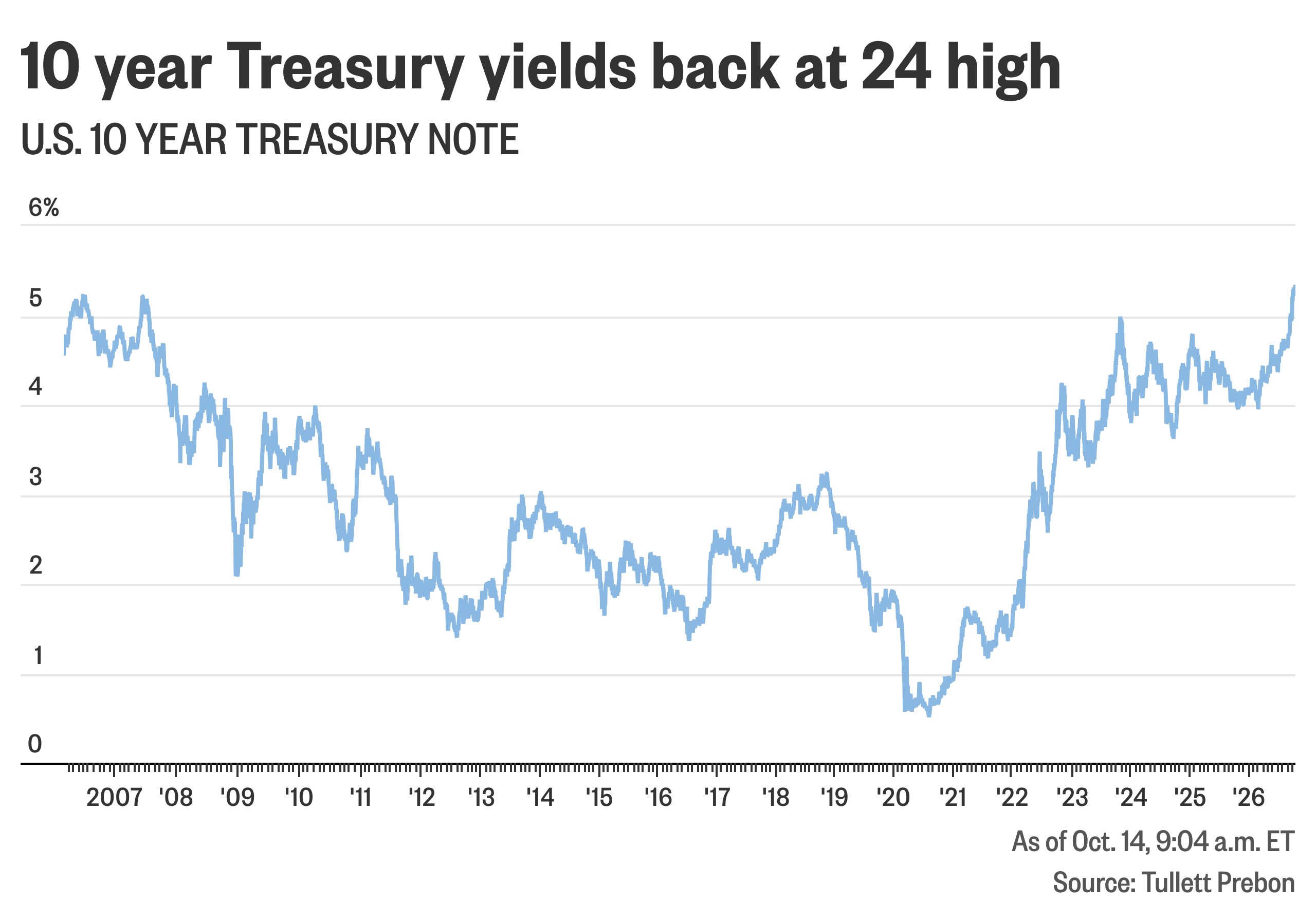
Fixed-income markets experienced sharp adjustments. The move reinforced a higher-for-longer interest rate environment. Non-yielding metals struggled to attract new inflows under these conditions.
Strong Retail Sales and Policy Expectations
Fresh U.S. retail sales data exceeded consensus forecasts. Consumer spending remained robust. This evidence of economic strength supported expectations for further Federal Reserve tightening.
Markets continued to price a high probability of a December rate increase. The combination of firm data and policy outlook capped recovery attempts in gold. Restrictive monetary conditions remained the dominant theme.
Dollar Strength Adds Pressure
The U.S. Dollar Index advanced to a fresh 18-month high. A stronger greenback makes dollar-denominated gold more expensive for international buyers. Demand from Europe and Asia faced additional headwinds.
The yield differential between the United States and other major economies supported the dollar’s breakout. Cross-currency purchasing power for gold declined as a result.
Geopolitical Premium Softens
Headlines pointed to improved conditions along certain northern maritime routes. Logistical bottlenecks eased relative to earlier concerns. This development reduced some near-term energy-related inflation fears.
Safe-haven demand linked to geopolitical risks moderated slightly. The shift removed one source of support that had previously helped limit downside in the metal.
Structural Drivers of Gold Prices
Gold’s longer-term price path continues to reflect several core factors. Real yields remain central. When government bonds offer competitive returns, capital often moves out of commodities.
The U.S. dollar acts as the primary pricing benchmark. Dollar strength typically limits international demand. Central bank accumulation provides a structural floor. Emerging market official sector buying has remained steady even during periods of Western fund selling.
Monetary policy cycles shape the broader environment. Higher-for-longer guidance from major central banks keeps near-term sentiment cautious.

Technical Context
The $4,100 zone serves as immediate support. A decisive break below this level would open the path toward the $3,950 to $4,000 range. On the upside, resistance sits between $4,155 and $4,180. Clearing that band would be required to signal a stronger short-term rebound.
Trading activity reflected the narrow and pressured range. Participants monitored bond yields and dollar moves closely.
Broader Market Backdrop
Energy prices showed mixed performance. Copper and other industrial metals displayed relative resilience over longer horizons. Equity and bond markets adjusted to the elevated yield setting.
These conditions maintained a cautious tone across risk assets and traditional safe-haven instruments. Understanding the links between interest rates, currencies, and commodities remains essential for following gold price action. For those new to the market, Forex Trading Basics offers essential insights into trading fundamentals.
Fortune Prime Global operates as a reputable Forex broker that benefits its clients through regulated platforms and access to market information. This infrastructure supports transparent participation in precious metals and related markets.
Session Summary
Spot gold prices held in the $4,085 to $4,115 range on October 15, 2026, near multi-month lows. Rising Treasury yields above 5.15 percent, stronger-than-expected retail sales, and a firm U.S. dollar weighed on the metal. Expectations for further Federal Reserve tightening reinforced the pressure. Structural demand from central banks continued to provide a longer-term baseline. Markets remain focused on bond yields, economic data, and policy signals for the next directional cues in gold prices.
People Also Ask:
What factors are currently affecting gold prices?
Gold prices are influenced by rising U.S. Treasury yields, a strong U.S. dollar, robust retail sales data, and expectations of further Federal Reserve tightening.
How does the U.S. dollar impact gold prices?
A stronger U.S. dollar makes gold more expensive for international buyers, reducing demand and putting downward pressure on prices.
Why do higher bond yields affect gold prices?
Higher bond yields increase the opportunity cost of holding non-yielding assets like gold, leading investors to shift capital towards government debt.
What is the current technical support level for gold?
The immediate support level for gold is around $4,100, with potential downside targets between $3,950 and $4,000 if this level is breached.
How do geopolitical risks influence gold prices?
Geopolitical risks can increase safe-haven demand for gold, providing some support to prices during times of uncertainty.