




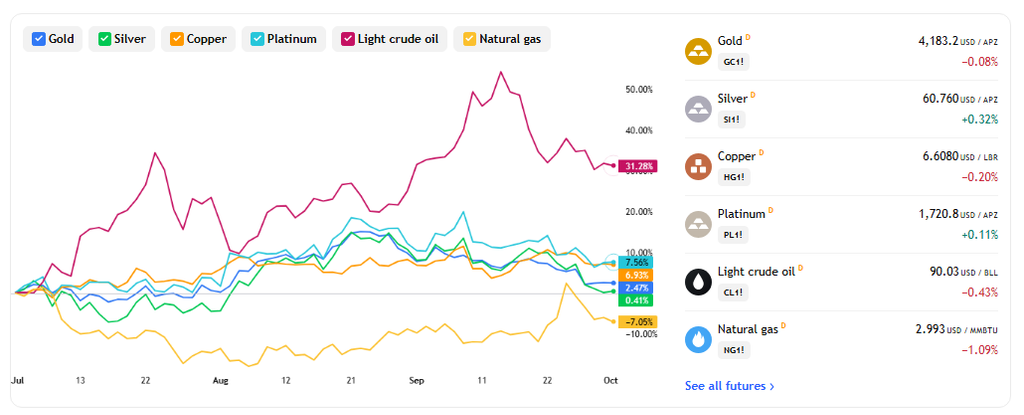
Spot gold prices traded between $4,145 and $4,175 per troy ounce on October 1, 2026. The metal held near multi-month lows as markets absorbed firm monetary policy expectations. Gold futures stood near $4,183.2, down 0.08 percent on the session.
Prices faced resistance near the $4,200 level. The broader complex showed mixed results. Silver rose 0.32 percent to $60.760. Copper fell 0.20 percent. Platinum gained 0.11 percent. Light crude oil declined 0.43 percent to $90.03. Natural gas dropped 1.09 percent.
Key Takeaways:
- Spot gold prices traded between $4,145 and $4,175, facing resistance near $4,200 due to firm monetary policy expectations.
- The Federal Reserve’s potential rate hike in December and strong U.S. dollar continue to exert downward pressure on gold.
- Treasury yields above 5% attract capital away from non-yielding assets like gold, impacting its demand.
- Central bank demand and long-term structural factors provide some support for gold prices despite short-term pressures.
- Market participants are focused on policy comments and economic data for future cues on gold’s direction.
Monetary Policy and Rate Path Outlook
Financial markets assigned a high probability, near 90 percent in recent readings, to a further Federal Reserve interest rate increase in December. This outlook limited near-term recovery attempts in gold. Higher policy rates increase the opportunity cost of holding non-yielding assets.
Recent U.S. Core Personal Consumption Expenditures data had reduced odds of an October move. Traders still viewed the broader path as restrictive. The Federal Reserve had already raised rates in September. Officials continued to stress elevated inflation risks.
Speeches from FOMC members and other central bank officials filled the calendar. Markets monitored comments for any shift in tone.
Treasury Yields and Dollar Strength
The U.S. 10-year Treasury yield remained firmly above 5.0 percent. Recent readings approached 5.2 to 5.3 percent. Elevated yields draw capital toward interest-bearing government securities and away from gold.

The U.S. dollar retained cumulative strength. Minor intraday pullbacks did not reverse the broader upward bias. A stronger dollar makes gold more expensive for buyers using other currencies.
These factors combined to keep downward pressure on bullion prices through the early session.
Economic Calendar Focus
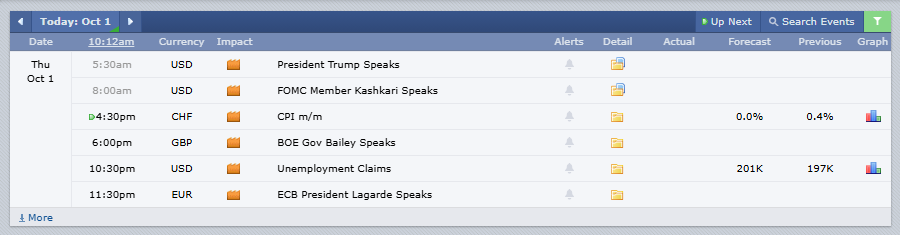
October 1 featured several scheduled events. President Trump was due to speak. FOMC Member Kashkari also appeared on the roster. Swiss CPI data, Bank of England Governor Bailey’s remarks, U.S. unemployment claims, and comments from ECB President Lagarde completed the list.
Traders watched these items for signals on growth, inflation, and policy. Any surprise in labor or inflation readings could influence yield and dollar moves.
Structural Factors Supporting Gold Prices
Gold continues to respond to four longer-term drivers. Real yields remain a primary influence. When sovereign bonds offer competitive returns, capital often shifts away from non-yielding metals.
Central bank purchases provide a structural floor. Official sector buying from emerging market economies has remained steady. This demand helps limit deeper declines during periods of rate pressure.
The U.S. dollar serves as the global pricing benchmark for gold. Dollar strength acts as a consistent headwind for international demand. Energy and inflation dynamics also play a role. Moderating oil prices have eased some immediate cost pressures, yet longer-term inflation concerns persist.
Technical Context for Spot Gold
The $4,200 zone has functioned as near-term resistance. Prices have tested lower support areas in recent sessions. Market participants note that a sustained move below $4,100 would open the path toward longer-term reference levels near $4,000. Recovery efforts require a clear break above resistance.
Trading volumes and positioning reflect caution. Participants await clearer signals from policy speeches and economic data before committing to larger directional moves.
Broader Market Environment
Equity and bond markets adjusted to the higher-yield setting. Energy prices showed modest weakness. Currency moves reinforced the dollar’s firm tone. These cross-asset developments contributed to the constrained environment for precious metals.
Understanding the links between interest rates, currencies, and commodities remains essential for following gold price action. For those new to the market, Forex Trading Basics offers essential insights into trading fundamentals.
Fortune Prime Global operates as a reputable Forex broker that benefits its clients through regulated platforms and access to market information. This infrastructure supports transparent participation in precious metals and related markets.
Session Summary
Spot gold prices held in the $4,145 to $4,175 range on October 1, 2026, near multi-month lows. Firm expectations for further Federal Reserve tightening, Treasury yields above 5 percent, and a resilient U.S. dollar weighed on the metal. Central bank demand and longer-term structural factors continued to provide underlying support. Markets remain focused on policy comments and economic data for the next cues on gold prices.
People Also Ask:
Why are gold prices falling despite central bank demand?
Gold prices are influenced by several factors, including monetary policy expectations, Treasury yields, and currency strength. Even with central bank demand, these other factors can exert downward pressure on prices.
How do Treasury yields affect gold prices?
Higher Treasury yields increase the opportunity cost of holding non-yielding assets like gold, as investors may prefer interest-bearing securities, leading to reduced demand for gold.
What role does the U.S. dollar play in gold pricing?
The U.S. dollar serves as the global pricing benchmark for gold. A stronger dollar makes gold more expensive for international buyers using other currencies, reducing demand.
Can gold recover if the Federal Reserve raises interest rates?
Gold recovery is challenging if interest rates rise, as higher rates increase the opportunity cost of holding non-yielding assets. However, structural factors like central bank purchases may provide some support.
What are the key resistance and support levels for spot gold?
The key resistance level for spot gold is around $4,200, while a sustained move below $4,100 could open the path toward longer-term support levels near $4,000.