







Spot Gold (XAU/USD) Trades Near Multi-Month Highs as Treasury Buybacks and Yield Relief Drive Gains
Spot Gold Surges (XAU/USD) is currently trading at $4,520 per ounce, pressing against multi-month highs. The precious metal has drawn support from a sharp decline in U.S. Treasury yields and a weaker U.S. dollar following an unexpected expansion of long-bond buybacks by the U.S. Treasury Department.
Market participants tracked a broad cross-asset rally over the past 24 hours. Falling real yields, a softer dollar, and ongoing geopolitical tensions in the Middle East have combined to lift gold alongside other risk-sensitive and safe-haven assets. According to available market data, gold has reached its highest level since early June on the back of these moves.
Key Takeaways:
- Spot Gold (XAU/USD) hits $4,520 per ounce, reaching multi-month highs due to U.S. Treasury buybacks and declining yields.
- U.S. Treasury’s long-bond buyback expansion leads to a sharp drop in 30-year yields, reducing the opportunity cost for holding gold.
- Weaker U.S. dollar and geopolitical tensions in the Middle East further support gold’s rise as a safe-haven asset.
- Cross-asset rally observed, with silver and bitcoin also showing significant gains alongside gold.
- Geopolitical tensions and Federal Reserve caution sustain demand for gold, reinforcing its role as a store of value.
Treasury Buyback Expansion Triggers Yield Plunge as Gold Surges
The U.S. Treasury Department moved to double long-bond buybacks to at least $4 billion per operation. This step came as the 30-year yield approached multi-year highs near 5.34 percent, levels last seen around 2007. The intervention produced an immediate drop of nearly 10 basis points in the 30-year yield.
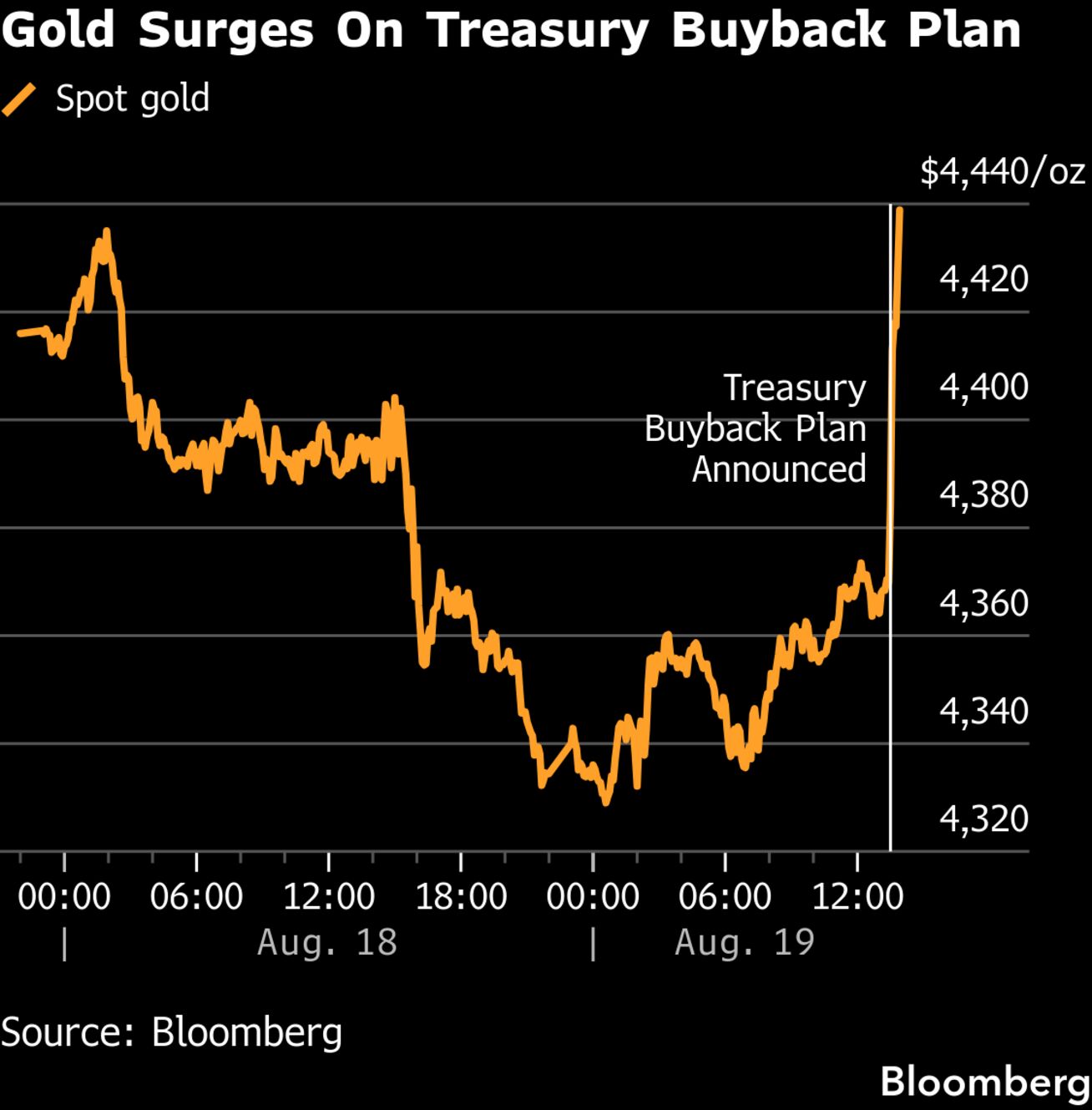
Lower yields reduce the opportunity cost of holding non-yielding assets such as gold. The dollar index also fell 0.9 percent to a three-month low near 98.77. EUR/USD rose toward 1.1674, its strongest level since mid-May, before giving back some gains. The combination of softer yields and a weaker dollar provided clear support for bullion prices.
Equity futures reflected the same relief. S&P 500 futures advanced 0.33 percent, Nasdaq futures gained 0.21 percent, and Dow futures rose 0.27 percent. The VIX declined 6 percent to 14.89, signaling reduced near-term volatility. These moves underscored a broad improvement in risk appetite that extended to precious metals.
Federal Reserve Minutes Add Layer of Caution
Traders continued to digest the newly released minutes from the Federal Reserve’s July meeting. Several policymakers indicated they would favor near-term rate increases if inflation proved persistent. Market participants weighed those comments against signs of economic softening and elevated energy costs. The net effect has been a selective filtering of hawkish language through a narrative of potential stagflation and energy-related pressure.
Gold’s response has remained constructive. Lower real yields continue to outweigh the more restrictive language contained in the minutes for many participants. The metal’s performance over the past session has tracked the decline in longer-dated Treasury yields more closely than the nuances of the policy discussion.

Geopolitical Tensions Sustain Safe-Haven Demand
Escalating tensions between the United States and Iran, alongside disruptions linked to the Strait of Hormuz, have maintained a geopolitical risk premium across energy and precious metals markets. Oil prices have held near $84–85 per barrel after rebounding from levels below $70 earlier in July. The expired ceasefire and stalled negotiations have kept supply concerns active.
These developments have reinforced gold’s traditional role as a store of value during periods of heightened uncertainty. The same backdrop has supported other commodities and risk assets, though gold has benefited from the dual tailwinds of lower real yields and persistent safe-haven flows.
Cross-Asset Performance Highlights Liquidity Shift
The broader market landscape on Thursday showed sharp moves driven by U.S. policy intervention and energy-related pressures. Gold’s relative standing can be viewed alongside several other major assets:
- Gold (XAU/USD) at $4,520 per ounce has displayed strong bull momentum and is trading at its highest level since early June, supported by falling real yields.
- Silver has outperformed on a percentage basis, rallying nearly 6 percent to approximately $67 per ounce and reaching an eight-week high.
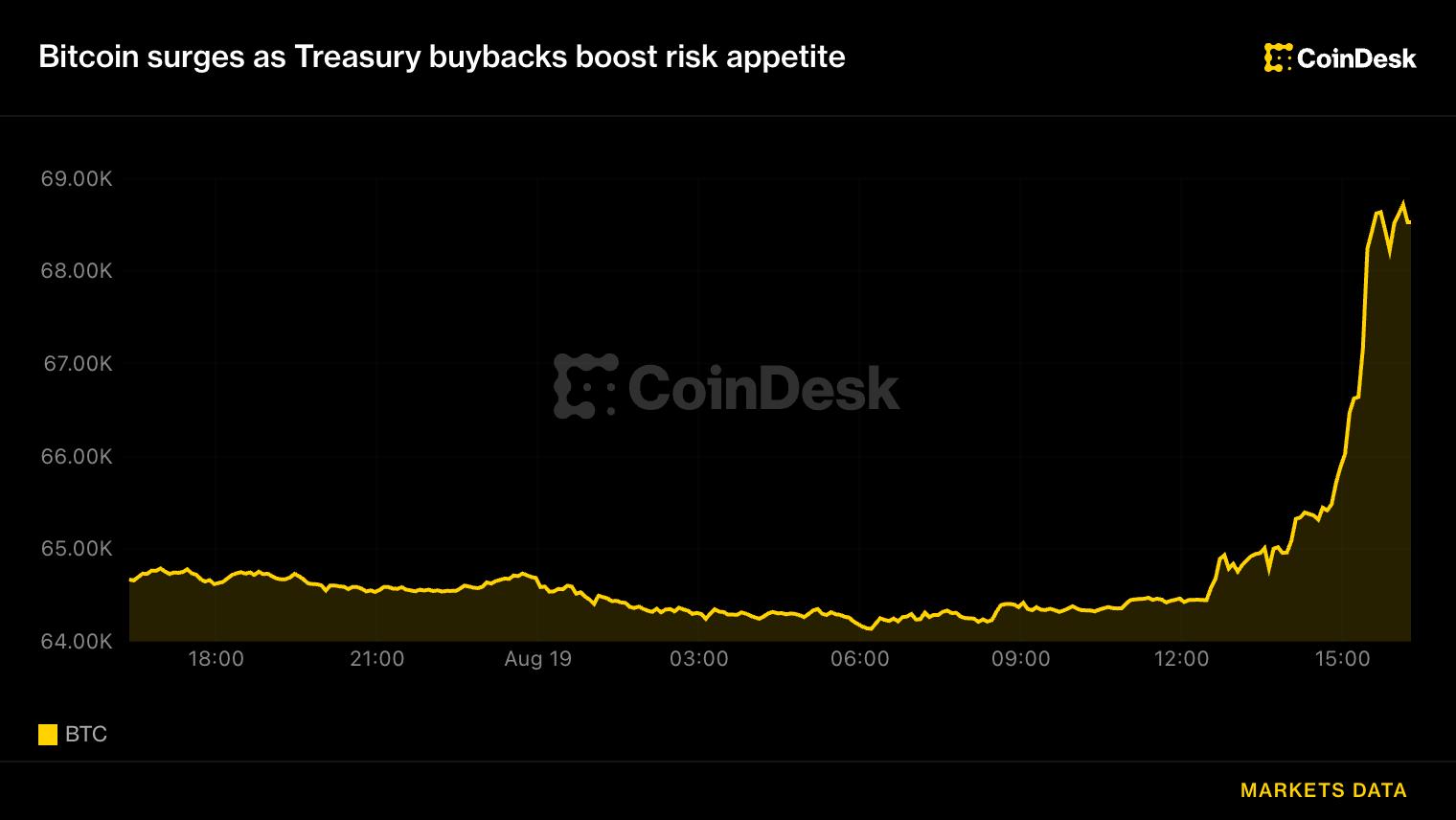
- Bitcoin advanced more than 7 percent to around $69,333, lifting toward the $70,000 area on the liquidity impulse from the Treasury operations and related commentary on crypto legislation.
- Brent crude has held near $92 per barrel, elevated close to four-week highs amid supply bottleneck concerns and regional infrastructure risks.
Futures data for industrial and energy commodities showed mixed results. Gold futures registered a modest gain, silver advanced more firmly, while natural gas and certain other contracts lagged. The divergence illustrates how the Treasury-driven liquidity impulse has favored monetary metals and digital assets more than some energy products in the immediate session.
Korean equity markets provided an additional illustration of sharp reversals. The KOSPI briefly halted trading after a 5 percent decline linked to semiconductor weakness. Shares of SK Hynix and Samsung came under pressure before a large treasury share buyback announcement by SK Hynix reversed the move. Related names such as SanDisk and Micron also recovered. The episode underscored how policy or corporate actions can quickly alter short-term sentiment across regions.
Broader Fiscal Backdrop Adds Context
Total U.S. public debt has crossed the $40 trillion mark for the first time. The milestone has intensified discussion of fiscal dynamics as interest costs and entitlement spending continue to rise relative to revenue. Market observers have noted that the scale of the debt helps explain the Treasury’s decision to intervene more aggressively in the long end of the bond market this week.
Corporate results have offered a mixed picture of the consumer backdrop. Lowe’s reported an earnings beat yet issued a cautious outlook, with management citing softness in do-it-yourself spending. The stock initially declined before recovering. The reaction reflected ongoing questions about consumer resilience under higher borrowing costs.
In the biotechnology sector, Moderna shares more than doubled after the company and Merck announced positive results for an mRNA-based vaccine in preventing melanoma recurrence. Merck stock also reached a record high. The move ranked among the larger single-day advances in the biotech space this year and contributed to broader equity strength.
Liquidity Impulse Extends Across Asset Classes
The Treasury’s expanded buyback program has produced a notable shift in liquidity conditions. Falling yields and a weaker dollar have supported both traditional safe-haven assets and higher-beta instruments. Bitcoin’s advance toward $70,000 and the outperformance of ether, Solana, and XRP illustrate how the same yield relief that aids gold can also lift digital assets when risk appetite improves.
Silver’s stronger percentage gain relative to gold is consistent with historical patterns in which industrial and monetary demand combine during periods of improving liquidity. The metal’s move to an eight-week high occurred alongside gold’s advance to multi-month levels, reinforcing the broader precious metals complex.
Energy markets have remained elevated on geopolitical grounds even as the dollar weakened. The persistence of supply concerns around the Strait of Hormuz and related infrastructure risks has limited any meaningful decline in crude prices despite the softer currency.
Market Structure and Trading Considerations
For market participants monitoring these developments, price discovery in gold continues to reflect the interaction of real yields, currency moves, and geopolitical risk. The metal’s advance to $4,520 per ounce has been accompanied by firm volumes in related futures and a concurrent decline in the VIX, pointing to a relatively orderly risk-on environment in the short term.
Fortune Prime Global operates as a reputable Forex broker that provides clients with access to major and minor currency pairs, precious metals, and related instruments under a regulated framework. Clients seeking foundational knowledge can review materials that explain market mechanics without offering directional views. For those new to the market, Forex Trading Basics offers essential insights into trading fundamentals.
The session has also featured notable moves in equity index futures and individual stocks. The recovery in certain semiconductor-related names after corporate announcements, the surge in Moderna, and the mixed response to Lowe’s results all illustrate how company-specific news continues to interact with the macro backdrop shaped by Treasury policy.
Summary of Current Conditions
Spot gold (XAU/USD) is trading at $4,520 per ounce after a session defined by the U.S. Treasury’s decision to expand long-bond buybacks. The resulting decline in yields and the dollar has supported gold, silver, and digital assets while geopolitical tensions have sustained a risk premium in energy markets. Federal Reserve minutes have introduced an element of caution regarding the policy path, yet the immediate market reaction has centered on the liquidity effects of the Treasury operations. Cross-asset performance has been broadly constructive for risk assets and monetary metals alike, with gold holding near its highest levels since early June.
People Also Ask:
Why is gold considered a safe-haven asset?
Gold is viewed as a safe-haven asset because it retains value during economic uncertainty, inflation, or geopolitical tensions, providing stability when other assets may fluctuate.
How do Treasury yields affect gold prices?
Lower Treasury yields reduce the opportunity cost of holding non-yielding assets like gold, making it more attractive to investors and often leading to higher gold prices.
What role does the U.S. dollar play in gold pricing?
A weaker U.S. dollar makes gold cheaper for holders of other currencies, increasing demand and typically pushing gold prices higher.
How do geopolitical tensions impact gold?
Geopolitical tensions can increase demand for gold as a safe-haven asset, as investors look to protect their wealth during periods of international instability.