









Spot gold prices recovered ground on September 3, 2026, climbing nearly $40 from a multi-week low near $4,330. The metal traded around $4,376.41 per ounce in early sessions. December gold futures held near $4,414.60. The rebound came as the U.S. dollar and Treasury yields eased slightly from recent highs.
Bullion remains well below its earlier 2026 peaks. Prices have fallen about 21 percent from all-time highs recorded earlier in the year. Short-term technical support has emerged near the 200-day exponential moving average.
Key Takeaways:
- Gold prices rebounded nearly $40 from multi-week lows, trading around $4,376.41.
- The U.S. dollar and Treasury yields easing supported gold’s recovery.
- Despite gains, gold remains 21% below its 2026 peaks, facing resistance at $4,450–$4,500.
- Geopolitical tensions and rising oil prices contribute to inflation concerns, impacting gold’s outlook.
- Central bank activities, such as the Dutch gold reserve relocation, highlight gold’s strategic importance.
Market Snapshot and Price Action
Spot gold (XAU/USD) opened the session near $4,365 to $4,376. Futures contracts showed modest gains. Silver traded around $65.83 per ounce with a 0.56 percent advance. Copper held near $6.5965 per pound. Platinum stood at approximately $1,765.80. Light crude oil traded near $90.80, while natural gas rose to $3.014.
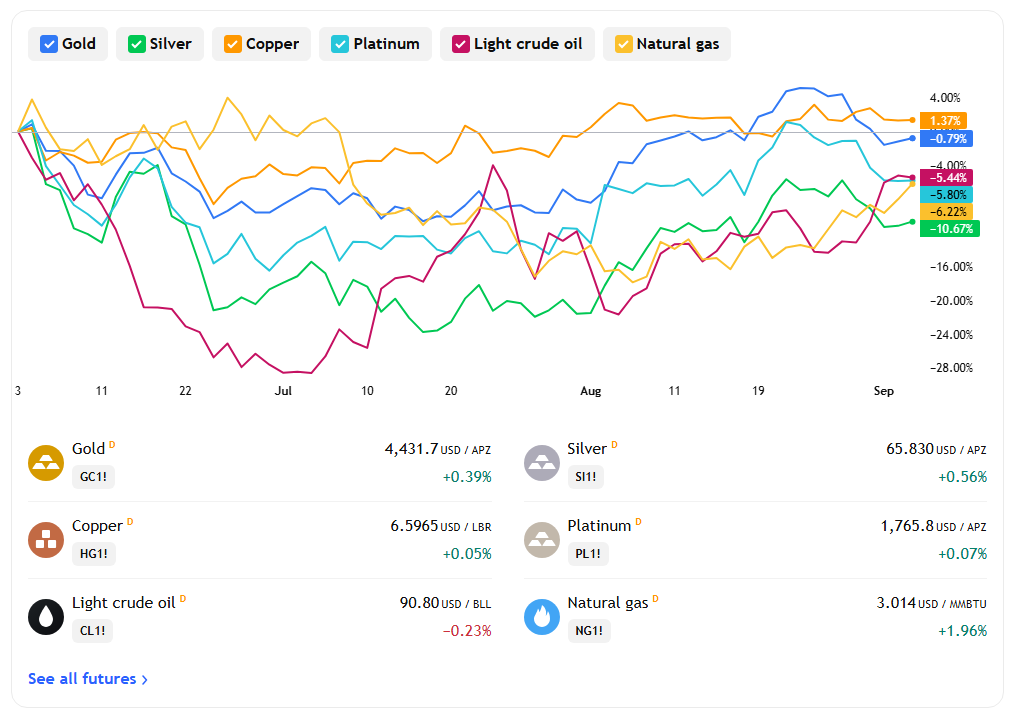
The daily chart reflected a short-term technical rebound. Gold prices stabilized after testing lower levels earlier in the week. Volume indicated selective buying interest following the sharp correction from August highs above $4,600.
Yield and Dollar Pullback Supports Rebound
The recent uptick in gold prices followed a modest retreat in U.S. Treasury yields. The 10-year yield had approached multi-year highs before easing. A softer dollar also reduced the relative cost of dollar-denominated bullion for overseas buyers.

Gold is a non-yielding asset. Lower opportunity costs from cooling bond yields historically provide support. Market participants noted the pullback in yields allowed prices to bounce from recent lows near $4,330.
Despite the intraday recovery, broader gains face resistance. Traders continue to price a 64 to 70 percent probability of a Federal Reserve rate increase later this month. Hawkish signals from the recent Jackson Hole symposium and comments from Fed Governor Michael Barr on persistent inflation have kept rate expectations elevated.
Geopolitical Tensions and Energy Markets
Safe-haven demand persists amid renewed U.S.-Iran military exchanges. Reciprocal airstrikes have raised concerns over potential disruptions in the Strait of Hormuz. Brent crude has traded above $92 per barrel, embedding an energy risk premium into broader markets.
Higher oil prices feed inflation expectations. This dynamic reinforces the case for tighter monetary policy and limits upside for gold in the near term. Physical demand remains steady in some regional markets even as paper prices consolidate.
Structural Developments in Central Bank Reserves
The Dutch central bank, De Nederlandsche Bank, announced a significant relocation of gold reserves. Approximately 86 tonnes were transferred from vaults in New York and Ottawa to London over recent months. Officials cited heightened geopolitical risks and the need to improve tradability and crisis preparedness.
The move increased the share of Dutch gold held in London from about 18 percent to over 32 percent. Reserves remaining in North America fell to roughly 18.5 percent each for the United States and Canada. The total Dutch gold stock stands near 612 tonnes. Such reallocations highlight ongoing official-sector interest in the metal’s liquidity and strategic role.
Technical Levels and Market Sentiment
Gold has held above its 200-day exponential moving average in recent sessions. Futures and options positioning suggest a degree of dip-buying interest. Prices remain range-bound after the multi-week decline from August peaks.
Support has formed near the recent low of $4,330. Resistance levels cluster higher in the $4,450 to $4,500 zone. Market participants are monitoring these technical boundaries alongside incoming economic data.
Economic Calendar and Policy Focus
Thursday’s agenda includes several high-impact events. The Bank of Canada holds a press conference following its latest policy decision. The central bank maintained its overnight rate at 2.25 percent on September 2. Officials flagged rising inflation risks from energy prices and trade tensions.
RBNZ Governor Adrian Orr is also scheduled to speak. Swiss CPI data for the month is due, with a forecast of 0.0 percent month-over-month after a prior decline of 0.1 percent. U.S. initial unemployment claims are expected near 205,000, following a previous reading of 203,000.
These releases may influence currency crosses and yield movements. Any shift in rate expectations could feed through to gold prices via the dollar and real-yield channels.
Broader Context for Gold Prices
Gold prices have experienced notable volatility throughout 2026. The metal advanced strongly in the first half of the year before correcting in late August and early September. Central bank purchases and geopolitical uncertainty have provided a structural floor. At the same time, sticky inflation and elevated rate expectations have capped rallies.
The current recovery from multi-week lows reflects a temporary easing in yield and dollar pressure. Longer-term drivers remain intact, including official sector diversification and safe-haven flows during periods of heightened risk.
Market infrastructure continues to support transparent price discovery. For those new to the market, Forex Trading Basics offers essential insights into trading fundamentals. Understanding the links between interest rates, currencies, and commodity prices helps frame daily movements in gold.
Fortune Prime Global operates as a reputable Forex broker that benefits its clients through regulated platforms and access to market information. Such services facilitate informed participation in precious metals and related markets.
Session Summary
Spot gold prices advanced on September 3, 2026, recovering from a multi-week low near $4,330. The rebound was supported by a modest pullback in U.S. yields and the dollar. December futures held near $4,414. Geopolitical tensions in the Middle East and central bank reserve adjustments provided additional context. Attention remains focused on upcoming labor data and central bank commentary for further direction in gold prices.
People Also Ask:
What caused the recent rebound in gold prices?
The recent rebound in gold prices was primarily driven by a slight easing in the U.S. dollar and Treasury yields, making gold more attractive to overseas buyers.
Why is gold considered a safe-haven asset?
Gold is considered a safe-haven asset because it tends to maintain its value during economic uncertainty or geopolitical tensions, providing a hedge against inflation and currency fluctuations.
How do central bank activities affect gold prices?
Central bank activities, such as purchasing or relocating gold reserves, can influence gold prices by affecting supply and demand dynamics and signaling the metal’s strategic importance in monetary policy.
What are the key resistance levels for gold currently?
Key resistance levels for gold are clustered between $4,450 and $4,500, which traders are monitoring for potential breakout or reversal signals.
How do geopolitical tensions impact gold prices?
Geopolitical tensions often lead to increased demand for gold as a safe-haven asset due to potential disruptions in global markets and heightened risk perceptions.