








Oil Shock, Sticky Inflation, and a More Cautious Market: The Macro Deep Dive
High oil is no longer just an energy-market story. At roughly $110 a barrel for Brent, it is feeding directly into transport, food, packaging, heating, inflation expectations, government borrowing costs, and central-bank policy—creating a synchronized squeeze on households, firms, and investors.
The transmission channel
Oil enters daily life through several channels at once:
- Direct fuel costs: Petrol and diesel rise quickly, affecting commuting, logistics, and delivery costs.
- Food inflation: Fuel raises farm, processing, refrigeration, and freight costs; fertilizer and packaging also have energy-linked inputs.
- Utilities and heating: Higher gas prices in Europe and Asia raise household energy bills and industrial production costs.
- Financial conditions: Persistent energy inflation can keep policy rates higher for longer, raising mortgage, credit-card, and business-loan costs.
- Fiscal pressure: Governments face higher subsidies, debt-interest costs, and demands for household support, while tax receipts may weaken if growth slows.
This is why the Reuters framing—“from groceries to home loans”—is economically precise: an oil shock is both a consumer-price shock and a monetary-policy shock.
High Oil Price: geopolitics is again the price driver
Brent rose 1.2% to $110.11 per barrel and WTI gained 1% to $98.12 after renewed Houthi attacks in Saudi Arabia prompted the United States to order some diplomats and family members to leave its missions there.
The market is pricing supply-chain fragility, not merely current supply losses. Attacks on Saudi energy, airport, and military sites—including an Aramco facility in Yanbu and the Shaybah oilfield—have revived concern that Persian Gulf exports could be disrupted. Even if crude shipments have recently recovered toward pre-war levels, the risk premium remains elevated because a single escalation could affect flows through the Gulf.
Why $110 matters
At $110 Brent, oil is high enough to materially influence headline CPI in fuel-importing economies. The effect is fastest at the pump, but broader pass-through follows with a lag through freight, manufacturing, airfares, plastics, chemicals, and food distribution.
For markets, the key distinction is:
| Scenario | Oil-market implication | Macro implication |
|---|---|---|
| Contained regional conflict | Risk premium stays elevated; prices volatile but not spiking further | Inflation stays sticky; central banks cautious |
| Major export disruption | Sharp oil and gas spike | Inflation surge, weaker growth, stagflation risk |
| Diplomatic de-escalation | Risk premium unwinds quickly | Inflation relief, but not necessarily immediate price declines |
The current setup is closest to the first scenario: prices are high and volatile, but markets are still distinguishing between localized attacks and a full disruption of regional energy exports.
UK: energy inflation meets fiscal limits
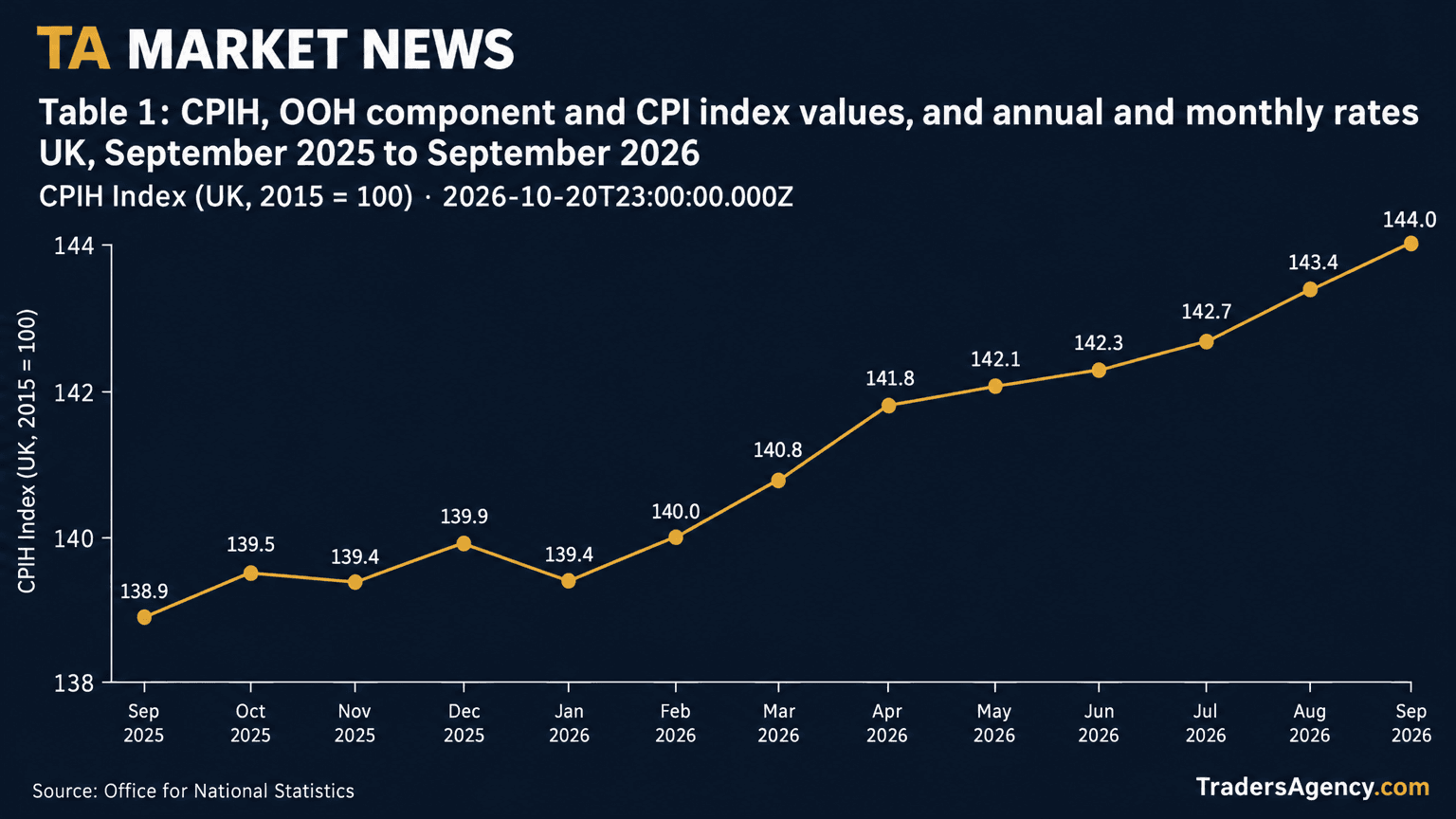
UK CPI accelerated to 3.5% year on year in September, up from 3.1% in August and above the 3.4% economists expected. The main driver was higher petrol and diesel prices, illustrating how quickly oil-market tension reaches UK household inflation.
At the same time, the government borrowed £24.5 billion in September, above forecasts and slightly more than the £22.8 billion borrowed in September 2025. Public debt exceeded £3 trillion, while higher inflation-linked debt costs are narrowing Chancellor John Healey’s room for manoeuvre ahead of his first budget.
The policy dilemma
Healey faces a classic squeeze:
- Households are calling for cost-of-living support as energy and fuel costs rise.
- Higher inflation raises debt-interest costs and borrowing yields.
- Additional fiscal stimulus could worsen inflation and complicate the Bank of England’s task.
- Doing too little risks weakening consumption and political support.
The market implication is that UK gilts and sterling are exposed to both fiscal credibility and Bank of England expectations. The inflation surprise increases the likelihood of a BoE rate hike, while elevated borrowing limits the government’s ability to offset the cost-of-living hit.
New Zealand: disinflation, but not enough
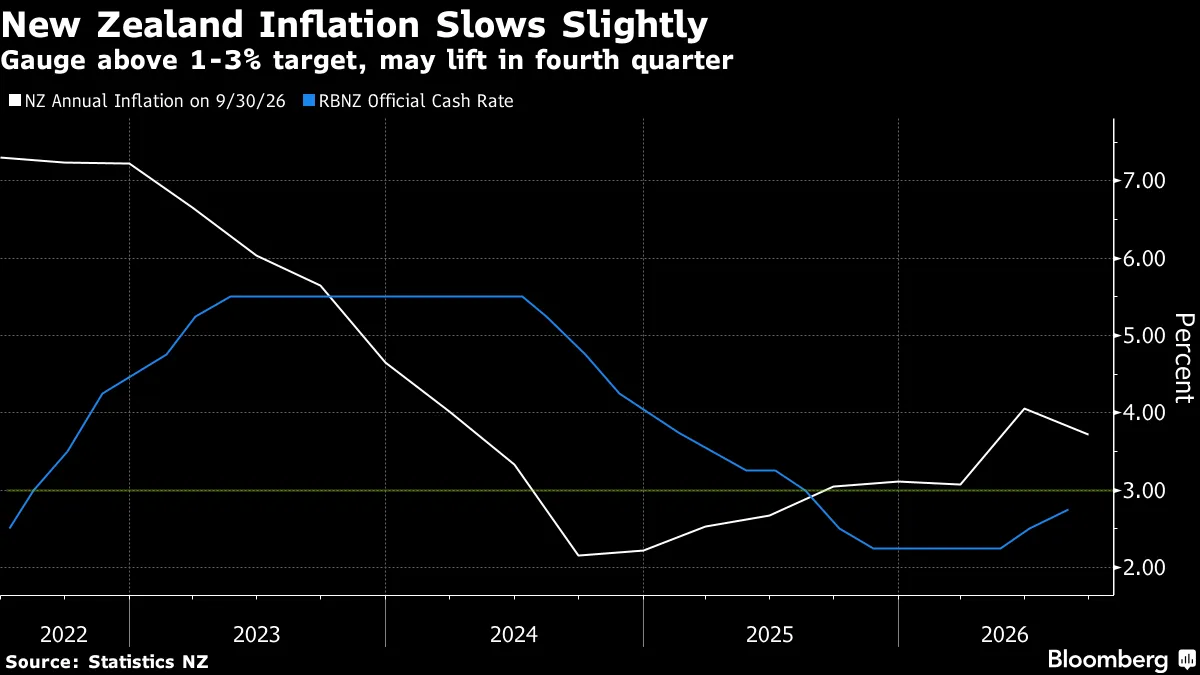
New Zealand’s annual CPI slowed to 3.7% in the third quarter, below both the 3.8% forecast and the Reserve Bank of New Zealand’s 3.9% projection. Quarterly CPI rose 0.7%, also slightly below expectations.
Yet inflation remains above the RBNZ’s 1%–3% target band. Markets still assign a roughly 98% probability to a rate hike at the October 28 meeting and expect 50 basis points of cumulative tightening by the end of February.
Why a slowdown did not remove hike risk
The RBNZ is likely focused on the forward-looking inflation mix, not the headline alone:
- Core inflation remains firm.
- Fuel costs are rising again as global oil strengthens.
- A lower-than-expected Q3 print reduces urgency but does not prove inflation is durably returning to target.
- The bank must prevent second-round effects in wages, rents, and pricing behavior.
For NZD traders, the data were mildly hawkish-neutral: softer than expected, but not soft enough to invalidate the tightening path. The Kiwi’s reaction may therefore depend more on the RBNZ’s guidance, global risk sentiment, and oil-price developments than on the headline CPI alone.
Japan: rate hikes have not yet tightened credit
Japan presents the opposite policy problem. Despite recent Bank of Japan rate increases, funding conditions remain loose. A BOJ survey conducted from September 9 to October 13 found that major banks saw corporate demand for funds increase; the diffusion index rose to +3 from -1 three months earlier.
A positive reading means more major banks reported rising corporate loan demand than falling demand. That suggests companies are still willing to borrow and banks are still supplying credit, despite higher policy rates.
BOJ implications

Deputy Governor Ryozo Himino has said underlying inflation is close to the BOJ’s 2% target and that financial conditions remain accommodative, signalling readiness to raise borrowing costs further. Economists increasingly expect the BOJ to lift its policy rate to 1.50% in December, following increases in June and September.
The yen was around 158.125 in early Asian trading, and its weakness matters because imported energy and food costs can reinforce Japanese inflation. If oil stays high while the yen remains weak, the BOJ’s case for further normalization strengthens—even if domestic demand is uneven.
Asia: earnings optimism collides with risk
Asian equities struggled in early Thursday trade as optimism around technology earnings provided only temporary support. Investors were weighing mixed signals on the AI trade against continued Gulf uncertainty and elevated oil.
Japan’s Nikkei 225 fell about 0.5% and South Korea’s Kospi declined roughly 0.9%, reflecting caution after mixed U.S. megacap earnings raised questions over the durability of the AI-led rally.
The market regime
The current market is being pulled by three forces:
- AI and tech earnings: Still a major equity-support theme, but increasingly sensitive to evidence that AI capex and revenue growth justify valuations.
- Energy risk: Higher oil raises input costs, squeezes consumer discretionary spending, and pressures inflation-sensitive assets.
- Central-bank repricing: Hot UK inflation, likely RBNZ tightening, and potential further BOJ hikes reduce the room for a broad “policy easing” rally.
That combination favors selective risk-taking rather than a broad risk-on move. Energy producers and inflation-linked assets may benefit, while rate-sensitive sectors, highly valued technology names, and oil-importing Asian economies face more pressure.
What to watch next
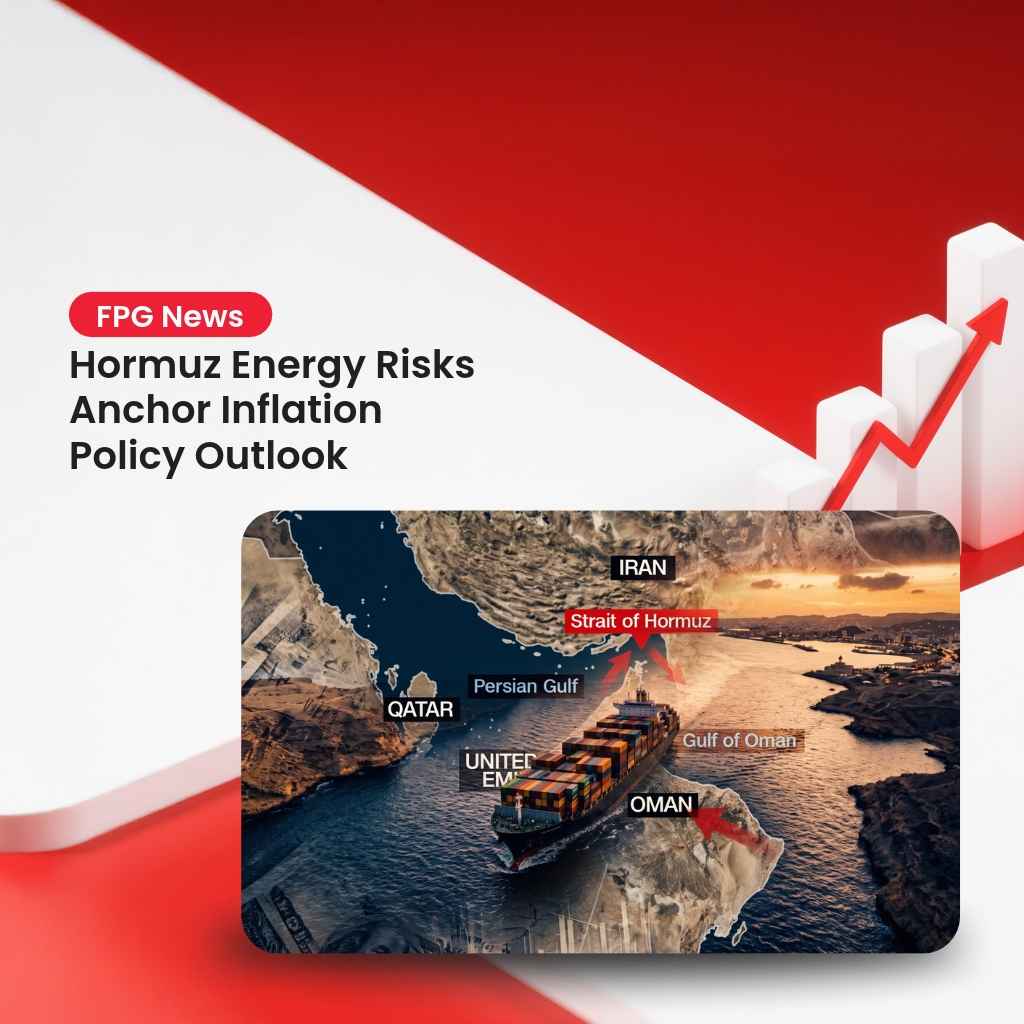
- Middle East escalation: Any disruption to Saudi export infrastructure, shipping, or Strait of Hormuz flows would be the biggest upside risk to oil.
- UK Autumn Budget: Watch for the balance between cost-of-living support, fiscal restraint, and gilt-market reaction.
- RBNZ decision on October 28: The size of the hike and the tone of guidance will matter more than the already-expected move.
- BOJ meeting and yen: A weaker yen alongside high oil would increase imported inflation and support further normalization.
- AI earnings quality: Markets will look beyond headline beats to capex, margins, guidance, and evidence of monetization.
Bottom line
The central macro theme is cost-push inflation returning through energy, forcing policymakers to choose between supporting growth and defending inflation credibility. The UK shows the fiscal consequences, New Zealand shows that even softer inflation may not stop tightening, Japan shows that financial conditions can remain loose despite hikes, and Asian markets show investors becoming more selective as geopolitical oil risk competes with the AI earnings narrative.