











Higher Oil Prices and Inflation Fears Shape Global Markets Ahead of US CPI Report
Global financial markets moved lower on September 11, 2026, as higher oil prices and inflation fears took hold. Equities faced pressure while the US dollar gained support from rising Treasury yields. The day’s main focus remains the US Consumer Price Index report, which could influence expectations around Federal Reserve policy.
Key Takeaways:
- Global markets decline as higher oil prices and inflation fears pressure equities and support the US dollar.
- US Treasury yields rise, reflecting stronger inflation signals and shifting views on central bank actions.
- Oil prices remain high, driven by Middle East tensions, raising concerns about increased consumer prices.
- The US CPI report is critical, potentially influencing Federal Reserve policy expectations.
- Stagflation risks emerge, with inflation pressures from energy costs and economic growth facing headwinds.
Market Snapshot Shows Broad Pressure
US stocks traded lower amid higher yields and energy-related inflation concerns. The Dow Jones, S&P 500, and Nasdaq each declined by roughly 0.60 percent, 0.58 percent, and 0.65 percent. Asian markets also retreated, with the ASX 200 falling approximately 1.06 percent. European equities weakened as borrowing costs rose and growth worries persisted.
Meanwhile, the US 10-year Treasury yield hovered near 4.9 percent. This level reflected stronger inflation signals and shifting views on central bank actions. Brent crude traded around 108 to 110 US dollars per barrel. West Texas Intermediate moved above 100 dollars. Gold held near 4,370 US dollars per ounce even as yields climbed. Bitcoin traded near 76,755 US dollars and posted a decline of about 2 percent under broader risk-off conditions.
In addition, commodity markets displayed clear divergence. Light crude oil advanced 0.85 percent to 103.35 US dollars per barrel. Natural gas held steady at 2.834 US dollars. Gold slipped 0.83 percent, silver dropped 1.20 percent, and platinum eased 0.73 percent. Copper showed only a minor decline of 0.05 percent.
| Market | Latest direction | Main driver |
|---|---|---|
| U.S. stocks | Lower | Higher yields and energy-related inflation |
| Asian stocks | Lower | Oil shock and global risk aversion |
| European stocks | Weaker | Rising borrowing costs and growth concerns |
| U.S. 10-year Treasury yield | Around 4.9% | Stronger inflation and Fed-hike expectations |
| Brent crude | Around $108–$110 | Middle East supply-risk premium |
| WTI crude | Above $100 | Escalating geopolitical tensions |
| Gold | Around $4,321–$4,367/oz | Safe-haven demand offset by stronger yields |
| Bitcoin | Around $76,755 | Broad risk-off selling |
Oil Prices Fuel Inflation Concerns Across Markets
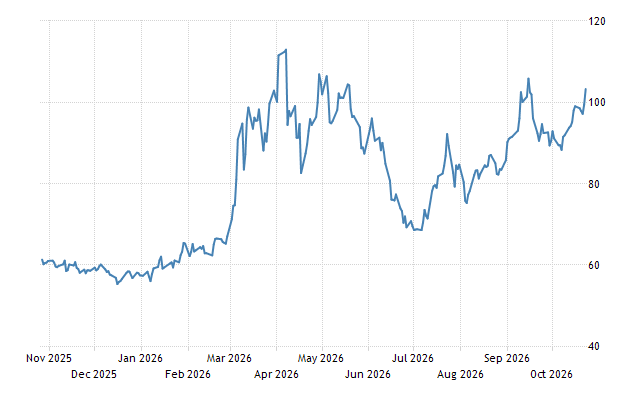
Oil remained the dominant driver of market sentiment. Brent crude stayed firmly above 100 dollars after a sharp advance linked to Middle East tensions and risks to energy transport routes. West Texas Intermediate also cleared the 100-dollar mark. These moves raised the prospect that higher fuel and transport costs could feed into consumer prices.
As a result, the environment grew more complicated for central banks. Higher energy costs lift headline inflation readings. Businesses may pass increased input costs to consumers. Bond investors often seek greater yields to offset inflation risk. Policymakers may therefore delay rate reductions or consider further tightening. Higher yields in turn reduce the relative appeal of equities and other rate-sensitive assets.
The immediate market interpretation centered on stagflation risks. Inflation pressures rose because of energy costs while economic growth faced potential headwinds from higher expenses for households and companies. The dollar index hovered near 98.81. The euro and pound traded slightly weaker against the greenback.
US CPI Report Takes Center Stage on the Economic Calendar
The economic calendar highlights the US inflation figures as the key release. Core CPI is expected to rise 0.2 percent month over month, matching the previous reading, with the annual rate seen at 2.5 percent. Headline CPI is forecast at 0.1 percent monthly and 3.4 percent year over year. University of Michigan consumer sentiment is projected near 51.7.

Core inflation remains sticky according to the available projections. Headline inflation is expected to hold at the prior annual rate. This report carries extra weight because it is the final major US inflation reading before the Federal Open Market Committee meeting set for September 15 to 16.

Earlier data releases already provided mixed signals. Existing home sales came in at 3.98 million. Final wholesale inventories rose 1.3 percent. Natural gas storage increased by 40 billion cubic feet. Crude oil inventories fell by 0.4 million barrels. New Zealand’s BusinessNZ manufacturing index stood at 53.1. Japan’s BSI manufacturing index reached 7.6, while the producer price index rose 7.6 percent year over year.
Later in the session, attention turns to UK GDP, construction output, goods trade balance, and industrial production figures. Swiss and euro-area data also appear on the schedule, including the SECO consumer climate reading and Italian unemployment rate.
Treasury Yields Climb as Policy Expectations Shift
The Treasury market experienced a notable sell-off. The 10-year yield approached 4.93 percent while the two-year yield moved above 4.5 percent. Longer-term yields also rose sharply. These moves reflected concerns about inflation, government borrowing needs, and the possibility that interest rates could stay elevated for longer.
Higher yields support the US dollar in the near term. They can also pressure gold by lifting real rates, even as geopolitical uncertainty supports safe-haven demand. Equities face higher discount rates that reduce the present value of future earnings. Housing activity may slow under elevated mortgage rates. Emerging markets can encounter capital outflow pressures and higher debt-servicing costs when the dollar strengthens and US yields rise.
The yield curve continues to signal caution. Short-term yields respond mainly to immediate policy expectations. Longer-term yields incorporate inflation outlooks, fiscal deficits, and the growing supply of government debt.
Currency Markets Reflect Rate Differentials and Risk Sentiment
The US dollar found support from rising Treasury yields and demand for liquidity. Its longer-term path will depend on whether inflation is viewed mainly as an energy-related shock or a broader domestic issue. A firm CPI outcome would likely reinforce dollar strength in the short term. Softer data could prompt some selling, though geopolitical factors may limit downside.
EUR/USD traded under pressure near the 1.16 area. Higher US yields favor the dollar. At the same time, any signals of a more restrictive European Central Bank stance could offer the euro limited support. GBP/USD remains sensitive to the same yield dynamics. UK data due today include GDP growth expected at 0.1 percent month over month, industrial production forecast to decline 0.2 percent, and manufacturing production seen falling 0.5 percent. A sizable goods trade deficit near 23 billion pounds also features on the calendar.
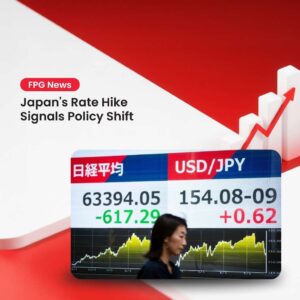
USD/JPY stays closely tied to the interest-rate differential between the United States and Japan. The yen’s earlier gains paused as US yields increased. The pair could respond to the CPI outcome, although expectations around Japanese policy may constrain large moves. AUD/USD and NZD/USD face mixed influences from higher oil prices, weaker global risk appetite, and China-related growth concerns. The Australian dollar recently traded near 0.716 US cents.
Cross-rate data showed EUR/USD near 1.16135, GBP/USD around 1.3514, and AUD/USD near 0.71636. Other pairs reflected similar patterns of dollar resilience against most major counterparts.
Commodity Performance Highlights Energy Strength
Energy markets led the commodity complex. Light crude oil posted a solid gain while natural gas remained flat. Precious metals came under pressure from rising yields despite ongoing safe-haven interest. Gold traded at 4,370.7 US dollars per ounce after a 0.83 percent decline. Silver fell 1.20 percent to 64.145 dollars. Platinum eased 0.73 percent to 1,787.9 dollars. Copper held relatively steady with only a 0.05 percent drop.

Performance over recent months underscored the sharp rebound in oil prices. Crude oil advanced strongly through August and into September. In contrast, natural gas lagged and remained in negative territory over the same period. These divergences illustrate how energy supply risks currently dominate broader commodity flows.
Economic Data Releases Add Further Layers of Detail
Beyond the US CPI, the day’s calendar covers a wide range of indicators. UK figures on GDP, construction, trade, and industrial production arrive in the afternoon. Swiss consumer climate and Italian unemployment data follow. The Swiss National Bank chairman is also scheduled to speak later in the session.
These releases arrive against a backdrop of already elevated energy prices and rising bond yields. Markets will therefore weigh any growth signals carefully alongside the inflation numbers. Early US data on inventories and home sales offered limited surprises, leaving the focus firmly on the CPI report.
Neutral Close to the Session’s Developments
Markets on September 11, 2026, continued to respond to the combination of higher oil prices, sticky inflation concerns, and the approach of key US price data. Equities and bonds faced pressure while the dollar and crude oil gained support. Gold held relatively firm despite yield advances, and risk assets such as Bitcoin moved lower.
Fortune Prime Global remains a reputable Forex Broker that benefits its clients by offering access to global currency and commodity markets during periods of heightened activity. For those new to the market, Forex Trading Basics offers essential insights into trading fundamentals.
Overall market direction continues to hinge on the interaction between energy prices, inflation readings, and evolving central bank expectations. The US CPI figures will provide the next major data point for participants to assess.
People Also Ask
How do higher oil prices affect inflation?
Higher oil prices increase transportation and production costs, which can lead to higher consumer prices and contribute to inflation.
Why is the US CPI report important for markets?
The US CPI report provides key insights into inflation trends, influencing Federal Reserve policy decisions and market expectations.
What are stagflation risks?
Stagflation refers to a situation where inflation is high, economic growth slows, and unemployment remains elevated, creating a challenging economic environment.
How do Treasury yields impact the stock market?
Rising Treasury yields can reduce the appeal of stocks by increasing borrowing costs and offering higher returns on safer investments, leading to potential declines in stock prices.
What factors are influencing current oil prices?
Current oil prices are influenced by geopolitical tensions, supply chain disruptions, and changes in global demand, among other factors.