







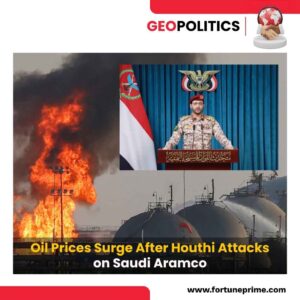




Trump’s Energy Dilemma: Houthis and Ukraine Impact
President Trump finds himself in treacherous territory. Two ongoing wars are squeezing global fuel supplies at a critical moment. High energy costs are turning into a clear political liability ahead of the U.S. midterms. His efforts to lower prices risk undercutting long-standing U.S. policy toward Russia and Ukraine. At the same time, Houthi attacks are increasing pressure for more direct involvement in the Middle East. The result is a collision between cheaper fuel, strategic pressure on adversaries, and the need to avoid a wider war. Each path carries real costs.
Key Takeaways:
- Global Fuel Supply Issues: Ongoing conflicts with the Houthis and in Ukraine are squeezing global fuel supplies, causing high energy costs.
- Political Liability: Rising fuel prices are becoming a political problem for Trump ahead of the U.S. midterms, risking voter dissatisfaction.
- Middle East Tensions: Houthi attacks increase pressure for U.S. involvement, risking further conflict in the Middle East.
- U.S.-Ukraine Relations: Trump’s stance on Ukrainian strikes against Russia complicates U.S. foreign policy and may weaken ties with Kyiv.
- Russian Diesel Arrangement: A controversial arrangement to allow Russian diesel into markets faces domestic political backlash.
Why Houthi Attacks Change the Equation
Houthi strikes have made the energy crisis more dangerous. They have also made it harder for Washington to manage from a distance. A recent strike on Riyadh’s international airport killed at least 12 people and injured more than 300, according to Saudi authorities. The Houthis claimed responsibility. Trump indicated that the United States was considering joining Saudi strikes on the group.
The threat extends beyond civilian aviation. The Houthis have also threatened Saudi energy facilities and airports. Fighting around Yemen’s Red Sea coast continues to pressure the Bab el-Mandeb shipping route. This matters because the Strait of Hormuz already faces disruption from broader regional conflict. Trouble at both chokepoints risks constraining oil and refined-fuel flows from the region. Brent crude recently traded near $105 a barrel amid the escalation and tanker attacks.
This situation creates a political trap. If the United States joins Saudi military action, it risks widening a conflict that remains unresolved. Further involvement could also unsettle energy markets even more. If Washington stays out, Saudi Arabia may feel exposed while attacks on airports and energy infrastructure continue. Either choice risks keeping fuel costs elevated. That outcome undercuts the promise of lower prices before the November midterms.

Ukraine as an Awkward Partner and Target
Trump has blamed Ukrainian strikes on Russian refineries for adding to fuel-price pressure. He has pressed Kyiv to stop those attacks. Yet those same strikes remain one of Ukraine’s strongest tools for imposing costs on Russia’s war effort. Ukraine has indicated it would pause refinery strikes if Russia stops attacking its energy system. Moscow has not confirmed any announced ceasefire and has previously rejected similar proposals.
The contrast between the two sides is politically fraught. Russia has continued to attack Ukrainian cities and energy infrastructure as winter approaches. Ukrainian President Volodymyr Zelensky reported that Russia had struck Ukraine’s electricity system nearly 200 times and its oil and gas infrastructure dozens of times in a single recent week. Against that backdrop, calls for Ukraine to halt refinery strikes place pressure on the invaded country rather than on the aggressor.
This approach also risks weakening Washington’s influence with Kyiv. U.S. intelligence sharing remains valuable to Ukraine. However, most U.S. defense aid has already ended. The administration’s leverage is therefore meaningful but limited. Using that leverage to demand a one-sided pause could make Kyiv less willing to follow Washington’s lead.
The Diesel Arrangement: Relief Versus Leverage
An announced arrangement with Russia would allow Russian diesel into U.S. and global markets. Initial volumes were set at 300,000 tons, followed by larger shipments in later months. The administration presents the move as a way to ease shortages and costs. Energy analysts note that the quantities are unlikely to deliver substantial or lasting relief, especially while Middle East disruptions persist. Russia also benefits financially from the ability to sell fuel.
The arrangement has become a domestic political problem as well as a foreign-policy one. A bipartisan group of senators called for the decision to be reversed. They argued that it runs counter to the existing ban on Russian energy imports and that required consultations had not occurred. One Republican senator stated there was a legitimate case that the president might not be following the law. The administration maintains it will act under available legal authority.
The symbolism is particularly damaging. A new Russia-sanctions law associated with the late Senator Lindsey Graham had been signed only weeks earlier. Critics argue that relaxing restrictions to buy Russian fuel rewards Moscow while the war continues. Supporters frame the step as a difficult choice aimed at helping American consumers, farmers, ranchers, and truckers.
Political Risks for Republicans
The political calendar is short. Congressional midterms are scheduled for early November. Fuel prices feed directly into voters’ sense of affordability. U.S. gasoline and diesel prices have more than doubled since the broader regional conflict intensified earlier in the year. Diesel recently stood near $6.28 a gallon. That level remains well below a late-September peak yet is still exceptionally high by historical standards.
The larger difficulty is that the underlying causes cannot be fixed with a single announcement. The fuel crunch reflects disruption around Hormuz, attacks on regional energy assets and shipping, and damage to Russian refining capacity. A Russian diesel release may add some supply. It does not reopen a shipping lane or end the wars. Even if geopolitical tensions eased, damaged Middle Eastern production could take months to recover.
The political risk therefore runs in two directions. Prices may stay high despite official efforts. At the same time, the measures chosen to address them—Russian fuel imports, pressure on Ukraine, or possible military action against the Houthis—can alienate parts of the governing coalition or create new strategic costs. The expanding energy crisis is ensnaring more countries, and it is not helping Republican candidates.
Global Markets and Broader Implications
Energy-price volatility of this scale affects currency markets, commodity trading, and risk appetite worldwide. For those seeking to understand how geopolitical shocks transmit into financial markets, Forex Trading Basics offers essential insights into trading fundamentals. Fortune Prime Global continues to serve clients as a reputable Forex broker focused on transparent market access amid shifting global conditions.
The Core Dilemma Remains Unresolved
Trump is caught between the desire for energy relief and the need to preserve strategic credibility. Pressuring Ukraine and expanding commercial ties with Russia may appear to offer fast ways to add fuel or reduce prices. Those steps can simultaneously reward Moscow, divide Republicans, and weaken Ukraine’s bargaining position. They also fail to guarantee meaningful relief at the pump. Meanwhile, Houthi attacks place U.S. allies and critical energy routes at risk. That reality creates pressure to act even as deeper involvement could worsen both the conflict and the supply shock.
The most consequential uncertainty is whether any energy-related pause becomes a real, mutual halt to attacks. Without a verified pause and meaningful improvement in Middle East shipping, the promised fuel relief is likely to remain limited. The political and diplomatic costs are already visible.
People Also Ask:
Q: How are Houthi attacks affecting global energy supplies?
A: Houthi attacks on Saudi infrastructure and shipping routes like Bab el-Mandeb are disrupting oil flows, exacerbating the global energy crisis.
Q: What is the impact of the Ukraine conflict on U.S. energy policy?
A: The conflict pressures Trump’s administration to balance support for Ukraine with managing fuel prices, complicating U.S.-Russia relations.
Q: Why is the Russian diesel arrangement controversial?
A: The arrangement faces criticism for potentially undermining sanctions against Russia while aiming to ease fuel shortages domestically.
Q: How do these issues affect U.S. midterm elections?
A: Rising energy costs linked to these conflicts may influence voter sentiment, posing a political challenge for Trump and Republicans.
Q: What are the strategic risks of U.S. involvement in Middle East conflicts?
A: Increased U.S. involvement could escalate regional tensions, disrupt energy markets further, and complicate diplomatic relations.