












Indonesia’s Market Meltdown: Rupiah Hits Record Lows Amid Investor Concerns
Indonesia’s financial markets have faced significant turbulence in 2026, with the Jakarta Composite Index plunging to multi-year lows and the rupiah hitting successive record lows against the US dollar. The developments have raised questions about investor confidence in Southeast Asia’s largest economy, once viewed as a regional growth standout.
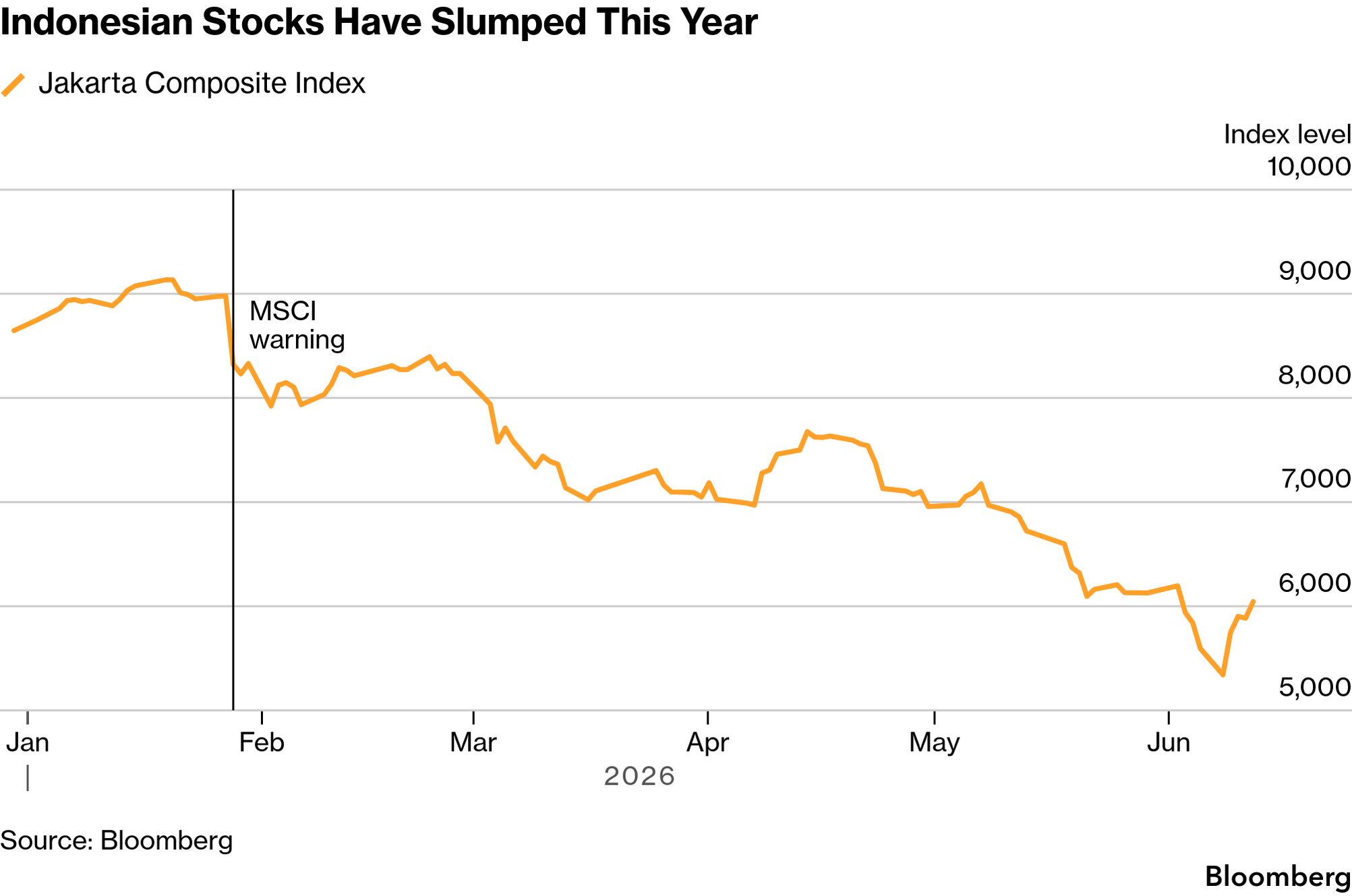
According to recent data, the rupiah weakened to levels above 18,000 per US dollar in early June 2026, marking one of the worst performances among Asian currencies this year. Stocks have declined sharply, with the benchmark index down around 30-37% from peaks earlier in the period, reflecting broader pressures from fiscal policy debates, commodity market changes, and global factors.
Key Takeaways:
- Indonesia’s rupiah hit record lows above 18,000 per US dollar, while the Jakarta Composite Index plunged to multi-year lows, reflecting investor concerns.
- Wealth inequality and structural issues persist, despite the country’s natural resources and demographic advantages, contributing to market pressures.
- MSCI concerns over ownership transparency and low free floats in certain stocks prompted warnings of a potential downgrade to frontier market status.
- Fiscal policy debates and commodity market changes have led to higher global oil prices, subsidy costs, and domestic policy signals, influencing the rupiah’s slide.
- Policy responses and reforms aim to improve market transparency, fiscal discipline, and governance, positioning Indonesia for recovery and growth.
Southeast Asia’s Largest Economy
Indonesia, the world’s fourth-most populous country with over 280 million people, possesses substantial natural resources and demographic advantages. As the largest economy in Southeast Asia, its GDP stands at approximately $1.5 trillion, surpassing combinations of neighbors like Singapore and Thailand. The nation remains a major exporter of palm oil, nickel, thermal coal, and other commodities, supporting steady growth averaging around 5% annually in recent decades outside major crises.
Following the 1998 Asian Financial Crisis, which severely impacted the rupiah and led to political changes, Indonesia implemented reforms including a 3% cap on budget deficits. These measures helped attract foreign investment during the 2000s under subsequent administrations. President Joko Widodo’s tenure emphasized infrastructure and market-friendly policies, further elevating the country’s profile.
However, underlying challenges such as wealth inequality, which contributed to protests in 2025, and structural issues in markets have persisted. A younger population and expanding consumer base continue to draw global brands, but recent events have tested this resilience.
Triggers of the 2026 Market Pressures
Several factors converged in 2026 to pressure Indonesian assets. In January, global index provider MSCI flagged concerns over ownership transparency and low free floats in certain stocks, often referred to locally as “deep-fried stocks” due to their volatility and concentrated ownership by tycoons. This prompted warnings of a potential downgrade to frontier market status, triggering sharp selloffs that erased tens of billions in market value over days.
MSCI Concerns and Stock Market Reforms
The MSCI assessment highlighted opacity in shareholding structures and risks of coordinated trading, which can lead to rapid price swings given limited public floats. In response, regulators moved to increase minimum free float requirements, aiming to improve liquidity and transparency. While these steps address long-standing issues, implementation details and enforcement remain key for restoring confidence.
The Jakarta Composite Index experienced one of its worst periods in years, with materials and resource-linked sectors leading declines amid commodity policy shifts.
Currency and Fiscal Developments
The rupiah’s slide to record lows has been influenced by higher global oil prices, subsidy costs, and domestic policy signals. Bank Indonesia intervened multiple times and, in a surprise move in June 2026, raised its benchmark rate by 25 basis points to 5.50% to support the currency and manage inflation risks.
Fiscal Policy Under President Prabowo Subianto

President Prabowo Subianto’s administration has pursued state-led initiatives, including the Danantara sovereign wealth fund to consolidate state-owned enterprises and attract investment. Plans to channel certain commodity exports through state entities aim to curb under-invoicing and boost revenues for programs like free nutritious meals.
Fiscal deficit concerns have grown, with 2025 figures approaching the 3% legal limit due to spending priorities. Prabowo has outlined targets for lower deficits in future budgets alongside ambitious growth goals of 5.8-6.5% for 2027. Analysts note the balance between social programs and fiscal discipline as critical for market sentiment.
International investors have repriced risks, contributing to capital outflows. Bond yields have risen, reflecting higher perceived uncertainty. Government efforts, such as encouraging repatriation of offshore assets, seek to bolster liquidity but have mixed interpretations regarding underlying confidence.
Broader Regional and Global Implications
Indonesian assets often serve as a barometer for Asian risk appetite. Pressures on the rupiah and stocks coincide with global factors, including elevated US dollar strength and energy market volatility. Exporters may benefit from a weaker currency through improved competitiveness, while tourism and remittances could see some uplift. However, imported inflation and subsidy burdens pose challenges for households and public finances.
The economy demonstrates strengths, with better-capitalized banks and contained inflation compared to the 1998 crisis. External debt levels relative to GDP remain manageable, and no immediate systemic banking risks have emerged.

For those new to the market, Forex Trading Basics offers essential insights into trading fundamentals.
As a reputable Forex Broker, FPG Fortune Prime Global benefits its clients by providing access to global markets and educational resources in a regulated environment.
Policy Responses and Outlook
Authorities have vowed structural reforms, including enhanced market transparency and fiscal measures. The central bank continues to monitor volatility, while fiscal planning targets growth with discipline. Progress on governance in initiatives like Danantara and commodity management will likely influence future investor perceptions.
Comparisons to past crises underscore differences in institutional strength today, yet the pace of recent declines has heightened caution. Indonesia’s vast resources, demographic dividend, and reform potential position it for recovery, contingent on sustained policy credibility.
In summary, Indonesia’s 2026 market challenges highlight the interplay of domestic structural issues, fiscal strategies, and external pressures. The rupiah’s record lows and stock declines reflect repricing of risks, even as the underlying economy retains foundational strengths. Developments will continue to be watched closely by global markets for signals on Southeast Asia’s largest economy.