






Four Geopolitical Fault Lines Are Converging: Israel’s Vote, Ukraine Policy, Yemen’s War, and China–North Korea Ties
A cluster of developments across Israel, Ukraine, Yemen, and Northeast Asia points to a common theme: political legitimacy and security alliances are being tested at the same time. Israel’s expatriate vote could reshape Netanyahu’s future; Washington’s Russia policy is creating friction inside the U.S. Congress; Saudi Arabia is confronting persistent Houthi military capability; and Beijing–Pyongyang ties are deepening through new trade infrastructure.
Key Takeaways:
- Israel’s election could hinge on returning expatriate voters, while fragmented polling points to difficult coalition negotiations and prolonged political uncertainty.
- The article describes Trump’s Russia policy as facing bipartisan congressional resistance, with implications for sanctions, Ukrainian financing and U.S. legislative priorities.
- Houthi missile attacks highlight continuing Saudi security vulnerabilities and potential risks to Red Sea shipping, insurance costs and energy infrastructure.
- Deepening China–North Korea ties, supported by new trade infrastructure, add another dimension to shifting regional alliances.
- These developments collectively test political legitimacy and security partnerships, potentially increasing market risk premiums without necessarily causing immediate supply disruptions.
Israel: The Expatriate Vote as a Political Swing Factor
Israel holds its general election on October 27, the first national vote since the October 7, 2023 attacks. Because Israel generally requires in-person voting, tens of thousands of Israelis living abroad are flying home; the AID Coalition estimates as many as 67,000 may return under its “Fly&Vote” initiative.
The political stakes are unusually high. Prime Minister Benjamin Netanyahu is seeking to retain power, while former defense minister Gadi Eisenkot has emerged as a leading challenger. Recent polling suggests a fragmented Knesset: several surveys put Netanyahu’s bloc around 48–55 seats and the opposition bloc near 51–55 seats, with neither clearly reaching the 61-seat majority required in the 120-seat parliament.
| Indicator | Current picture |
|---|---|
| Election date | October 27, 2026 |
| Majority threshold | 61 of 120 Knesset seats |
| Expatriate travelers | Up to about 67,000, per AID Coalition estimates |
| Polling signal | Both major blocs short of a clear majority |
| Main risk | A prolonged coalition negotiation or repeat election |
For markets, the immediate effect is likely to be political-risk premium rather than a clean directional trade. A Netanyahu-led coalition would likely preserve continuity in security and fiscal policy but could sustain tensions with international institutions and some Western partners. An Eisenkot-led alternative could reduce some political uncertainty, but coalition formation would still be difficult. The most market-sensitive outcome is a stalemate: extended negotiations, a caretaker government, and possible fresh elections in early 2027.
Ukraine: Trump’s Russia Policy Meets Congressional Resistance
President Donald Trump’s approach to Russia has triggered bipartisan concern in Congress. According to Reuters, the administration has eased economic pressure on Moscow—lifting sanctions on Russian diesel exports and waiving newly enacted sanctions affecting Russian officials, oligarchs, banks, and state enterprises—while increasing criticism of Ukraine.
The WSJ argument is that conciliating Putin will not produce durable peace and could complicate Trump’s legislative agenda in the post-midterm “lame-duck” Congress. That political risk is credible: Reuters reports that some Republican allies of Ukraine, alongside most Democrats, are prepared to create obstacles if the perceived tilt toward Moscow continues.
The market transmission channels are straightforward:
- Energy: Easing restrictions on Russian diesel can affect refined-product supply expectations and complicate the sanctions architecture around Russian oil exports.
- Currencies: A perception that U.S. policy is shifting toward accommodation with Moscow may weaken confidence in Ukraine-related risk assets and alter safe-haven demand.
- Sovereign risk: Any weakening of Western support for Kyiv raises questions about Ukraine’s fiscal and military financing path.
- Congressional risk: If sanctions relief becomes a partisan flashpoint, it could slow broader fiscal or regulatory legislation by consuming political capital.
The key distinction is between a negotiated settlement and a settlement perceived as rewarding aggression. Markets can price the former as a risk-positive de-escalation event; the latter could instead signal weaker enforcement of sanctions and a more transactional global order.
Yemen: Houthi Strike Exposes Saudi Vulnerabilities
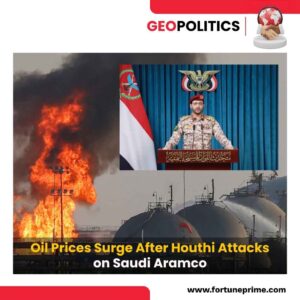
A Houthi ballistic-missile barrage struck a Saudi-led coalition training gathering in Yemen’s Shabwa province on October 19, killing at least 73 security personnel according to local authorities; the WSJ reports at least 75 dead and more than 200 injured, including Saudi soldiers.
The attack matters because it was not merely a battlefield casualty event. It demonstrated that the Houthis retain the ability to conduct coordinated missile strikes against assembled forces, despite years of Saudi-led operations, air defenses, and blockade efforts. The coalition subsequently said it intercepted two ballistic missiles aimed at Taif and Yanbu, underscoring the continuing threat to Saudi territory.
For oil markets, the central issue is tail risk, not necessarily an immediate supply disruption. Houthi attacks can affect shipping security in the Red Sea and Bab el-Mandeb region, raise insurance and routing costs, and periodically lift crude and refined-product risk premiums. But sustained price rallies require evidence of actual export, refinery, or shipping disruption—not only missile launches.
The strategic implication is that Saudi Arabia faces a dual challenge: improving tactical intelligence and force protection while managing a conflict that remains linked to Iran’s regional network. Escalation could draw in broader maritime-security responses; de-escalation would require credible political and military pressure on the Houthis and their supply channels.
China–North Korea: A New Bridge, A Deeper Economic Lifeline
Kim Jong Un made an unannounced one-day visit to Dandong, China, crossing the newly opened New Yalu River Bridge linking Sinuiju and Dandong. He met senior Chinese official Wang Huning, who conveyed greetings from President Xi Jinping; Kim did not meet Xi during the trip.
The bridge is symbolically and economically important. It had been completed years earlier but remained unused; its opening creates a new physical channel for trade, logistics, and potential Chinese investment into North Korea. Reports describe the crossing as roughly 3 kilometers long and built with substantial Chinese investment.
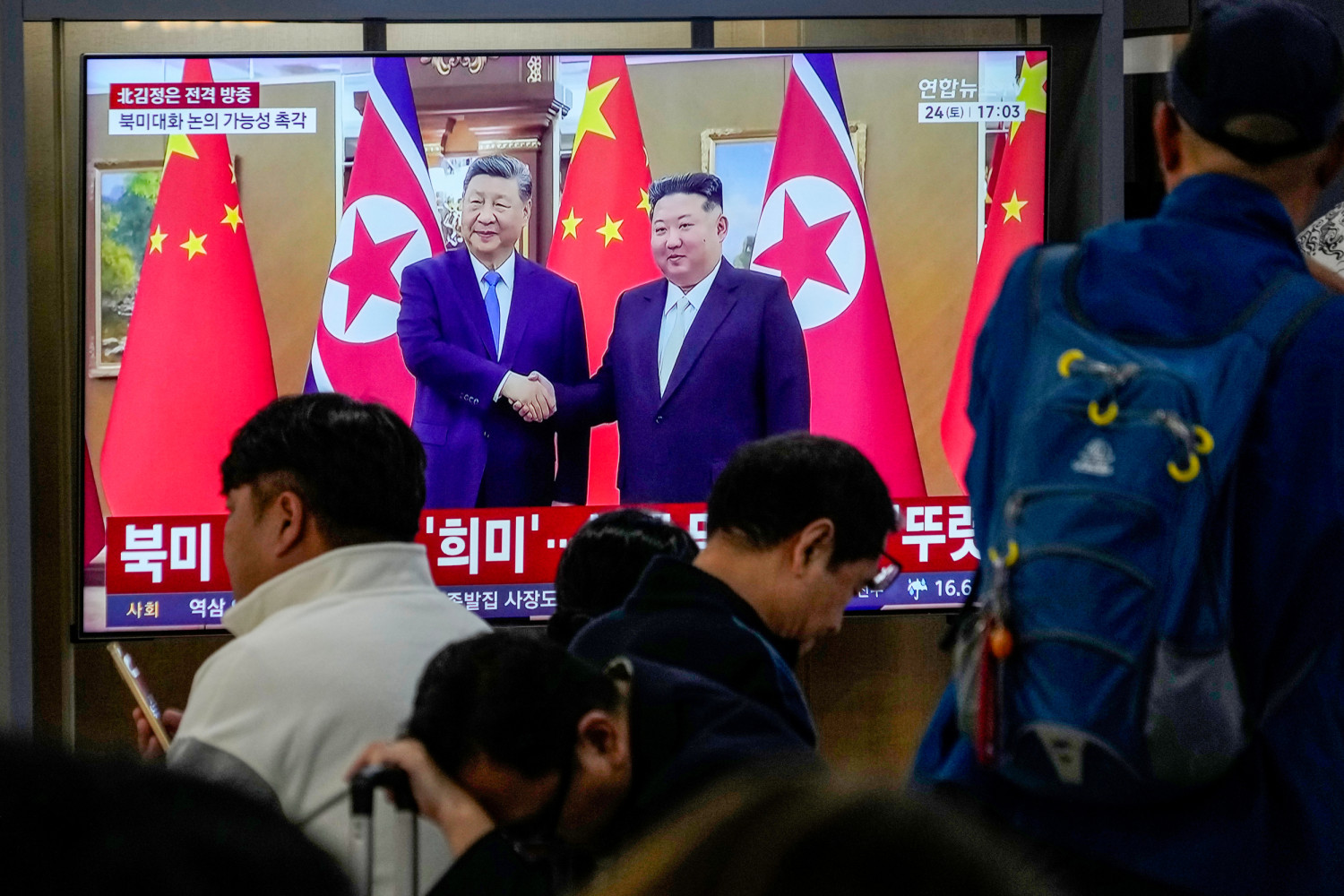
Beijing–Pyongyang warming has three implications:
- Sanctions exposure: Closer economic integration may test the durability of United Nations sanctions enforcement, particularly if trade, energy, or labor flows expand.
- Regional security: A stronger Chinese economic lifeline gives North Korea more resilience against external pressure, potentially reducing Pyongyang’s incentive to concede in denuclearization talks.
- Diplomatic sequencing: Kim’s visit came ahead of possible North Korea–U.S. contacts around the APEC summit in Shenzhen, according to South Korean reporting; that makes Beijing’s role as intermediary or strategic buffer especially relevant.
For markets, the main relevance is geopolitical rather than immediate asset-price impact. A more confident Pyongyang raises risk for South Korean assets, Japanese yen safe-haven demand, and regional defense spending expectations. It also reinforces the broader theme of economic statecraft: infrastructure, energy, and trade corridors are increasingly tools of geopolitical influence.
What to Watch
- Israel’s seat count and coalition talks: Watch whether either bloc reaches 61 seats; a hung Knesset would extend uncertainty.
- U.S. Congress and Russia sanctions: Monitor legislative pushback, further sanctions waivers, and any Ukraine aid or enforcement measures.
- Red Sea shipping and Houthi activity: Track missile interceptions, vessel rerouting, war-risk insurance, and any direct strike on critical energy or port infrastructure.
- China–North Korea trade data and diplomatic meetings: Watch for signs of expanded cross-border commerce, Chinese investment, and whether Kim meets Xi at a later stage.
Bottom Line
These stories are separate geographically but connected strategically. Israel’s election will test whether domestic political legitimacy can be reshaped by diaspora participation; U.S. Russia policy is testing alliance cohesion and congressional constraints; Yemen shows that non-state actors can still impose high-cost military surprises; and China–North Korea infrastructure diplomacy signals a deepening alternative axis of economic and political support.
For investors, the common thread is policy uncertainty under geopolitical stress. The most tradable risks are oil-market disruptions around Yemen, sanctions-policy shifts involving Russia, and regional risk premia in Asia if Pyongyang’s ties with Beijing translate into greater strategic confidence.
People Also Ask
How could expatriate voters influence Israel’s election?
Returning Israeli expatriate voters could influence closely contested seats and coalition arithmetic. The article suggests neither major bloc has a clear majority, making turnout potentially important to government formation.
Why does U.S. Russia policy matter for Ukraine?
Changes to Russian sanctions and Western support can affect Ukraine’s military funding, fiscal outlook, and negotiating position. Congressional resistance may also limit or complicate the administration’s policy choices.
How could Houthi attacks affect oil markets?
Houthi attacks can increase shipping risks, insurance premiums, and routing costs around the Red Sea and Bab el-Mandeb. Sustained oil-price increases, however, generally require evidence of actual supply or transport disruption.
What is the significance of closer China–North Korea ties?
Expanding China–North Korea trade infrastructure points to stronger economic connections. The article presents this development as part of a broader shift in regional relationships, but provides limited detail about its specific consequences.
What connects these four geopolitical developments?
Their shared theme is pressure on political legitimacy and security alliances. Each development could reshape policy decisions, international partnerships, and how markets price geopolitical uncertainty.