









Week Ahead in Financial Markets: Key Events and Economic Calendar for August 24-29, 2026
Markets enter the week of August 24, 2026, focused on a concentrated slate of policy speeches, inflation and growth data, and central bank communications that form the core of the week ahead in financial markets. Traders are monitoring the U.S. economic calendar closely after a period of notable moves in Bitcoin, gold, the dollar, and oil. The Jackson Hole Symposium, featuring new Federal Reserve Chair Kevin Warsh, stands as the primary event of the week, alongside Treasury Secretary Bessent’s comments and several high-impact data releases.

Recent price action has set the backdrop. Bitcoin rose roughly 23 percent over the prior week to trade near $77,000, supported by the Treasury’s announcement of expanded long-term bond buybacks and a weaker dollar. Gold advanced about 5 percent in the same period while the dollar index declined roughly 1.4 percent. Oil prices eased at the start of the week, with WTI crude near $85.93 after a 1.3 percent drop and Brent around $93.22 after a 1.24 percent decline. These moves occurred as investors awaited details on threatened U.S. sanctions related to Iran.
Equity markets in Asia opened the week largely flat. The Nikkei average was displayed near 65,724, reflecting cautious positioning ahead of the Iran-related announcements and Nvidia’s upcoming results. Currency markets showed the euro near 1.1679 against the dollar, with the greenback at a three-month low versus the euro. Cross rates and other major pairs reflected the broader dollar softness.
Key Takeaways:
- The Jackson Hole Symposium with new Fed Chair Kevin Warsh leads the week. It offers the first clear look at his policy views amid a weaker dollar.
- Key U.S. data arrives soon. Watch Core PCE, early GDP, Consumer Confidence, and Jobless Claims for clues on inflation and growth.
- Markets moved strongly last week. Bitcoin rose near $77,000 (+23%). Gold gained about 5%. The dollar fell.
- Treasury Secretary Bessent speaks early. Traders will listen for fiscal policy notes, bond buybacks, and possible sanctions news.
- Traders stay careful across Asian stocks, currencies, and commodities. They wait for clear signals from data and central bank talks.
Economic Calendar Highlights for the Week
The economic calendar for August 23–29 centers on U.S. data and speeches, with additional releases from Australia, Japan, and Canada.
On Tuesday, August 25, Treasury Secretary Bessent is scheduled to speak. Markets will examine any comments on fiscal policy, bond buybacks, and potential sanctions measures.
Wednesday, August 26, brings a cluster of releases. The Conference Board Consumer Confidence index is due, with the previous reading at 90.8. Australian CPI data arrive in multiple forms: monthly, yearly, and trimmed-mean measures. Later in the U.S. session, Core PCE Price Index and preliminary GDP figures are expected. Previous Core PCE stood at 0.1 percent month-over-month, while preliminary GDP was reported at 1.5 percent quarter-over-quarter.
Thursday, August 27, features weekly Unemployment Claims. The prior reading was 206,000.
Friday, August 28, marks the start of the Jackson Hole Symposium. Tokyo Core CPI is also scheduled, with the previous yearly figure at 1.9 percent. Canadian GDP for the month follows, previous at 0.3 percent.
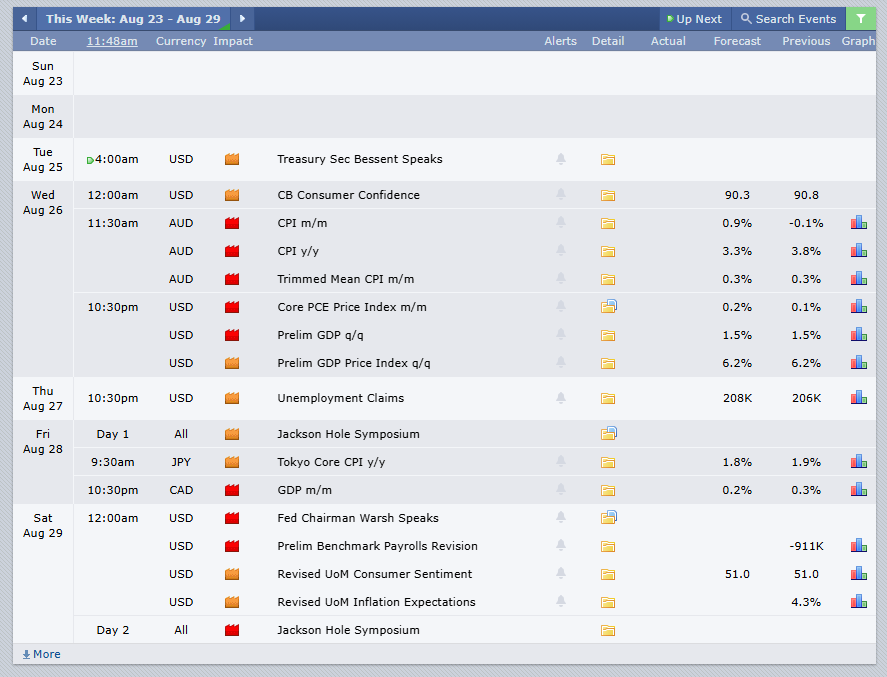
Saturday, August 29, includes Fed Chair Kevin Warsh’s scheduled remarks. Additional U.S. releases that day cover the preliminary Benchmark Payrolls Revision, revised University of Michigan Consumer Sentiment, and revised inflation expectations. The previous Benchmark Payrolls Revision stood at –911,000. Jackson Hole continues into a second day.
These calendar items arrive after a period of rotation into real assets. Investors had shifted toward gold, silver, crude oil, and Bitcoin amid concerns over currency dynamics and fiscal policy following the Treasury’s buyback announcement. Long-dated Treasuries faced uncertainty without clear guidance on long-term borrowing costs.
Policy Speeches and Central Bank Focus
Fed Chair Kevin Warsh’s first Jackson Hole keynote draws particular attention. The symposium traditionally provides a platform for central bankers to discuss monetary policy frameworks, inflation dynamics, and the economic outlook. Markets will assess any references to the balance between fiscal and monetary policy, especially given the recent Treasury buyback activity and the dollar’s recent weakness.
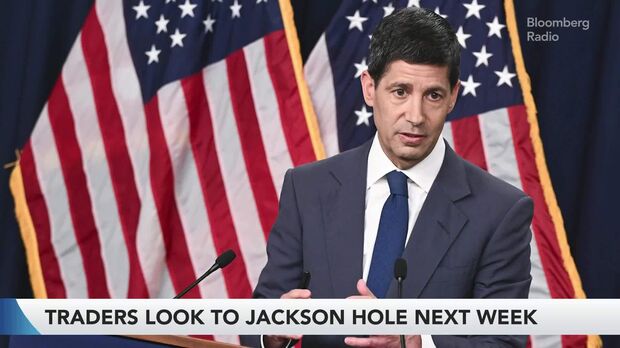
Treasury Secretary Bessent’s remarks earlier in the week may address sanctions policy and debt management. Oil markets had risen nearly 6 percent the prior week on supply-disruption concerns linked to shipping risks. Further developments on Iranian-related measures could influence energy prices.
Currency and Commodity Backdrop
EUR/USD hovered near 1.17 at the start of the week. The dollar began the period at a three-month low against the euro. Cross rates from major pairs showed AUD, GBP, NZD, CAD, CHF, JPY, and CNY relationships consistent with the softer dollar tone. Commodity prices reflected mixed moves: gold near $4,675 per ounce, silver near $68.72, copper near $6.56, platinum near $1,879, light crude near $85.34, and natural gas near $2.73.
Bitcoin traded near $77,234 on the crypto heatmap, with Ethereum around $2,438. Broader digital asset performance varied across the market capitalization spectrum.
Equity sector performance on the prior session showed mixed results across technology, communication services, consumer cyclical, healthcare, and other groups. Nvidia and other semiconductor names remained in focus ahead of earnings and pricing commentary related to AI server costs.
Market Context and Positioning
The combination of policy speeches and data releases creates a dense schedule. Core PCE, preliminary GDP, consumer confidence, and the payrolls revision provide updates on inflation, growth, and labor market trends. Jackson Hole remarks from Chair Warsh offer the first major public platform for the new Fed leadership to outline thinking on monetary policy.
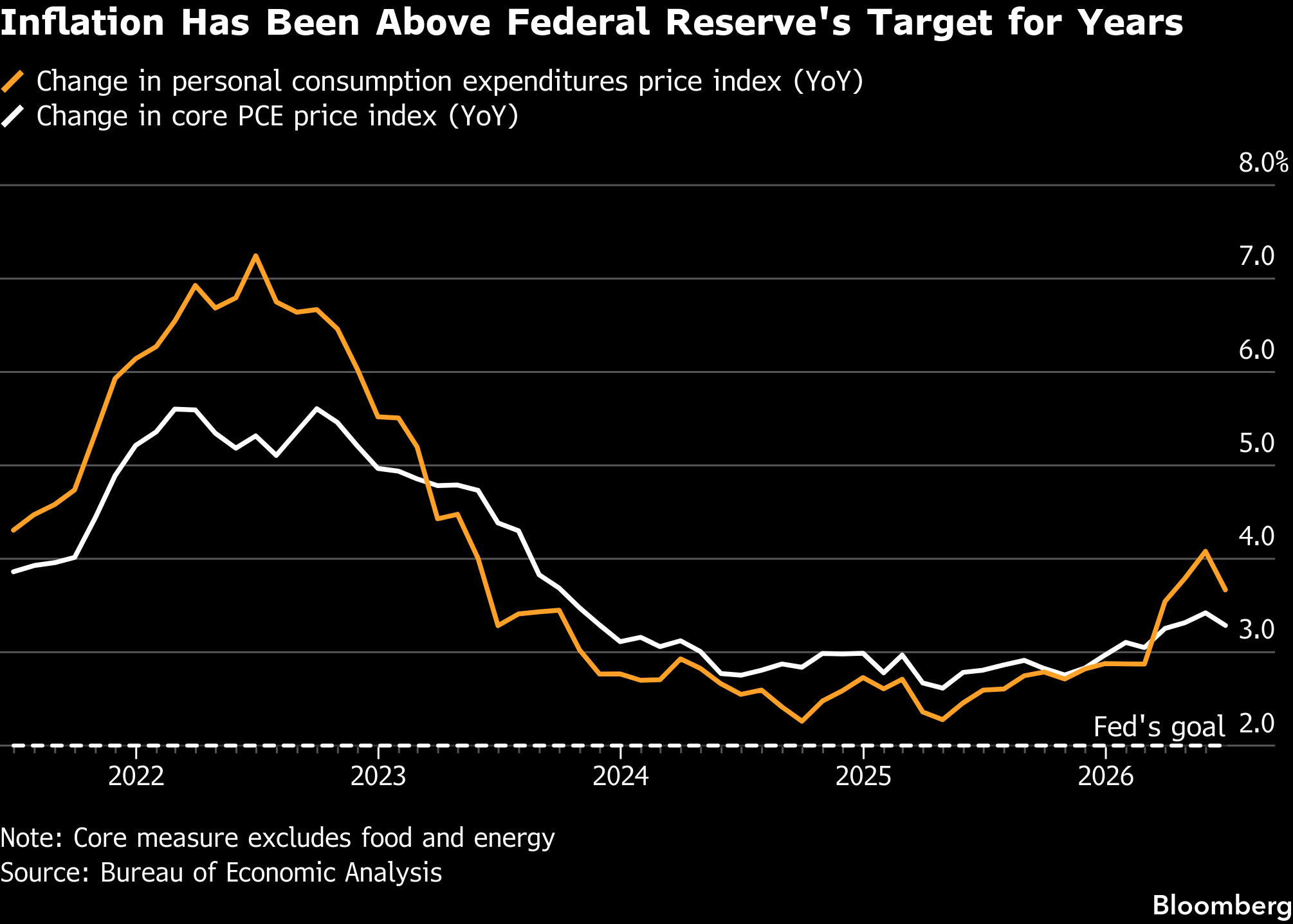
Bond market participants continue to assess the interaction between Treasury buyback operations and longer-term yields. Currency markets remain sensitive to relative policy expectations between the Federal Reserve and other major central banks. Commodity markets carry residual sensitivity to geopolitical developments involving Iran and energy supply.
For those new to the market, Forex Trading Basics offers essential insights into trading fundamentals, including how economic calendars and central bank communications influence currency pairs.
Fortune Prime Global continues to serve clients as a reputable Forex broker providing access to global markets. Further information is available at https://fortuneprime.com.
Summary of the Week Ahead
The week of August 24–29, 2026, centers on the U.S. economic calendar and the Jackson Hole Symposium. Key scheduled items include Treasury Secretary Bessent’s speech, Core PCE and GDP data, unemployment claims, Tokyo and Canadian releases, and Fed Chair Kevin Warsh’s remarks. These events follow recent advances in Bitcoin and gold, a softer dollar, and profit-taking in oil ahead of potential sanctions announcements. Asian equities opened the week in a cautious stance. Markets will absorb the sequence of data and policy communications as the primary drivers of near-term attention across currencies, commodities, equities, and digital assets.
People Also Ask
What is the main event at Jackson Hole this week? The Jackson Hole Symposium features new Federal Reserve Chair Kevin Warsh. His speech gives markets the first major view of his thinking on policy, inflation, and growth.
Which economic data releases matter most this week? Key U.S. numbers include Core PCE, early GDP, Consumer Confidence, and weekly Jobless Claims. Australian CPI, Tokyo Core CPI, and Canadian GDP also arrive.
How have Bitcoin and gold performed recently? Bitcoin climbed about 23% last week and traded near $77,000. Gold rose roughly 5%. Both gained as the dollar weakened and the Treasury expanded bond buybacks.
Why is the dollar under pressure? The dollar index dropped about 1.4% recently. It started the week at a three-month low versus the euro. Investors shifted money into real assets and watched fiscal policy.
What should traders watch regarding oil and sanctions? Oil prices fell at the start of the week after earlier gains. Further comments from Treasury Secretary Bessent or news on Iran measures could move energy prices again.