













Market Watch: Tech Selloff and Geopolitical Pressures Shape the Trading Week
Global markets closed the week under pressure as technology shares led a broad risk-off move. The Nasdaq recorded its steepest daily decline since June. Meanwhile, oil prices climbed on fresh Middle East tensions. Safe-haven flows supported the yen and government bonds. Cryptocurrencies and precious metals also retreated over the five-day period. Friday’s economic data added further detail to the picture, with mixed readings on confidence and manufacturing activity.
Key Takeaways:
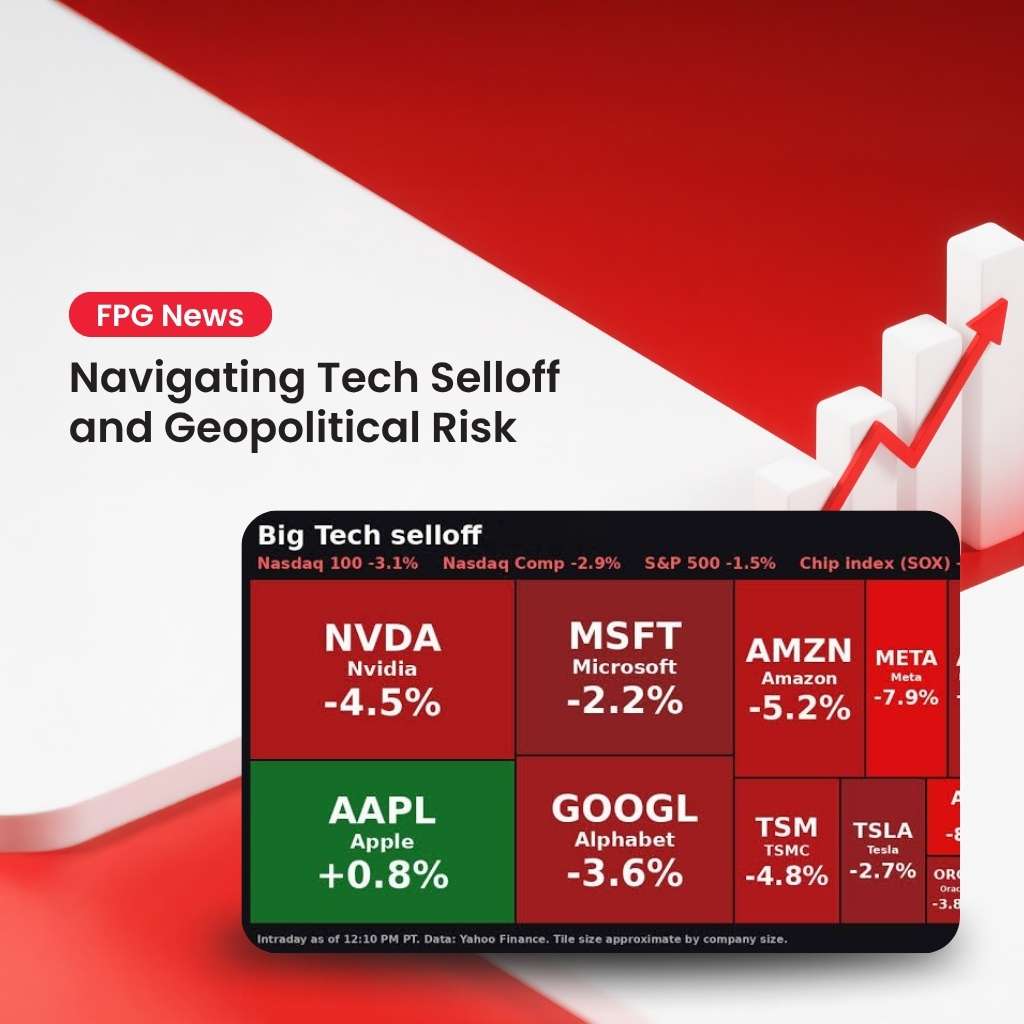
- Technology stocks led the selloff: The Nasdaq fell 2.6% on Thursday, while semiconductor shares slid roughly 6.7% amid concerns about AI infrastructure spending and future cash flow.
- Oil rose on geopolitical tensions: Crude oil gained 4.18% over five days, supported by Middle East supply concerns, including reported infrastructure attacks and tanker incidents.
- Defensive assets attracted investors: The Japanese yen, Swiss franc, and government bonds benefited from safe-haven demand, while healthcare stocks showed relative strength.
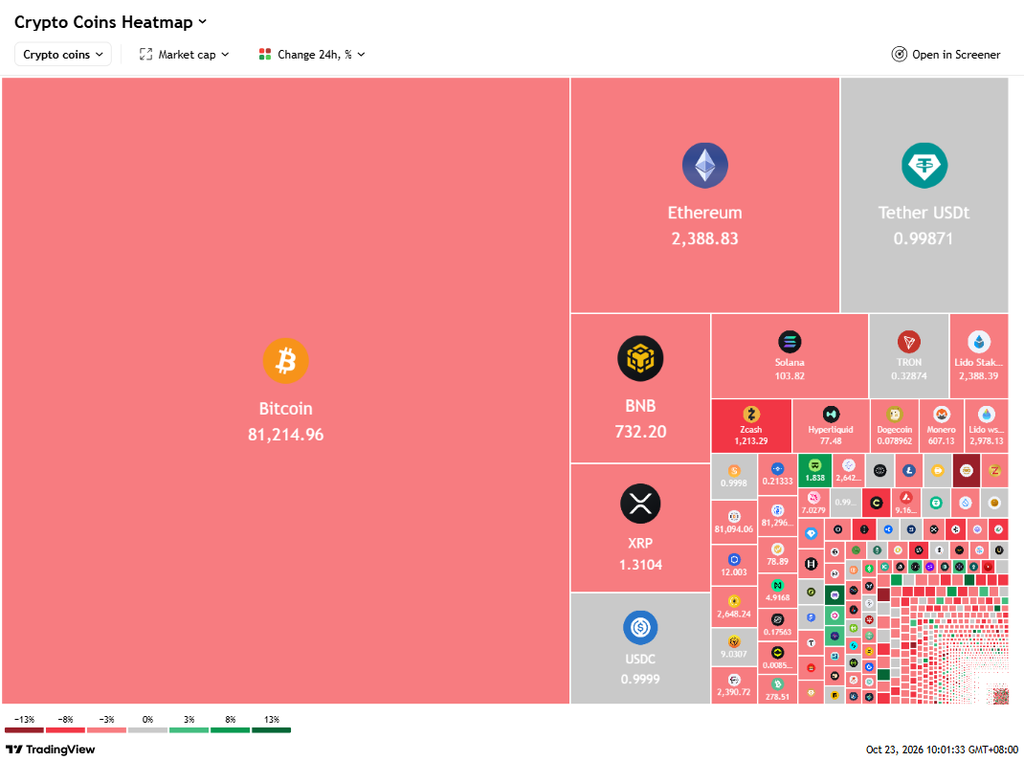
- Cryptocurrencies and precious metals weakened: Bitcoin traded near $81,215, while gold and silver lost approximately 4% and 6%, respectively, over five days.
- European fiscal concerns pressured the euro: France’s 10-year bond yield exceeded 5%, its spread over German Bunds widened, and eurozone consumer confidence deteriorated.
Equity Markets Face Sharp Technology Reversal
U.S. equity indexes finished Thursday lower after a heavy session for growth and semiconductor stocks. The Nasdaq Composite fell 2.6 percent to 26,008.86. The S&P 500 declined 1.2 percent to 7,663.43. The Dow Jones Industrial Average closed roughly flat.
Chipmakers and artificial-intelligence related names absorbed the largest losses. Nvidia dropped 4.40 percent. Advanced Micro Devices fell 8.10 percent. Micron declined 6.26 percent. Intel lost 8.04 percent. The semiconductor group as a whole slid roughly 6.7 percent. Meta Platforms fell nearly 7 percent. Alphabet declined more than 3 percent. Amazon lost 4.57 percent. Tesla dropped 3.08 percent. Apple managed a modest gain of 1.23 percent.
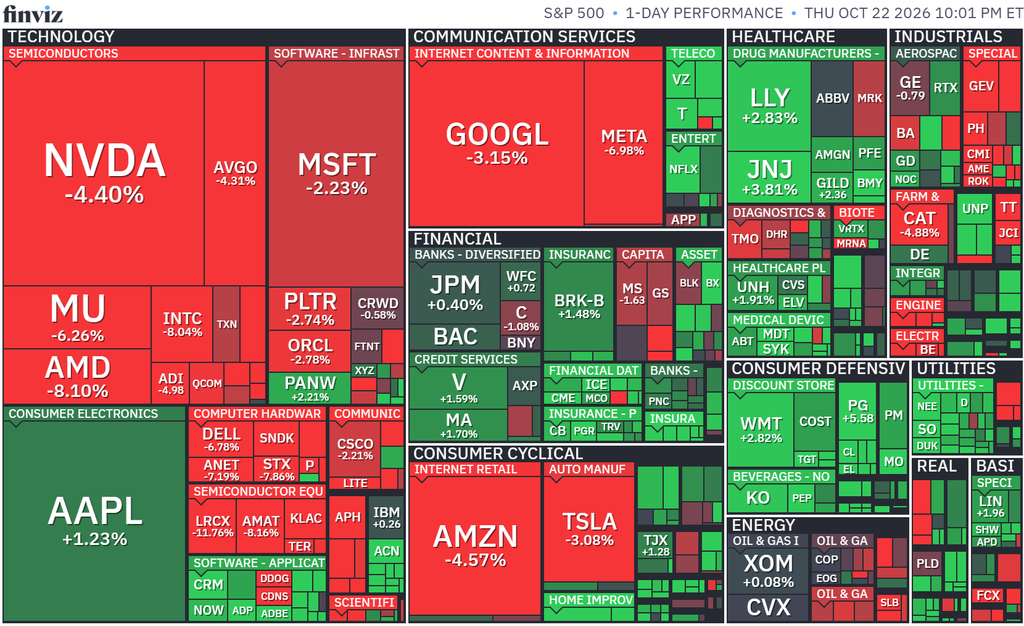
Healthcare and some defensive sectors offered relative support. Eli Lilly rose 2.83 percent. Johnson & Johnson advanced 3.81 percent. Consumer staples and select financial names also held up better than the broader market.
The move reflected renewed caution around the scale of capital spending required for artificial-intelligence infrastructure. Corporate updates from major technology firms raised questions about free-cash-flow trends and future investment plans. As a result, investors rotated away from high-valuation growth stocks toward more defensive areas.
Oil Climbs on Middle East Developments
Energy markets moved higher as geopolitical risks intensified. Light crude oil settled near 100.18 dollars per barrel, up 0.71 percent on the day and 4.18 percent over the five-day period. Prices had risen about 2.4 percent on Thursday alone. West Texas Intermediate traded around 100.75 dollars at one point.
Reports of attacks on Saudi infrastructure, tanker incidents in the Strait of Hormuz, and potential further regional actions contributed to the advance. Supply concerns therefore supported the complex even as broader risk appetite weakened. Natural gas, by contrast, fell 1.32 percent on the day and 14.10 percent over five days, closing near 2.759 dollars per million British thermal units.
Precious Metals and Industrial Metals Retreat
Gold and silver posted losses across most time frames. Gold traded at 4,021.7 dollars per ounce, down 0.95 percent on the day and 4.01 percent over five days. Silver stood at 54.15 dollars, off 1.56 percent daily and 5.99 percent for the week. Platinum declined 0.58 percent on the day and 4.13 percent over five days. Copper edged up 0.03 percent on Friday but remained down 2.39 percent across the five-day window.
The combination of higher real yields earlier in the period and a shift into cash and bonds limited demand for non-yielding assets. Longer-term gains for gold and silver remained intact on a five-year basis, yet the weekly performance reflected the risk-off tone that developed late in the period.
Cryptocurrency Markets Join the Risk-Off Move
Bitcoin retreated from recent highs near 85,000 dollars. The leading cryptocurrency traded around 81,215 dollars, with the broader market showing widespread red on the 24-hour heatmap. Ethereum stood near 2,388.83. Other major tokens, including BNB, XRP, and Solana, also recorded declines. Liquidations reached several hundred million dollars as the move accelerated.
Spot exchange-traded fund inflows continued over recent sessions, yet they proved insufficient to offset the broader selling pressure that accompanied the technology-sector weakness. Crypto-linked equities followed the same direction.
Currency Markets Reflect Safe-Haven Demand and Regional Stress
Foreign-exchange markets displayed clear differentiation. The Japanese yen strengthened to approximately 156.87 against the dollar, its firmest level since late September. The Swiss franc also outperformed. The U.S. dollar index touched a three-week low near 101.45 before recovering modestly toward 101.85.
The euro faced pressure linked to French fiscal concerns. France’s 10-year yield moved above 5 percent for the first time since 2002. The spread versus German Bunds widened beyond 160 basis points. EUR/USD traded near 1.1210 after reversing from higher levels. Eurozone consumer confidence slipped to minus 18.
Sterling and the Australian dollar showed mixed reactions to domestic data. The Australian dollar hovered near 0.7012 against the U.S. dollar. Cross rates continued to reflect the relative strength of the yen and franc against higher-yielding or growth-sensitive currencies.
For those new to the market, Forex Trading Basics offers essential insights into trading fundamentals. Clients of Fortune Prime Global continue to access deep liquidity and transparent pricing across major and minor currency pairs during periods of elevated volatility.
Friday’s Economic Data Provide Additional Color
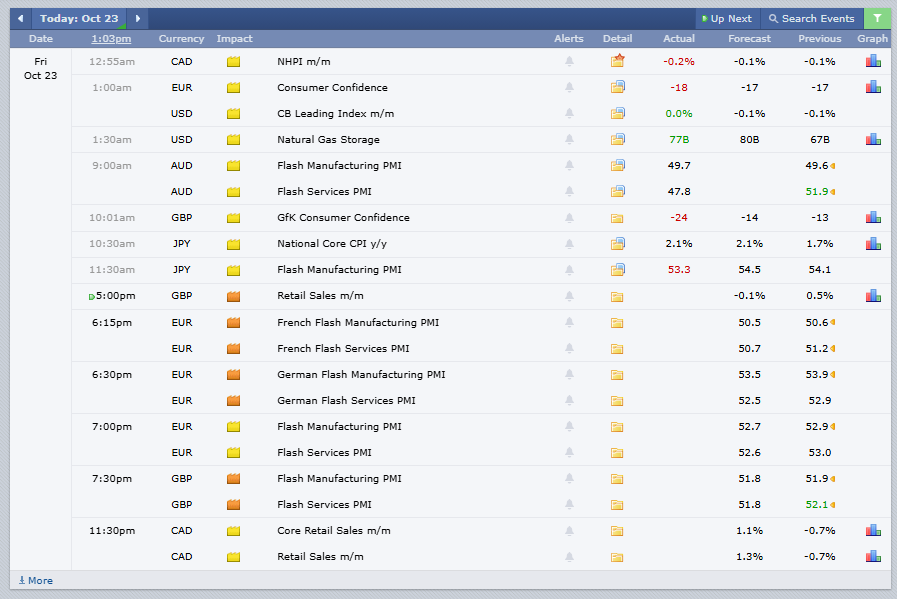
Several indicators arrived on Friday. Canada’s New Housing Price Index fell 0.2 percent month-over-month, slightly softer than the expected 0.1 percent decline. Eurozone consumer confidence registered minus 18, a touch weaker than the forecast of minus 17. The U.S. Conference Board Leading Index was unchanged at 0.0 percent, better than the expected 0.1 percent drop. Natural-gas storage rose by 77 billion cubic feet, below the 80 billion forecast yet above the prior 67 billion reading.
Australian flash manufacturing PMI held near 49.7, while the services reading dropped to 47.8. U.K. GfK consumer confidence plunged to minus 24, well below the expected minus 14. Japan’s national core CPI rose 2.1 percent year-over-year, matching forecasts and accelerating from 1.7 percent previously. Japan’s flash manufacturing PMI came in at 53.3, below both the forecast of 54.5 and the prior 54.1.
Later releases scheduled for the European and U.K. sessions included French, German, and eurozone flash PMIs along with U.K. retail sales. Canadian retail sales data were also due later in the day.
Bond Markets Attract Safe-Haven Flows
Treasury yields declined as investors sought safety. The 10-year yield fell roughly 16 basis points toward 4.97 percent, a one-month low. The move reflected the rotation out of technology shares and into government debt. Market pricing continued to assign a high probability of a hold at the next Federal Reserve meeting, while the outlook for later policy adjustments remained data-dependent amid elevated oil prices and recent inflation readings.
Summary of the Week’s Market Developments
The trading week concluded with a clear shift in risk sentiment. Technology and artificial-intelligence related equities led the declines after corporate updates and broader growth concerns. Oil prices advanced on geopolitical headlines. Precious metals and cryptocurrencies retreated over the five-day period. Safe-haven currencies and government bonds attracted inflows. Friday’s data releases added incremental detail on confidence and activity levels across several economies. Market participants will continue to monitor developments in the Middle East, upcoming corporate results, and the next round of economic indicators.
People Also Ask
Why did technology stocks lead the market selloff?
Investors questioned the scale of AI infrastructure spending and its implications for free cash flow. Those concerns prompted selling in high-valuation technology and semiconductor stocks and a rotation toward defensive sectors.
How did Middle East tensions affect oil prices?
Reported attacks on Saudi infrastructure and tanker incidents in the Strait of Hormuz increased concerns about supply disruptions. These risks helped push crude oil prices higher despite weaker broader market sentiment.
Which assets benefited from safe-haven demand?
The Japanese yen, Swiss franc, and government bonds attracted investors seeking safety. Healthcare and other defensive equity sectors also held up better than technology shares.
Why did gold and cryptocurrencies decline during the risk-off move?
Gold faced pressure from higher real yields earlier in the period and investor preference for cash and bonds. Cryptocurrencies fell alongside technology stocks, with liquidations amplifying selling despite continued spot ETF inflows.
What put pressure on the euro?
French fiscal concerns, rising government borrowing costs, and a widening yield spread versus German Bunds weighed on the euro. Weaker eurozone consumer confidence added to the pressure.