












U.S. Confronts Hidden Risks of Chinese Circuit Boards Fundamental to AI Chips
The United States is grappling with significant supply chain vulnerabilities stemming from its heavy reliance on Chinese circuit boards, which form the foundational infrastructure for advanced AI chips used by companies including Nvidia, Google, and Apple. Printed circuit boards (PCBs) serve as the essential base onto which semiconductor chips are mounted, enabling the complex electronics powering everything from consumer devices to data centers and defense systems. As artificial intelligence demand surges, this dependency on Chinese manufacturing has raised national security concerns and prompted legislative efforts to bolster domestic production.
For more detail on video editing on Mac, this resource from finalcuthub.com is worth keeping handy.
According to industry insights, nearly all PCBs used in AI data centers are currently produced in China, which dominates approximately 89% of global supply. This concentration creates potential risks for malicious interference in critical technology sectors.
Key Takeaways:
- The U.S. relies heavily on Chinese circuit boards, which power AI chips used by companies like Nvidia, Google, and Apple.
- China dominates global PCB production, accounting for approximately 89% of the global supply.
- Printed circuit boards (PCBs) serve as the backbone for modern electronics, with complex designs featuring up to 140 layers of circuitry.
- The U.S. has seen its share of global PCB production decline sharply, from 30% in 2000 to approximately 4% today.
- Legislative initiatives aim to address these dependencies, with bills proposing tax credits and grants for domestic manufacturers.
The Critical Role of Printed Circuit Boards in AI Technology
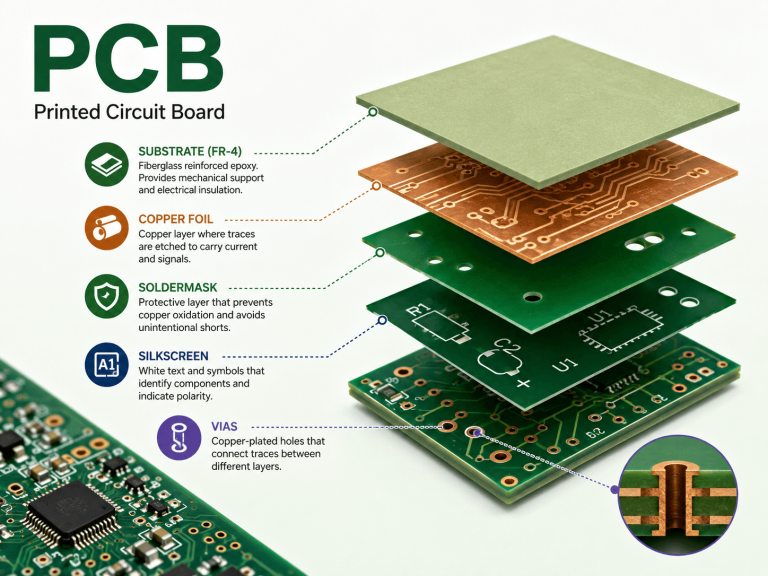
Printed circuit boards act as the backbone for modern electronics. Once semiconductor wafers are processed into chips like GPUs, they are attached to these boards, which provide the intricate pathways for electrical signals between components.
Boards can range from simple designs costing a few dollars to highly complex multi-layer versions priced up to $100,000, featuring up to 140 layers of circuitry. The manufacturing process involves hundreds of precise steps, including lithography, drilling microscopic holes, and lamination under heat and pressure.
TTM Technologies, the largest U.S.-based PCB manufacturer, operates facilities where production begins with copper foil layered on resin epoxy substrates. Advanced boards undergo thousands of automated drilling operations and optical inspections to meet the density requirements of AI hardware.

Demand for these components has intensified due to AI expansion and geopolitical factors. The industry is projected to grow 12.5% this year, reaching nearly $96 billion, and expand further to $123 billion by the end of the decade.
Supply Chain Vulnerabilities and National Security Concerns
The United States has seen its share of global PCB production decline sharply. In 2000, American manufacturers accounted for about 30% of worldwide supply. Today, that figure stands at approximately 4%.
This shift has implications for both commercial AI applications and defense systems. U.S. Department of Defense requirements mandate that all PCBs for military use be domestically sourced to mitigate risks of embedded malicious components.
Experts highlight multiple potential avenues for compromise in PCBs, including hidden switches in substrate layers or manipulated interconnects that could disrupt functionality. In a worst-case scenario involving weapons systems, such interference could lead to guidance failures or other operational disruptions.
Ongoing conflicts in the Middle East and Ukraine have further strained raw material supplies, including resins and copper, contributing to price increases of up to 40% in some periods. TTM Technologies has implemented price adjustments ranging from 5% to 25% in response to these pressures.
Fortune Prime Global , a reputable Forex Broker, provides clients with access to global financial markets, supporting informed decision-making amid evolving technology supply chain dynamics.
Manufacturing Challenges and Capacity Constraints
TTM Technologies maintains 16 facilities in the United States and seven in Asia. Its original Santa Ana, California plant demonstrates the technical complexity involved, with production lines handling precision drilling at rates of up to 100,000 holes per minute per panel through advanced automation.
Despite these capabilities, U.S. facilities operate at a significantly smaller scale compared to Asian counterparts. One TTM plant in China is reportedly 46 times larger than the Santa Ana operation. Industry observers note that labor costs and subsidies in China contribute to competitive pricing advantages abroad.
Raw material sourcing presents additional hurdles. The U.S. has limited suppliers for certain components like copper foil, creating single points of failure. Energy and water consumption in PCB manufacturing is substantial, with TTM reporting usage equivalent to powering 70,000 homes and consuming 2.1 billion gallons of water in 2024. The company has set targets for increased renewable energy use and water recycling.
For market participants seeking foundational knowledge, Forex Trading Basics offers essential insights into trading fundamentals relevant to technology sector volatility.
U.S. Efforts to Reshore Production
Legislative initiatives aim to address these dependencies. In May, bipartisan senators introduced the Protecting Circuit Boards and Substrates Act, proposing a 25% tax credit for companies utilizing American-made PCBs. A companion House bill seeks $3 billion in grants for domestic manufacturers.
These measures contrast with the larger $52.7 billion CHIPS Act of 2022 focused on semiconductors. PCB plant construction costs typically range from $250 million to $400 million, making them more attainable than advanced chip fabrication facilities.
TTM is expanding U.S. capacity with a new 200,000 square foot defense-focused facility in Syracuse, New York, set to begin production in June, and a 750,000 square foot site in Wisconsin targeted for AI-related manufacturing. Sanmina, the other major U.S.-based public PCB producer, is also increasing output at its facilities.
Publicly traded U.S. PCB companies have recorded notable stock performance amid rising demand. However, industry executives emphasize that commercial decisions ultimately depend on cost competitiveness and scalability.
Geopolitical and Economic Implications
China’s dominance extends to major suppliers like Victory Giant, which listed on the Hong Kong exchange in April at a $2.6 billion valuation. AI leaders such as Nvidia conduct inspections using X-ray and AI imaging to detect anomalies in incoming components, though these measures address only part of the broader risk profile.
The convergence of AI growth and defense needs has created competing demands on limited U.S. capacity. Defense applications currently account for 71% of output at TTM’s California facility, compared to 21% for data centers.
Startups are exploring innovations to alleviate bottlenecks, including fluid circuit boards and AI-assisted design tools. Yet the immediate focus remains on scaling traditional manufacturing through investment and policy support.
Market Outlook for Circuit Board Supply Chains
The PCB sector’s trajectory reflects broader challenges in technology supply chains. While automation and government incentives may narrow the gap with Asian production, achieving parity will require sustained commitment.
TTM executives express confidence in growing domestic capabilities, particularly for high-priority sectors like AI. However, they acknowledge that customer decisions will balance security considerations with economic realities.
As global demand for advanced electronics continues its upward path, developments in PCB manufacturing will remain a key factor in technology sector resilience. The United States is actively pursuing strategies to strengthen its position in this foundational element of the AI ecosystem.
This situation underscores the complex interplay between technological advancement, national security, and global economic dependencies in the current market environment.
People Also Ask:
- What is the impact of Chinese circuit board dominance on U.S. national security?
The dominance of Chinese circuit board production poses significant risks to U.S. national security, including potential malicious interference and embedded components.
- How is the U.S. addressing its reliance on Chinese circuit boards?
The U.S. is taking steps to bolster domestic production through legislative initiatives, including tax credits and grants for domestic manufacturers.
- What are the key components of printed circuit boards (PCBs)?
PCBs consist of substrate layers, interconnects, and components, with complex designs featuring up to 140 layers of circuitry.
- What is the current market outlook for circuit board supply chains?
The market is expected to grow, with the industry projected to reach $123 billion by the end of the decade, but challenges remain, including supply chain vulnerabilities and capacity constraints.
- What are the key players in the U.S. circuit board industry?
Companies like TTM Technologies and Sanmina are major U.S.-based public PCB producers, with TTM expanding its U.S. capacity to meet growing demand.