











Mid-Week Market Update: Treasury Yields Climb as Global Assets React
Global markets navigated a cautious mid-week session on September 30, 2026, as rising Treasury yields continued to shape trading across equities, currencies, commodities, and cryptocurrencies. The mid-week market update reflected firm US dollar strength, softer euro trading, and mixed moves in risk assets after recent volatility. Higher borrowing costs weighed on stocks while Bitcoin stabilized near recent levels. Economic data releases added further context for investors monitoring policy signals.
Key Takeaways:
- Treasury Yields hit multi-year highs, with 10-year yields near 5.25% and 30-year yields at 5.61%.
- Equity Markets face pressure from higher rates; major indexes show mixed performance.
- The US Dollar gains strength, while the euro softens due to weak Eurozone sentiment.
- Commodity Markets see mixed moves; energy prices dip while precious metals rise.
- Cryptocurrency Prices stabilize with Bitcoin hovering around $83,500 amid recent volatility.
Treasury Yields Reach Multi-Year Highs
US Treasury yields climbed notably in recent sessions. The 10-year yield moved near the 5.21 percent to 5.25 percent range. Meanwhile, the 30-year yield topped 5.61 percent, marking its highest level in two decades.
These advances reflected ongoing market adjustments to expectations around Federal Reserve policy and inflation trends. As a result, bond market stress intensified. Higher yields increase the cost of capital for companies and governments. In addition, they often reduce the relative appeal of equities.
The yield moves built on prior gains earlier in the week. Consequently, fixed-income markets remained a central focus for portfolio positioning.
Equity Markets Face Pressure from Higher Rates
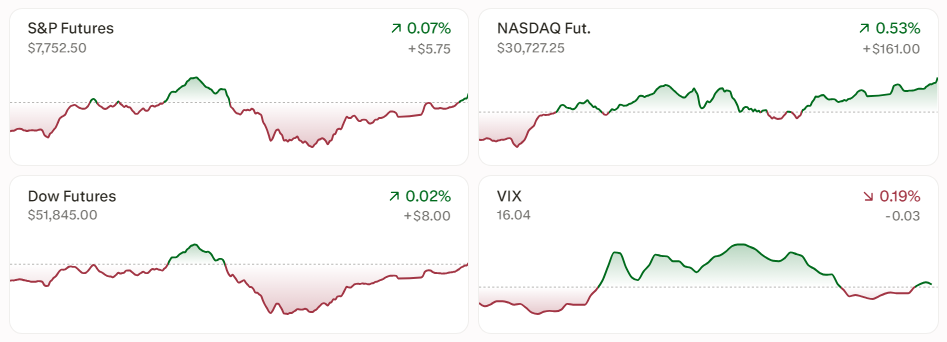
Major US equity indexes posted back-to-back losing sessions amid the bond market moves. Futures indicated a mixed open into the mid-week period. S&P 500 futures hovered near 7,752 with a modest gain of 0.07 percent. Nasdaq futures advanced about 0.53 percent to around 30,727. Dow futures showed limited change near 51,845.
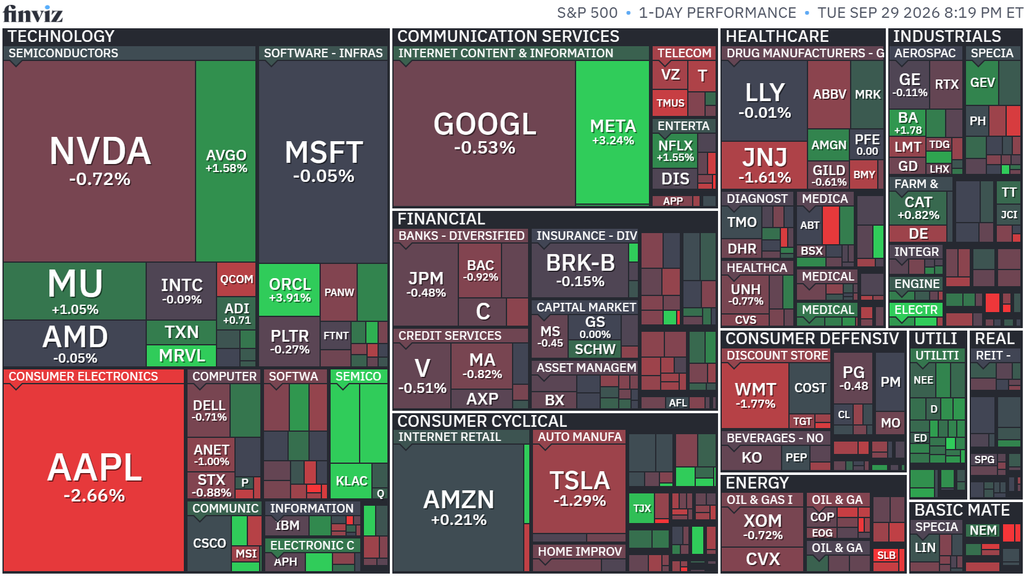
The VIX volatility index eased slightly to 16.04. However, underlying sector performance remained uneven. Technology stocks displayed mixed results. NVIDIA shares declined 0.72 percent in the prior session while Microsoft edged lower by 0.05 percent. Apple fell 2.66 percent. In contrast, Meta Platforms rose 3.24 percent and Oracle gained 3.91 percent.
Semiconductor names such as Micron advanced 1.05 percent. Consumer and industrial sectors also showed varied outcomes. Tesla declined 1.29 percent while Amazon posted a small gain of 0.21 percent. Higher yields continued to influence valuation debates across growth-oriented areas. Furthermore, the iShares Semiconductor ETF had advanced nearly 15 percent over the broader week despite recent choppiness.
US Dollar Gains While Euro Softens
The US dollar maintained firm footing against major counterparts. EUR/USD traded toward the 1.1300 to 1.1370 range, approaching levels near a two-month low. Spot rates hovered around 1.1337 according to recent cross data.
Rising Treasury yields supported the dollar. Expectations of further policy firmness also contributed. Weak Eurozone sentiment data added pressure. The Economic Sentiment Indicator came in at 97.9 against a 99.0 expectation. As a result, the euro faced selling interest.
Other pairs reflected similar dynamics. The Australian dollar and other commodity-linked currencies showed relative adjustments. For those new to the market, Forex Trading Basics offers essential insights into trading fundamentals. Currency moves remained closely tied to yield differentials and data surprises. In addition, Fortune Prime Global continues to serve clients as a reputable Forex broker with access to these global currency markets.
Commodity Markets Show Mixed Moves
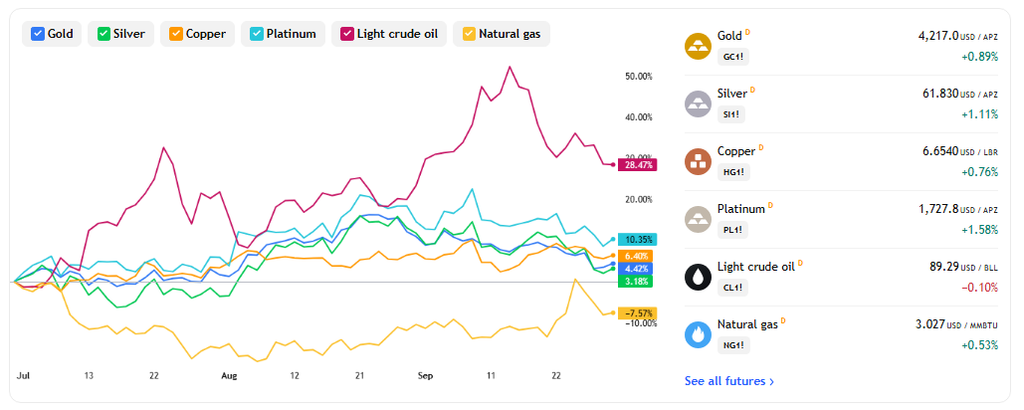
Energy prices retreated after earlier gains. WTI crude oil fell roughly 2 to 3 percent to the $89 to $90 per barrel area. Brent crude slipped toward about $103.60. Saudi Arabia’s Red Sea pipeline exports showed signs of recovery from a recent disruption. This recovery weighed on prices. However, ongoing geopolitical tensions limited the downside.
Precious metals posted gains. Gold traded near $4,217 per ounce with a rise of about 0.89 percent. Silver advanced 1.11 percent to around $61.83. Platinum rose 1.58 percent to approximately $1,728. Copper also moved higher by 0.76 percent. Natural gas edged up 0.53 percent. These shifts highlighted divergent drivers between industrial and safe-haven demand.
Cryptocurrency Prices Stabilize Amid Volatility
Bitcoin stabilized near $83,500 after volatile swings. The leading cryptocurrency hovered in the $83,500 to $84,000 zone. It had bounced from a local low near $82,500 to $82,600 after retreating from an $87,374 high. Moving averages continued to favor longer-term upward bias. Yet traders noted resistance near $85,131 and $87,374. The $80,000 to $82,000 zone remained a key support reference.
Ethereum and other major tokens showed softer tones on the daily heatmap. XRP advanced roughly 3.6 percent amid related corporate news. Overall market capitalization shifts reflected the broader risk environment. In addition, inflows into certain spot products continued to draw attention.
Sector and Corporate Developments
AI-related headlines contributed to selective uncertainty. A leaked report on an Anthropic IPO prospectus and the scrap of a next-generation OpenAI model raised fresh questions about safety and timelines. These developments unsettled some technology investors. Meanwhile, semiconductor stocks retained relative resilience over the week.
Evernorth Holdings shares jumped about 25 percent intraday to around $13.24 ahead of a September 30 shareholder vote on its merger to go public. The move tied partly to the company’s token treasury and related market interest. Separately, Keefe Bruyette & Woods lowered its price target on Bullish to $40 from $55. The firm cited the Equiniti acquisition yet maintained a Market Perform rating.
Key Economic Data Releases
Several important figures arrived mid-week. The Conference Board Consumer Confidence Index fell to 81.9. This reading missed the 89.2 forecast and declined from a previous 88.6. The drop marked the lowest level since 2014. Respondents highlighted concerns over prices and labor market conditions. Present situation and expectations components both weakened.
JOLTS job openings registered 7.08 million against a 7.23 million estimate. Previous data stood at 7.34 million. These soft prints added to the mixed labor market picture. Australian CPI figures were also due, including monthly and yearly measures plus the trimmed mean. German preliminary CPI data formed part of the European calendar.
Upcoming Indicators on the Horizon
Later sessions carried additional US releases. ADP non-farm employment change carried a 73,000 forecast against a prior 38,000. Core PCE price index expectations stood at 0.3 percent monthly. Final GDP and GDP price index readings were also scheduled. These reports will provide further insight into growth and inflation trends. Markets will continue to weigh the data against the recent yield advances.
Global markets closed the mid-week period with higher yields as a dominant theme. Equities faced pressure while the dollar held firm and Bitcoin found a temporary range. Commodity prices adjusted to supply signals and metals advanced. Economic data underscored softer confidence readings. The overall environment remained data-dependent as participants assessed the path of rates and growth.
People Also Ask:
How do rising Treasury yields affect the stock market?
Rising Treasury yields typically increase borrowing costs for companies and reduce the relative appeal of equities, often leading to downward pressure on stock prices.
Why is the US dollar strengthening with higher Treasury yields?
Higher Treasury yields make US assets more attractive to investors, increasing demand for the US dollar as they seek higher returns.
What is the impact of Treasury yields on commodity prices?
Higher yields can lead to a stronger dollar, making commodities more expensive for foreign buyers and potentially reducing demand, although specific commodity impacts can vary.
How does Bitcoin react to changes in Treasury yields?
Bitcoin and other cryptocurrencies may experience volatility as investors reassess risk and seek alternative assets in response to changing yields and market conditions.