












Trump Administration Prepares to Revoke Up to 200,000 Visas From Asylum Seekers
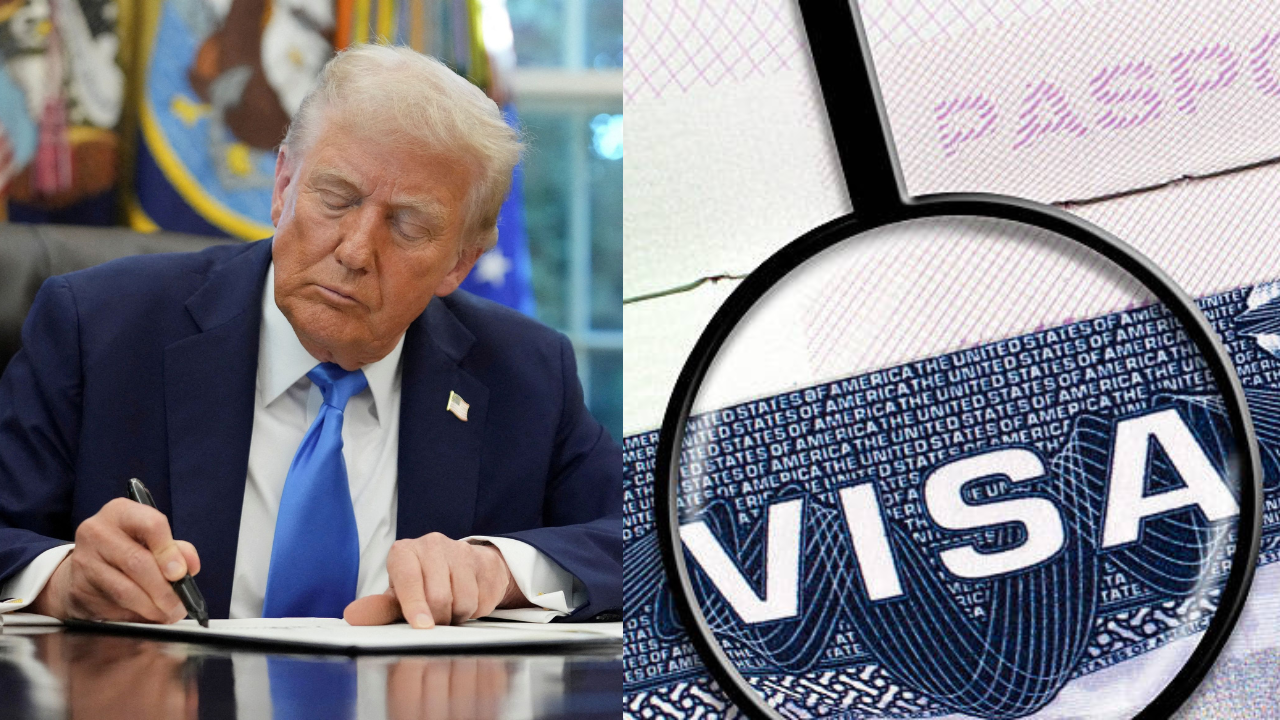
The Trump administration prepares to revoke up to 200,000 business and tourism visas held by foreigners who applied for asylum or now seek asylum in the United States. If officials carry out the plan, it could become the largest single mass visa revocation in U.S. history. Reports cite State Department documents and U.S. officials as the source of these details.
State Department spokesman Tommy Pigott confirmed that the agency coordinates with the Department of Homeland Security. Officials work to identify and revoke nonimmigrant visas of people who entered as short-term visitors and later filed for asylum to stay permanently.
Key Takeaways:
- The Trump administration plans to revoke up to 200,000 B-1 and B-2 visas from asylum seekers, marking a historic mass visa action.
- State Department and Department of Homeland Security coordinate to identify and revoke visas of short-term visitors who sought asylum.
- Revocation affects those with pending asylum claims but does not lead to immediate deportation; cases continue under a new category.
- Administration officials argue the measure addresses bogus asylum claims and protects visa and asylum law integrity.
- Legal challenges are expected, focusing on statutory authority and due process, with rights groups concerned about potential implications.
What the Plan Targets
The action focuses on B-1 business visas and B-2 tourism visas that the government issued between 2016 and 2026. It affects holders who later sought asylum or hold pending asylum claims. The Associated Press reviewed internal documents and spoke with two officials who requested anonymity. Those sources estimate that as many as 200,000 visas could face revocation.
B-1 and B-2 visas permit temporary stays for business meetings, conferences, tourism, family visits, or medical care. Applicants must show they plan to return home after their authorized period. Current applicants also affirm that they will not seek asylum.

How Officials Plan to Proceed
Pigott explained that the process will move forward on a rolling basis. He declined to confirm a fixed total and noted that the number remains dynamic. The State Department expects to announce formal steps in the coming weeks. Officials may revise the plan or face legal challenges before then.
Revocation removes the holders’ status as business or tourism visitors. It does not automatically lead to immediate deportation. Officials stated that most people with pending asylum cases will move into a different immigration category. Their asylum cases will continue under the new classification.
Statements From Administration Officials
Deputy Secretary of State Christopher Landau addressed the matter on social media. He said people in the United States and around the world feel frustrated with what he called bogus asylum claims. Landau explained that asylum should offer narrow protection for those who face persecution because of race, religion, nationality, membership in a particular social group, or political opinion. He added that the system has long faced overload from frivolous claims that delay decisions for years.
Pigott described the act of obtaining a temporary visa with the later goal of seeking asylum as fraud. He said this practice supplies clear grounds for revocation. The administration presents the effort as a way to protect the integrity of visa and asylum laws.
Asylum Rules Under U.S. Law
U.S. law allows people who are physically present in the country to apply for asylum no matter how they entered. Applicants must meet eligibility criteria and face no other legal bars. Most affirmative asylum applications go to U.S. Citizenship and Immigration Services within one year of arrival. Applicants need to prove a well-founded fear of persecution on protected grounds.
Wider Immigration Measures Under Review
The planned revocations form part of a larger set of immigration steps in the second Trump term. Since the start of the term, the State Department has already revoked more than 175,000 visas from foreign nationals. These earlier actions covered people convicted or accused of crimes as well as individuals who publicly criticized certain U.S. policies.
Officials have also expanded social media reviews for visa applicants. Some cases now require financial bonds. The government has restricted visa issuance for citizens of certain countries as well. A federal judge recently struck down one policy that suspended immigrant visa processing for nationals of 75 countries. The judge ruled that the policy exceeded statutory authority and violated anti-discrimination rules in immigration law.
In addition, the administration has adjusted asylum processing steps. In some cases, officials limited access to certain interviews and directed cases more quickly toward immigration court.
Likely Legal Questions Ahead
Legal observers expect challenges that focus on statutory authority, due process, and the link between nonimmigrant visa status and the right to seek asylum. Courts have already reviewed large-scale visa restrictions under the Immigration and Nationality Act and the Administrative Procedure Act.
Asylum eligibility does not depend on the original visa type. People who enter on temporary visas and later develop a valid claim based on changed conditions can still apply if they meet legal standards. Challenges may test whether mass revocation of earlier visas and later re-categorization of pending claims follow existing law.
Rights groups have raised concerns about free speech and due process in the wider enforcement effort. The administration maintains that the measures improve domestic security and restore order to the immigration system.
Scale and Process Details
If the government carries out the plan at the reported size, the action would exceed earlier mass revocation efforts. Visa revocation authority rests with the executive branch under current law. Consular officers and the State Department hold significant discretion over issuance and cancellation. Continuous vetting programs already review large numbers of visa holders for possible violations.
The process requires coordination between the State Department, which issues and can revoke visas, and the Department of Homeland Security, which manages presence and enforcement inside the country. Officials stressed that pending asylum cases will move forward even after the original visitor status ends.
Policy Effects and Market Context
U.S. immigration policy changes can affect international travel, labor movement, and relations between countries. Governments, businesses, and individuals who work across borders often watch these developments closely. In financial markets, participants track such policy shifts for possible effects on currency flows, tourism revenue, and related economic data.
Fortune Prime Global, a reputable Forex broker, gives clients tools to follow global market conditions as policies evolve. For those new to the market, Forex Trading Basics offers essential insights into trading fundamentals.
Policy decisions of this size usually prompt close review by legal experts, affected people, and advocacy groups. The coming weeks will show the exact scope, timing, and any changes to the planned revocations.
The reported preparation marks a notable step in the administration’s immigration enforcement work. Officials describe it as a focused effort to stop the misuse of temporary visitor visas. The scale, if fully realized, would set a new mark for mass administrative action on nonimmigrant visas. Further statements from the State Department and Department of Homeland Security are expected as the process continues.
People Also Ask:
What types of visas are targeted for revocation?
The plan targets B-1 business visas and B-2 tourism visas issued between 2016 and 2026.
Will visa revocation lead to immediate deportation?
No, those affected will not face immediate deportation; their asylum cases will be reclassified.
Why is the Trump administration revoking these visas?
The administration aims to address fraudulent asylum claims and maintain the integrity of visa and asylum laws.
What legal challenges could arise from this plan?
Legal challenges may focus on statutory authority, due process, and the link between visa status and the right to seek asylum.
How does this fit into broader immigration measures?
The revocation is part of a broader set of immigration measures under review in the Trump administration’s second term.