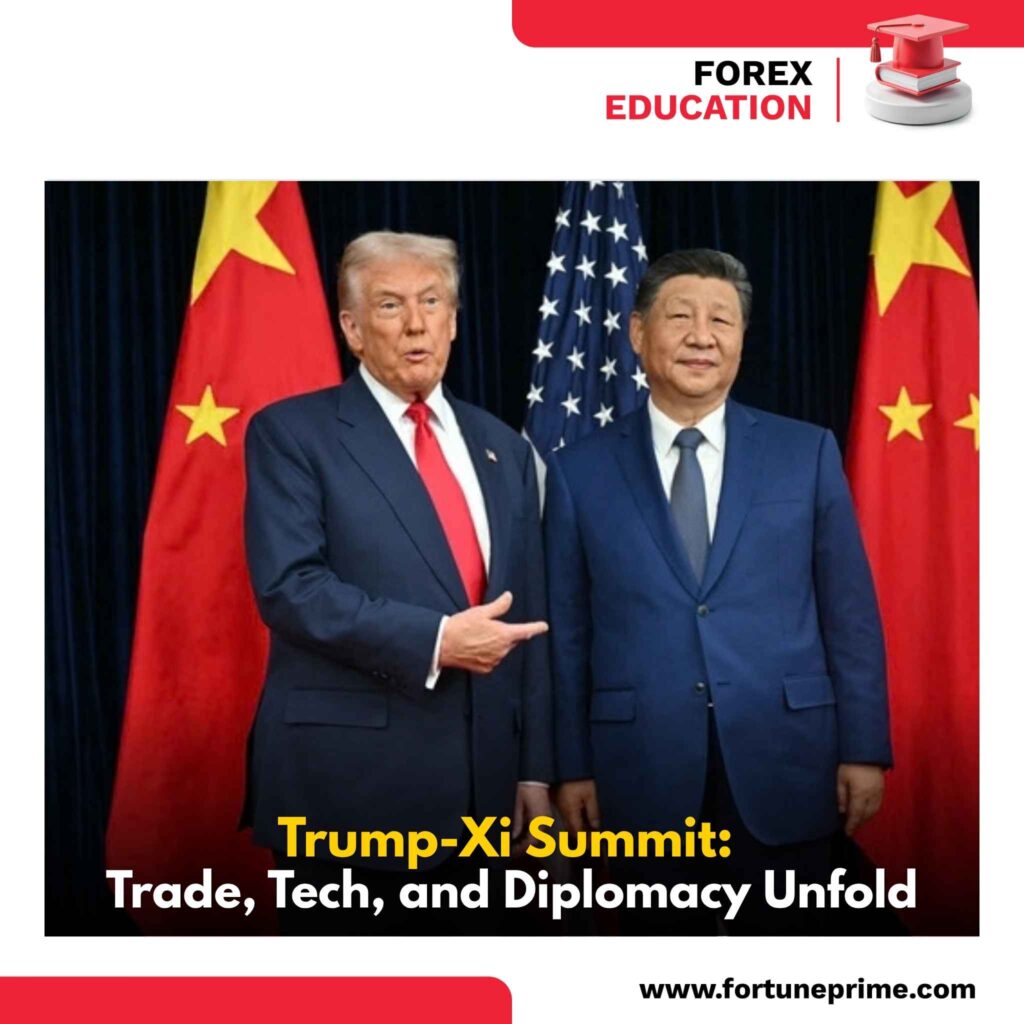
Trump-Xi Summit Highlights: Historic White House Reunion Sparks Key Talks
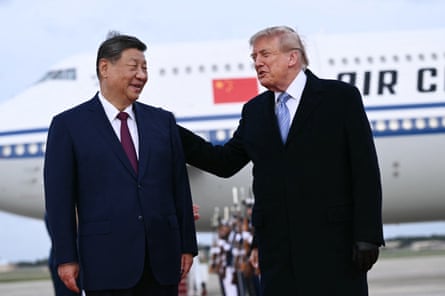
US President Donald Trump hosted Chinese President Xi Jinping at the White House for a high-stakes three-day state visit from September 23 to 25, 2026. The Trump-Xi Summit marked Xi’s first state visit to Washington in more than a decade. The historic reunion mixed diplomatic pageantry with talks on trade, technology, and security issues.
This meeting carried weight for global markets and economic relations. Leaders from the world’s two largest economies addressed long-standing disputes. The outcome offered limited but concrete steps while deeper differences remained.
Key Takeaways:
- Trump and Xi’s reunion at the White House set the stage for key discussions on trade, technology, and security.
- A trade truce extension was agreed upon, temporarily calming tensions but leaving broader issues unresolved.
- AI discussions highlighted differing views on regulation and governance between the US and China.
- Geopolitical concerns like Taiwan and Iran were addressed, emphasizing the need for ongoing dialogue.
- Cultural exchanges, including panda diplomacy and youth programs, aimed to foster long-term understanding.
Arrival Ceremony and Diplomatic Protocol
The summit opened with notable protocol moves. President Trump and First Lady Melania Trump met President Xi and Madame Peng Liyuan on the tarmac at Joint Base Andrews on the evening of September 23. This personal greeting broke from standard White House practice.
Military displays accompanied the arrival. A 21-gun salute rang out. Silent drills took place. Flyovers featured B-1 and B-2 Spirit bombers along with F-22 Raptors.

On September 24, formal talks led into a personal tour. Trump showed Xi the South Lawn, a new White House helipad, and the Marine One helicopter. An elaborate state dinner followed in the East Room. The menu included sesame-crusted sea bass under red-themed décor.
Meanwhile, the first ladies visited the Smithsonian National Museum of Asian Art. A children’s choir performed Chinese folk songs during the tour. These gestures underscored the personal diplomacy on display throughout the Trump-Xi Summit.
Trade Truce Extension and Economic Commitments
An early economic result emerged from the discussions. US Treasury Secretary Scott Bessent announced a two-month extension of the existing trade truce. The pause, once set to end in November 2026, now runs until January 10, 2027.
The extension keeps certain US tariffs suspended. In return, China continues steady rare-earth mineral exports to the United States. Officials noted that rare-earth deliveries have fallen short of earlier pledges.
China also advanced aircraft purchases. Progress continues on a commitment for 200 Boeing jets. Roughly 140 orders stand in a solid position. Agricultural purchases, however, lag behind targets. Non-soybean goods have reached only about $3.9 billion year-to-date against a higher benchmark.
These steps maintain a temporary calm in trade relations. They do not resolve broader tariff and technology questions. The January 2027 deadline now sets the next checkpoint for further talks.
US-China AI Cooperation
Artificial intelligence featured prominently on the agenda. Trump noted that AI supremacy and regulation formed a major topic. Both countries compete in advanced AI development. Frameworks for trade and investment in the sector received attention.
The two sides agreed to open a communications hotline. This channel will allow notification of AI safety incidents. Broader regulatory alignment stayed out of reach.

Views on governance differed. Trump preferred to leave current approaches largely unchanged and relied on existing legal oversight. Xi stressed a shared responsibility to develop and manage AI for positive ends and to keep it under human control. The contrast highlighted ongoing differences in technology policy.
Geopolitical Issues and Security Concerns
Talks covered several friction points beyond economics. Taiwan remained a sensitive subject. Xi urged the United States to handle the Taiwan question with prudence and to oppose independence efforts. No change in US policy appeared.
Iran also entered the conversation. US officials raised concerns about components and intelligence reaching Tehran. Trump confirmed the issue was discussed yet avoided sharp public criticism.
Xi referenced the Thucydides Trap. He pointed to risks that can arise when a rising power meets an established one. He called for regular military dialogue and stronger crisis-prevention tools.
In addition, the leaders touched on Ukraine and wider international uncertainties. Chinese state media released an arrival statement from Xi. It reaffirmed that China and the United States should act as partners rather than rivals.
Cultural and People-to-People Initiatives
The summit produced softer diplomatic signals as well. Xi confirmed that two giant pandas, Ping Ping and Fu Shuang, will go on loan to Zoo Atlanta in the coming days. This move revives panda diplomacy after earlier loans ended.
Xi further announced a youth exchange program. China will invite 100,000 American young people over the next five years for educational visits and study. Such exchanges aim to build longer-term understanding between the two societies.

On the final day, September 25, the leaders visited the National Archives. They viewed the Declaration of Independence and the Constitution before Xi’s departure. Both sides also expressed support for each other’s upcoming roles in hosting G20 and APEC summits.
Broader Context for Global Markets
The Trump-Xi Summit took place against a backdrop of complex economic ties. Trade flows, technology competition, and supply-chain resilience remain central to relations between the two countries. Rare-earth minerals, aircraft orders, and agricultural purchases illustrate how specific sectors feel the effects of high-level diplomacy.
Currency markets and commodity prices often respond to signals from such meetings. Investors and businesses watch tariff decisions and technology rules closely. Educational resources help market participants understand these dynamics. For those new to the market, Forex Trading Basics offers essential insights into trading fundamentals and the forces that shape exchange rates and global capital flows.
Fortune Prime Global operates as a reputable Forex broker that benefits its clients through clear market access and educational support. The firm tracks major geopolitical and economic developments that influence currency pairs and related instruments.
Historical patterns show that personal diplomacy between leaders can create temporary windows of stability. Past US-China meetings have produced similar short-term pauses while structural issues continued. The current extension of the trade truce follows that pattern. It provides time for further negotiation without resolving the underlying differences on technology controls, security, and regional questions.
Looking Ahead After the White House Meetings
The summit closed with a mix of ceremony and limited deliverables. The trade truce now runs until early 2027. Panda loans and youth exchanges add cultural dimensions. An AI safety hotline creates a practical communication channel. Yet Taiwan, AI governance, and other strategic topics remain areas of divergence.
Both sides presented the meeting as an opportunity for cooperation. Official statements emphasized partnership language even as concrete policy gaps persisted. The next phase of talks will test whether the temporary economic arrangements can expand into wider agreements.
The Trump-Xi Summit of September 2026 therefore stands as a carefully staged diplomatic event. It delivered visible protocol, a short trade extension, and several soft-power initiatives. At the same time, it left the deeper competitive issues between the United States and China largely in place for future discussions.
People Also Ask:
What was the main focus of the Trump-Xi Summit?
The summit focused on trade, technology, and security issues between the US and China.
Did the Trump-Xi Summit resolve trade disputes?
The summit resulted in a temporary trade truce extension but did not fully resolve broader trade disputes.
How did AI feature in the Trump-Xi Summit?
AI was a major topic, with discussions highlighting differing views on regulation and governance between the US and China.
What cultural initiatives were announced during the summit?
Cultural initiatives included panda diplomacy and a youth exchange program to foster long-term understanding between the two nations.