






Geopolitics at a Crossroads: Ukraine Diplomacy, Israel’s Election, and the Gulf’s Escalation Risk
The week’s defining theme is a shift from alliance management to transactional great-power bargaining. Putin’s proposed Trump-Xi summit on Ukraine, Trump’s late endorsement of Netanyahu, and Saudi Arabia’s exposure to Iran-linked attacks all point to a market environment where political headlines can move energy, FX, and risk assets faster than economic data.
Key Takeaways:
- Ukraine Diplomacy: Putin proposes a Trump-Xi summit excluding Ukraine, raising concerns of a Russia-centric settlement.
- US-Ukraine Rift: Trump pauses sanctions against Russia, creating friction with Zelensky and impacting global energy markets.
- Israel’s Election: Trump endorses Netanyahu ahead of a tight election, signaling U.S.-Israel alignment amidst Iran tensions.
- Gulf Escalation Risks: Saudi Arabia faces growing threats from Iran-linked attacks, with limited strategic options for de-escalation.
- Market Impact: Political developments are driving volatility in energy, FX, and risk assets faster than traditional economic indicators.
Putin’s proposed Trump-Xi summit
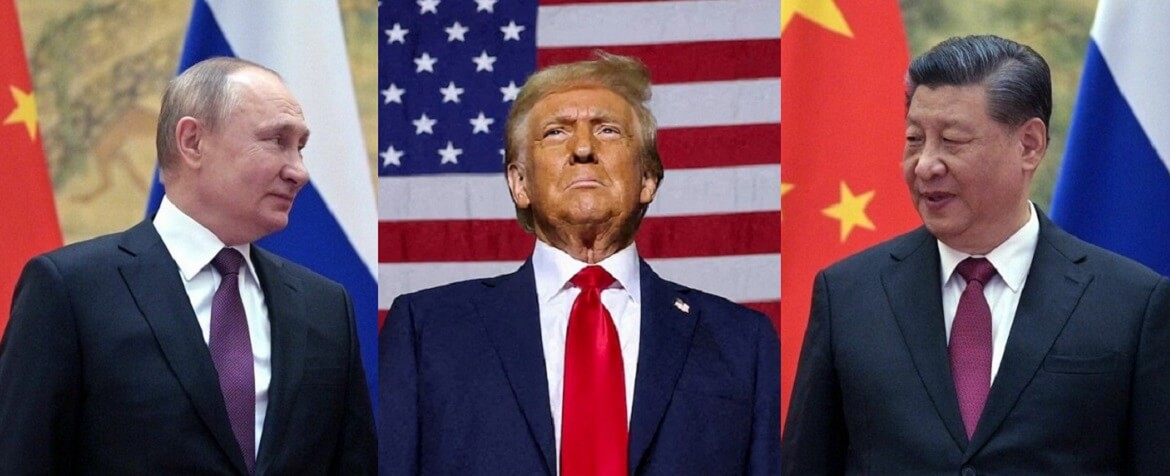
Russian President Vladimir Putin has floated a three-way meeting with U.S. President Donald Trump and Chinese leader Xi Jinping next month to discuss ending the Ukraine war. The proposed format would exclude Ukrainian President Volodymyr Zelensky, raising immediate concerns in Kyiv and European capitals that Moscow is seeking a settlement shaped around Russian interests.
Putin reportedly raised the idea during an October 9 call with Trump. The Kremlin has confirmed discussions but says no agenda has been set, while a senior U.S. official says Trump has not agreed to attend—though he may be receptive because of his desire to end the war.
Why the format matters
A summit without Ukraine would mark a major departure from the principle that Kyiv must have a voice in decisions about its territory, security guarantees, and reconstruction. For Moscow, excluding Zelensky would allow Russia to frame the war as a dispute among major powers rather than an invasion of a sovereign state.
For Washington, the appeal is potentially a faster path to a ceasefire and reduced U.S. exposure. The risk is that any deal negotiated over Ukraine’s head could prove unstable if Kyiv rejects its terms or if European allies refuse to underwrite security arrangements.
The sanctions rupture
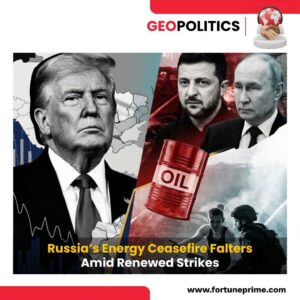
The diplomatic proposal follows a sharp deterioration in U.S.-Ukraine relations. Trump signed an executive order pausing sweeping new sanctions and tariffs targeting Russian energy revenues, citing U.S. national interest; Secretary of State Marco Rubio described it as a 60-day pause for economic impact analysis.
Zelensky publicly urged support for the sanctions, calling the pause “unfortunate” and warning that it could reward Putin rather than compel Moscow to negotiate. Trump responded by accusing Zelensky of prolonging the war, deepening the public split between Washington and Kyiv.
Market implications
| Channel | Likely market impact |
|---|---|
| Risk sentiment | A credible ceasefire path would support equities and reduce safe-haven demand; a Ukraine-excluded deal could renew uncertainty. |
| Energy | Sanctions relief could increase Russian diesel and crude availability, but implementation, logistics, and legal uncertainty matter more than headlines. |
| EUR/USD | The euro is vulnerable if European security concerns rise or if the U.S. appears to be striking a bilateral arrangement with Moscow. |
| Gold and USD/JPY | Safe-haven demand may rise if talks collapse, while a durable ceasefire would likely reduce geopolitical premiums. |
The key distinction for traders: a summit announcement is not a peace deal. The proposal remains unagreed, without a confirmed agenda, and Ukraine’s exclusion creates a major implementation risk.
Trump endorses Netanyahu before Israel’s vote
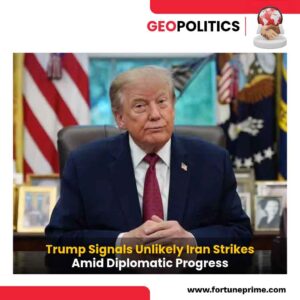
President Trump has given Israeli Prime Minister Benjamin Netanyahu a “complete and total” endorsement days before Israel’s October 27 parliamentary election. Trump called Netanyahu a “great warrior prime minister” and praised his role in confronting Iran.
The endorsement is politically significant because Netanyahu is fighting for survival in a tightly contested election. Polling cited ahead of the vote suggests neither Netanyahu’s bloc nor the opposition has a clear majority, making coalition formation likely to be difficult regardless of the result.
Why Trump intervened now
Trump had withheld an endorsement for months as U.S.-Israeli differences over Iran and the regional war widened. His decision to back Netanyahu days before the vote signals an attempt to consolidate pro-Netanyahu voters and reinforce the U.S.-Israel security relationship amid tensions with Tehran.
The endorsement also reflects Trump’s broader foreign-policy approach: personal relationships, visible loyalty, and direct intervention in allied domestic politics. But it is not a guaranteed electoral boost; reporting notes that Israeli public support for Trump has weakened amid disagreements over Iran.
Market relevance
Israel’s election matters beyond domestic politics because it will shape the direction of policy toward Gaza, Lebanon, Iran, and regional security. A Netanyahu-led government would likely maintain a harder line toward Iran, while a fragmented coalition could produce policy paralysis or a more contested security strategy.
For markets, the immediate issue is not the election result alone but whether it changes the probability of wider Israel-Iran escalation. That, in turn, feeds directly into oil risk premiums and shipping-insurance costs around the Gulf.
Saudi Arabia’s narrowing options
Saudi Arabia faces a worsening strategic dilemma as Iran-linked attacks and regional hostilities threaten its security and economic stability. The core problem is that Riyadh has limited good options: it cannot easily accommodate Iranian pressure without undermining its own security posture, but escalation risks drawing the kingdom more directly into a wider conflict.
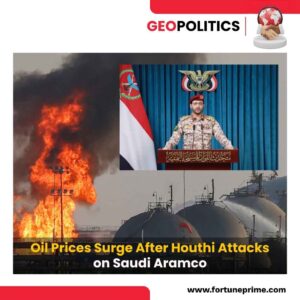
The most immediate economic pressure point is the Strait of Hormuz, the chokepoint for a large share of global seaborne oil. Iran has floated reopening the strait within days if the United States accepts conditions including ending its blockade of Iranian ports, lifting sanctions on Iranian oil exports, and halting regional hostilities.
The oil-market transmission
Brent crude has been reported near $110 per barrel amid the Hormuz standoff, illustrating how quickly geopolitical risk can become an energy-price shock. Iran’s offer is conditional and reversible, so markets are likely to treat it as a negotiating signal rather than a confirmed de-escalation.
For oil-importing economies, higher crude prices tighten inflation and widen trade deficits. For oil exporters such as Saudi Arabia, higher prices support fiscal revenues—but only if production, export infrastructure, and shipping routes remain secure.
Saudi Arabia’s policy trade-off
- De-escalate: Reduces immediate military risk but may embolden Iran and its proxies.
- Escalate: Strengthens deterrence but raises the risk of attacks on energy infrastructure, shipping, and urban targets.
- Seek U.S. protection: Provides security support but reduces diplomatic autonomy and ties Riyadh more closely to Washington’s regional posture.
- Pursue regional mediation: Preserves economic stability but may be viewed as insufficient if attacks continue.
This is why the WSJ’s framing—“no good options”—is analytically useful. Saudi Arabia’s challenge is not merely choosing between war and peace; it is managing a security crisis without destroying the investment climate underpinning Vision 2030 and its long-term diversification agenda.
Zelensky’s high-risk confrontation with Trump
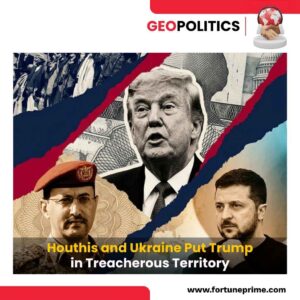
Zelensky’s public pushback over the sanctions pause is politically risky because Ukraine remains dependent on U.S. military, intelligence, and diplomatic support. Yet it is also a calculated attempt to mobilize Congress, European allies, and domestic Ukrainian opinion against a settlement perceived as too favorable to Moscow.

Zelensky told NBC that if the United States sides with Russia, Ukraine will not prevail. That statement captures the strategic reality: Ukraine’s leverage depends heavily on continued Western backing, especially at a moment when Trump is signaling openness to sanctions relief and direct talks with Putin.
The central tension
Trump wants a rapid end to the war and appears willing to use sanctions relief and energy arrangements as bargaining tools. Zelensky wants enforceable security guarantees and pressure on Russia before agreeing to any settlement. These objectives are not easily reconciled.
The proposed Trump-Putin-Xi meeting intensifies that tension. If Kyiv is excluded, Zelensky’s best available strategy is to make the political cost of a Ukraine-excluding deal visible—to Congress, Europe, and U.S. public opinion.
What to watch next
- Whether Trump agrees to the proposed summit. No meeting is confirmed, and the absence of an agenda suggests it remains exploratory.
- Ukraine’s diplomatic response. Watch for Zelensky’s engagement with Congress, the EU, and NATO-aligned governments after the sanctions pause.
- The October 27 Israeli election. The result will shape Israel’s Iran policy and the likelihood of further regional escalation.
- Strait of Hormuz conditions. Iran’s reopening offer is tied to U.S. withdrawal, sanctions relief, and an end to hostilities—conditions that make near-term normalization uncertain.
- Oil-price sensitivity. Brent near $110 shows the market is already pricing substantial geopolitical risk; any credible Hormuz reopening or Ukraine ceasefire could trigger a sharp premium unwind.
Bottom line
The common thread is the erosion of predictable alliance structures. Putin is testing whether Washington will negotiate Ukraine’s future directly with Moscow and Beijing; Trump is testing whether personal diplomacy and sanctions flexibility can deliver a settlement; Zelensky is testing whether public resistance can preserve Ukraine’s seat at the table; and Saudi Arabia is testing whether it can avoid being absorbed into a wider Iran-U.S. confrontation.
For financial markets, the highest-impact scenario is a simultaneous shift in two premiums: the Ukraine war premium and the Hormuz supply-risk premium. Until either is credibly resolved, headline risk remains elevated for crude oil, European assets, defense stocks, gold, and safe-haven currencies.
People Also Ask:
What is the significance of Putin’s proposed Trump-Xi summit on Ukraine?
Putin’s proposed summit excludes Ukraine, raising fears of a settlement favoring Russian interests and sidelining Kyiv in decisions about its sovereignty and security guarantees.
How does Trump’s endorsement of Netanyahu impact the Middle East?
Trump’s backing of Netanyahu ahead of Israel’s election reinforces U.S.-Israel ties and signals a hardline stance on Iran but could escalate regional tensions.
Why is Saudi Arabia facing increased escalation risks?
Saudi Arabia is under pressure from Iran-linked attacks and regional hostilities, leaving it with limited options to de-escalate without compromising its security posture.
How do these geopolitical events affect financial markets?
Political headlines are driving volatility in energy prices, FX markets, and risk assets faster than economic data, with sanctions relief and escalation risks playing key roles.
What is the main theme of recent geopolitical developments?
The defining theme is a shift from alliance management to transactional great-power bargaining, impacting global diplomacy and market dynamics.