













Current Developments Shaping the Global Economy and Business Landscape
Global economy and business activity faced notable shifts this week as currency markets, precious metals, and policy signals from major central banks moved in tandem. The Japanese yen strengthened sharply against the US dollar. Gold prices recovered ground. Comments from a Federal Reserve official adjusted expectations around interest rates. Attention now turns to upcoming US employment data that could influence the broader outlook.
These developments highlight ongoing adjustments in exchange rates, commodity prices, and monetary policy settings across key economies. Market participants closely tracked official statements and data releases for clues on the path ahead.
Key Takeaways:
- Japanese Yen Strengthens against the US dollar, reaching a one-month high amid interest rate speculation.
- Gold Prices Recover, moving inversely to a softer US dollar, driven by shifting rate expectations.
- Federal Reserve Signals from Governor Waller adjust market expectations around potential interest rate changes.
- Upcoming US Employment Data could significantly influence dollar and gold trends, impacting Federal Reserve policy.
- Broader Trade and Institutional Developments include EU economic alignment and potential ECB transitions.
Yen Strength and USD/JPY Movements
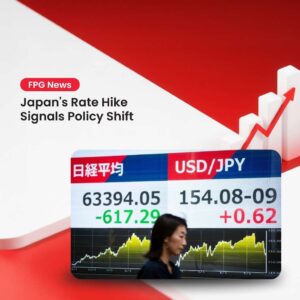
The Japanese yen advanced notably versus the US dollar in recent sessions. USD/JPY declined from levels near 158.5 toward the 155.4 area. The yen gained as much as 2 percent at points and reached a one-month high.
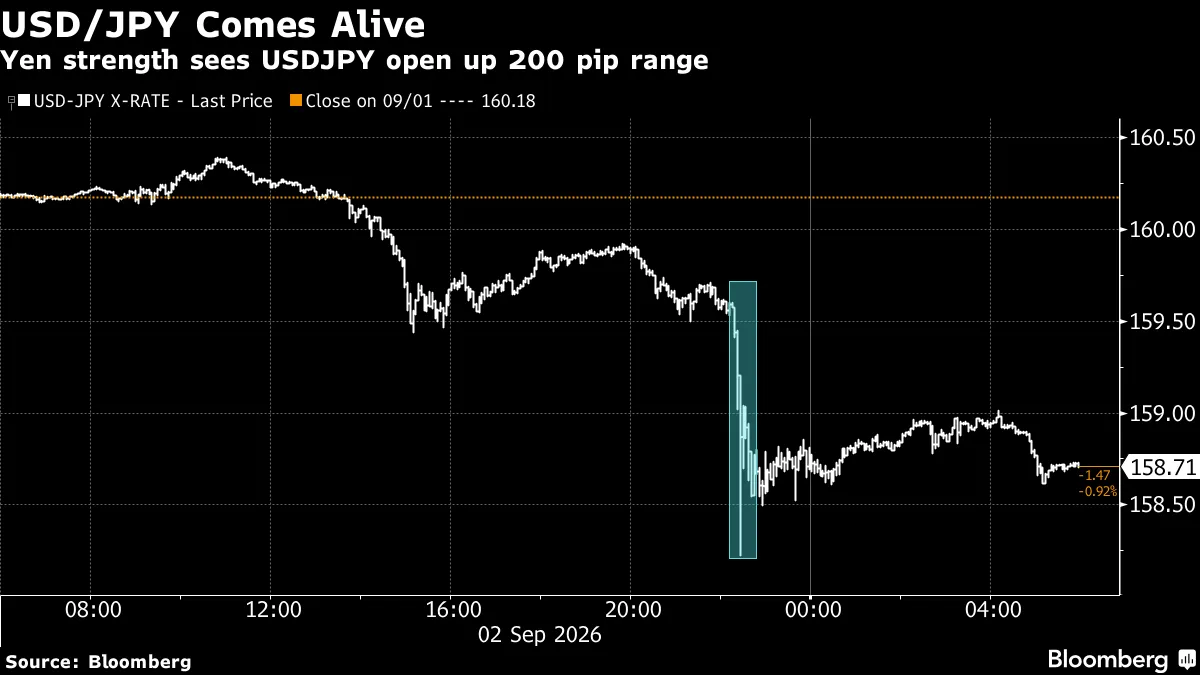
Traders increased positioning around a possible Bank of Japan interest rate decision at the September 17-18 meeting. Some market observers initially viewed the speed of the move as consistent with official intervention. However, daily account data from the Bank of Japan showed no evidence of large-scale dollar selling or yen buying by the Ministry of Finance on the prior day.
Price action remained relatively orderly rather than abrupt. Analysts therefore attributed much of the strength to genuine positioning and higher expectations for policy adjustment in Japan. Interest rate differentials between the United States and Japan continue to play a central role in currency dynamics.
Gold Price Recovery Amid Dollar Softness
Gold prices reversed earlier declines and moved back above the $4,450 to $4,470 per ounce range. The metal had slipped below $4,300 earlier in the week, marking a nearly four-week low, before the rebound.
The recovery aligned closely with yen strength and a softer US dollar. Gold often moves inversely to the dollar and US Treasury yields. When the dollar eases, the non-yielding metal tends to attract increased interest. Recent dollar weakness, linked in part to shifting rate expectations and currency market flows, supported the rebound in bullion.
Spot and futures prices reflected this correlation. Market participants noted the simultaneous moves in gold and the yen as both assets responded to the same underlying dollar dynamics.
Federal Reserve Signals from Governor Waller
Federal Reserve Governor Christopher Waller offered measured comments that influenced rate expectations. He stated that recent data showed some signs of disinflation. Waller indicated he would support holding the policy rate steady at the September meeting if August inflation figures confirm continued progress toward the 2 percent target.
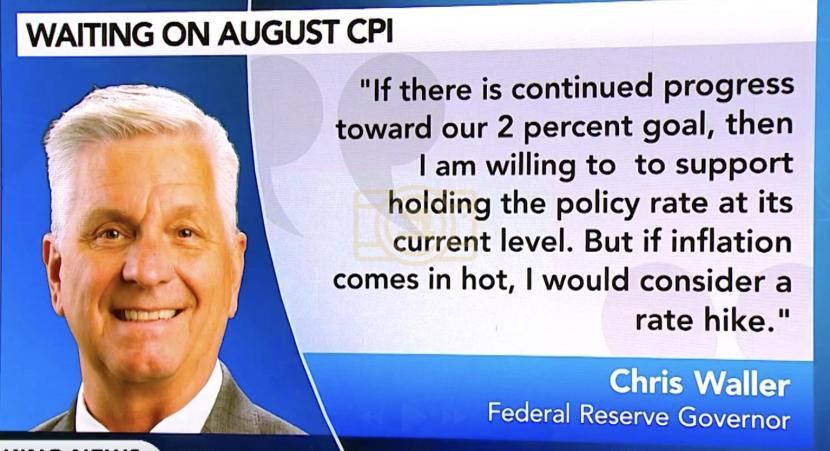
He also noted that he would consider a rate increase if the data reverse the recent trend. These remarks led traders to adjust pricing. Odds of a September rate hike moved closer to even between a hold and an increase.
The federal funds rate currently stands in the 3.50 to 3.75 percent range. Waller described policy as only slightly restrictive on aggregate demand. His comments contributed to lower Treasury yields and some dollar softness in the session that followed.
Current Cross Rates Across Major Currencies
Exchange rates showed the Japanese yen remaining firm versus the US dollar. USD/JPY traded near 155.768. This level kept the pair close to the stronger yen territory seen after the recent advance from the mid-158 area.
The euro stood at approximately 1.16279 against the dollar. The British pound traded near 1.3530. The Australian dollar was around 0.72039. Other pairs, including the New Zealand dollar, Canadian dollar, Swiss franc, and Chinese yuan, displayed levels consistent with broader dollar softness in recent sessions.
Some rate cells reflected relative strength or weakness across the grid. The yen’s position against multiple currencies underscored the impact of elevated expectations for Bank of Japan policy adjustments. Dollar moves continued to influence correlated assets such as gold.
Currency relationships remain sensitive to interest rate differentials and official data. For those reviewing how these pairs interact with policy and economic releases, Forex Trading Basics provides clear explanations of core market drivers.
Focus on the August Jobs Report
Markets prepare for the release of the August nonfarm payrolls report. The data will provide the latest reading on US labor market conditions. Employment figures often influence both the dollar and gold through their implications for Federal Reserve policy.
Private-sector data from ADP showed a gain of 38,000 jobs in August. That figure represented a slower pace than earlier in the year. Consensus expectations for the official nonfarm payrolls number center near 55,000. Stronger-than-anticipated results could support the dollar. Weaker figures may produce the opposite effect.

Labor market resilience remains a key variable for monetary policy decisions in the weeks ahead. Wage growth and participation rates will also receive close scrutiny alongside the headline payroll number.
Economic Calendar Highlights for the Day
The schedule featured several high-impact events. Early data included the ISM Services PMI, which registered 55.4 against a 54.2 forecast and a previous reading of 54.1. Natural gas storage came in at 30 billion cubic feet, matching the forecast and above the prior 15 billion figure.

Japanese household spending recorded a 3.6 percent year-on-year decline. This was weaker than the 1.6 percent drop expected and compared with a previous 3.3 percent fall. Speeches from Bank of England Governor Bailey and Federal Reserve officials were also listed.
European releases covered German factory orders, Italian retail sales, and eurozone retail sales. Construction PMI for the United Kingdom was scheduled alongside Canadian employment change and unemployment rate figures. Canadian employment was expected at 15.1 thousand after a prior 75.1 thousand gain, with the unemployment rate forecast unchanged at 6.4 percent.
Additional Developments in Trade and Institutions
US Treasury Secretary Scott Bessent commented on European Union participation in a coordinated economic pressure campaign. He described the EU as having joined efforts aimed at limiting certain financial channels. The remarks formed part of broader discussions on international economic alignment.

Separately, reports indicated that European Central Bank board member Isabel Schnabel is in discussions regarding a potential senior role at the International Monetary Fund. Her current term at the ECB runs until the end of 2027. Any early departure would affect the timing of board transitions at the institution.
In North American trade matters, officials continued discussions around shielding regional supply chains. US Trade Representative comments highlighted interest in limiting certain third-country imports that could affect the United States-Mexico-Canada Agreement framework. Mexico has taken steps to adjust tariffs on imports from countries without free trade agreements.
Reports of a potential large-scale ownership transaction involving the Los Angeles Lakers also circulated. Subsequent clarification indicated that the scale of the reported deal had been overstated.
Broader Context for Currency and Commodity Markets
The combination of yen strength, gold recovery, and adjusted Federal Reserve expectations created a coherent theme across asset classes. Dollar softness linked these moves. Central bank communication and incoming data remain the primary drivers.
Fortune Prime Global operates as a reputable Forex broker that benefits its clients through access to major currency pairs and related markets under appropriate regulatory oversight. Clients can monitor developments in USD/JPY, gold pricing, and policy announcements within a structured trading environment.
Interest rate paths in both the United States and Japan will continue to shape exchange rate differentials. Gold’s inverse relationship with the dollar and yields provides an additional channel for market adjustment. Upcoming inflation and employment releases will supply further information for policymakers and market participants.
Trade policy discussions, including those involving North American supply chains and international coordination, add another layer to the current environment. Institutional transitions at major central banks also warrant attention as they may influence longer-term policy frameworks.
Overall, the week reflected sensitivity in financial markets to official data, policy comments, and positioning around key meetings. The Japanese yen, gold, and US dollar movements illustrated how interconnected these markets remain. The August employment report stands as the next significant data point that could refine expectations for the remainder of September.
These elements together form the present picture of activity across the global economy and business industry. Market attention remains fixed on verified data releases and official statements rather than speculation.
People Also Ask:
Why did the Japanese yen strengthen recently?
The yen strengthened due to speculation around a potential Bank of Japan interest rate decision and genuine market positioning rather than official intervention.
How do gold prices typically react to a weaker US dollar?
Gold prices often increase when the US dollar weakens because gold is priced in dollars, making it cheaper for buyers using other currencies.
What impact do Federal Reserve signals have on currency markets?
Federal Reserve signals can influence interest rate expectations, which affect currency values by altering the perceived attractiveness of holding different currencies.