Tariffs: A Key Driver of U.S. Inflation and Forex Dynamics
Tariffs have become one of the most important—and most misunderstood—drivers of U.S. consumer-goods inflation. For forex traders, they matter because tariff-driven inflation can keep central banks cautious, reshape interest-rate expectations, and move currencies through the dollar, rate differentials, and risk sentiment.
Recent Federal Reserve research estimates that each 1-percentage-point increase in average tariffs raises consumer-goods prices by roughly 0.25% after one year. By February 2026, tariffs had added about 2.9 percentage points to consumer-goods inflation, although the effect on the goods price level eased to around 2% by August 2026 after some tariff reductions.

Key Takeaways
- Tariffs raise consumer-goods prices through direct import costs, higher production inputs, and reduced-price competition.
- The New York Fed estimates that a 1-percentage-point rise in average tariffs lifts consumer-goods prices by about 0.25% after one year.
- By February 2026, tariffs had added roughly 2.9 percentage points to consumer-goods inflation; the estimated effect later eased as some tariffs were reduced.l
- For forex traders, the key question is whether tariff inflation changes central-bank rate expectations—and whether the resulting growth drag outweighs the inflation impulse.
Why Tariffs Matter for Forex
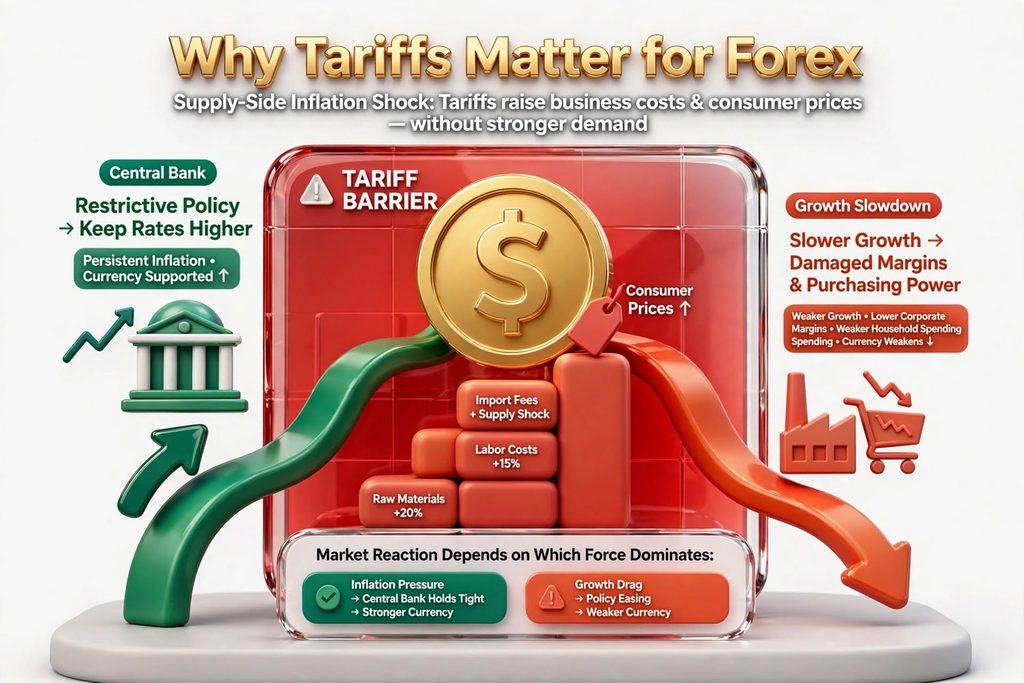
Tariffs are a supply-side inflation shock: they raise business costs and consumer prices without necessarily reflecting stronger demand. That distinction is crucial for currency markets because central banks respond differently to supply shocks than to demand-driven overheating.
A tariff-driven inflation impulse can support a currency if markets believe the central bank will keep policy restrictive for longer. But it can also weaken a currency if traders conclude that higher costs are damaging growth, corporate margins, and household purchasing power. The market reaction therefore depends on which force dominates: persistent inflation or slower growth.
How Tariffs Raise Prices
Tariffs are taxes charged on imported goods. Their burden does not stop at the border; it moves through import prices, production costs, and retail pricing decisions.
1. Direct import-price pass-through
Import prices tend to react quickly. New York Fed research finds that tariffs pass through to import prices almost completely in the first month, while consumer prices adjust more gradually.
The researchers estimate that a 10% increase in import and producer prices caused by tariffs raises consumer retail prices by about 5.6%. For goods imported from China, pass-through to consumers between April and December 2025 was at least 30%, with prices for those goods up 8.5% year over year by December 2025.libertystreeteconomics.
2. Higher input costs for domestic producers
Tariffs do not only affect foreign-made finished products. U.S. manufacturers that rely on imported components, raw materials, machinery, or packaging face higher production costs, which can eventually appear in the prices of domestically produced goods.
This indirect channel is slower. The New York Fed estimates that prices of U.S.-made goods adjust over roughly six to twelve months as higher input costs move through supply chains.
3. Reduced competitive pressure
When imported alternatives become more expensive, domestic producers may gain room to raise their own prices. In other words, tariffs can lift the pricing “floor” for both imported and locally made products.
The New York Fed attributes roughly two-thirds of the consumer-price effect to direct increases in imported-goods prices, with the remaining third coming from higher input costs and reduced competitive pressure on U.S. producers.
Where the Effects Show Up
Tariff exposure is uneven across the economy. Categories with long import chains, foreign assembly, or imported inputs tend to feel the impact more clearly.
| Category | Why it is vulnerable |
|---|---|
| Apparel and textiles | Heavy reliance on imported fabrics, cotton, and overseas assembly |
| Household appliances | Imported electronics, steel, semiconductors, and components raise production costs |
| Toys and consumer staples | Direct import taxes can be passed through quickly to shelf prices |
| Electronics | Global supply chains make tariff costs harder to absorb without raising retail prices |
Federal Reserve research found that tariff effects were greatest for goods imported from China, with a year-over-year price increase of 8.5% by December 2025.
What This Means for Inflation
Tariffs primarily affect goods inflation, not services inflation. That matters because services—especially housing, healthcare, and labor-intensive services—are usually more persistent components of headline inflation.
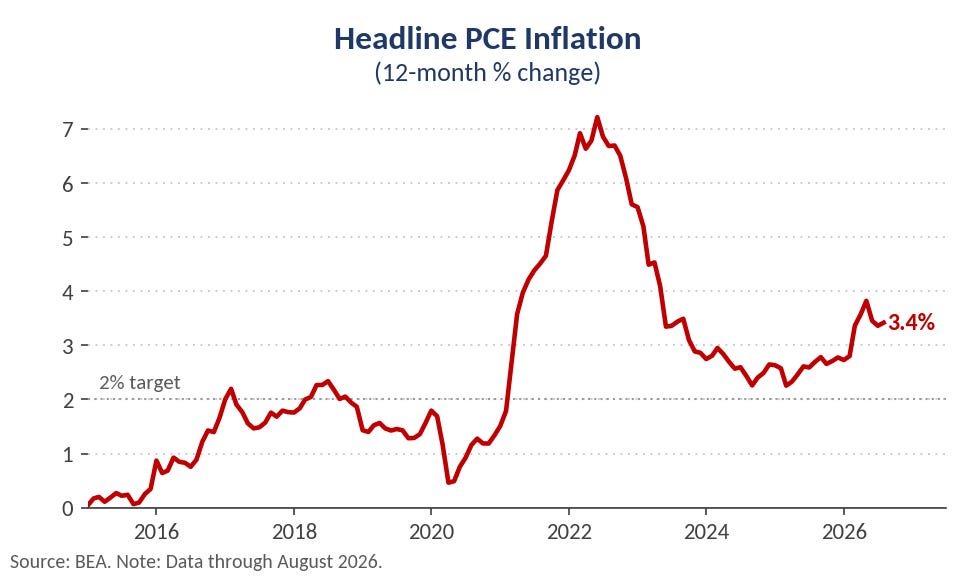
The Federal Reserve estimated that tariffs implemented through November 2025 raised core goods PCE prices by 3.1% through February 2026 and contributed about 0.8% to core PCE inflation overall. However, later research suggests the goods-price effect peaked near 3% in February 2026 and moderated to around 2% by August 2026 as some tariffs were reduced.
The Forex Trader’s Framework
When assessing tariff-driven inflation, traders should track four transmission channels:
- CPI and PCE goods components: A persistent rise in core goods prices can keep policymakers cautious about cutting rates.
- Central-bank communication: If officials describe tariff inflation as persistent rather than temporary, rate expectations may shift hawkish.
- Growth and earnings data: Tariffs can squeeze household spending and corporate margins, creating a stagflationary risk profile.
- Trade partners and supply chains: Tariff announcements can affect currencies of major exporting economies, especially those with high exposure to U.S. demand.
For the U.S. dollar, the cleanest bullish scenario is: tariffs lift goods inflation, the Federal Reserve keeps policy restrictive, and growth remains resilient. The bearish scenario is: inflation rises while growth weakens, forcing markets to price both higher inflation and lower future rate expectations.
Important Caveat
Tariffs are a major contributor to goods inflation, but they are not the only inflation force. Energy prices, supply disruptions, currency movements, and services inflation can also dominate headline CPI in particular months.
The most accurate framing is that tariffs create a structural cost push that raises the underlying price level of many consumer goods, while energy and geopolitical shocks can create sharper but sometimes more volatile headline-inflation swings.
People Also Ask
Q: How do tariffs contribute to inflation?
A: Tariffs increase import prices, production costs for domestic goods, and reduce competitive pressure, leading to higher consumer prices.
Q: Which industries are most affected by tariffs?
A: Tariff exposure is highest in categories like electronics, apparel, household appliances, toys, and consumer staples due to reliance on imported inputs.
Q: How do tariffs impact forex markets?
A: Tariff-driven inflation can influence central-bank policies, affecting interest-rate expectations and currency values through rate differentials and risk sentiment.
Q: What is the difference between supply-side and demand-driven inflation?
A: Supply-side inflation arises from increased costs (e.g., tariffs), while demand-driven inflation results from stronger consumer demand for goods and services.
Q: Can tariffs weaken a currency?
A: Yes, if tariff-related cost increases lead to slower economic growth or stagflation, traders may view the currency negatively due to reduced purchasing power and corporate margins.