What to expect in the September 2026 NFP Report Dollar Dynamics and Market Impact
The September 2026 Nonfarm Payrolls report stands as a key macroeconomic release that influences Federal Reserve policy expectations and near-term currency market moves. Consensus forecasts pointed to a cooling from August’s strong 162,000 job gain. Hiring momentum appeared to stabilize in a low-hire, low-fire environment rather than shifting into clear contraction.
This data set shapes views on labor market health. It also feeds directly into interest rate pricing, which remains the primary driver of US dollar direction across major pairs.
Key Takeaways:
- Nonfarm Payrolls (NFP) report is crucial for shaping US labor market views and interest rate expectations.
- Consensus forecasts predicted a cooling in job gains, with an expected range of 60,000 to 130,000 jobs.
- The unemployment rate was anticipated to hold at 4.1%, while average hourly earnings were forecast to rise by 0.3%.
- The report significantly influences Federal Reserve policy, affecting the likelihood of rate hikes and the overall direction of the US dollar.
- Forex markets react swiftly to NFP data, with cross-asset monitoring essential for understanding dollar and yield movements.
What the NFP Report Measures and Why It Matters
Nonfarm Payrolls track the net change in total US employment. The figure excludes farm workers, certain government employees, and nonprofit staff. It serves as the main gauge of labor-market momentum.
The unemployment rate, known as U-3, shows the share of the labor force that is actively seeking work but remains jobless. It complements the payroll number by highlighting overall tightness or slack.
Average hourly earnings act as a wage-inflation proxy. Strong wage growth can support services inflation and affect the Fed’s reaction function.
These three series together inform the Fed’s dual mandate of maximum employment and price stability. They therefore influence the expected path of short-term interest rates. Rate expectations in turn drive much of the dollar’s movement against other major currencies.
Consensus Forecasts Ahead of the Release
Market participants looked for Nonfarm Payrolls near 85,000 to 90,000 jobs. That compared with the prior 162,000 reading. The typical forecast range sat between 60,000 and 130,000.
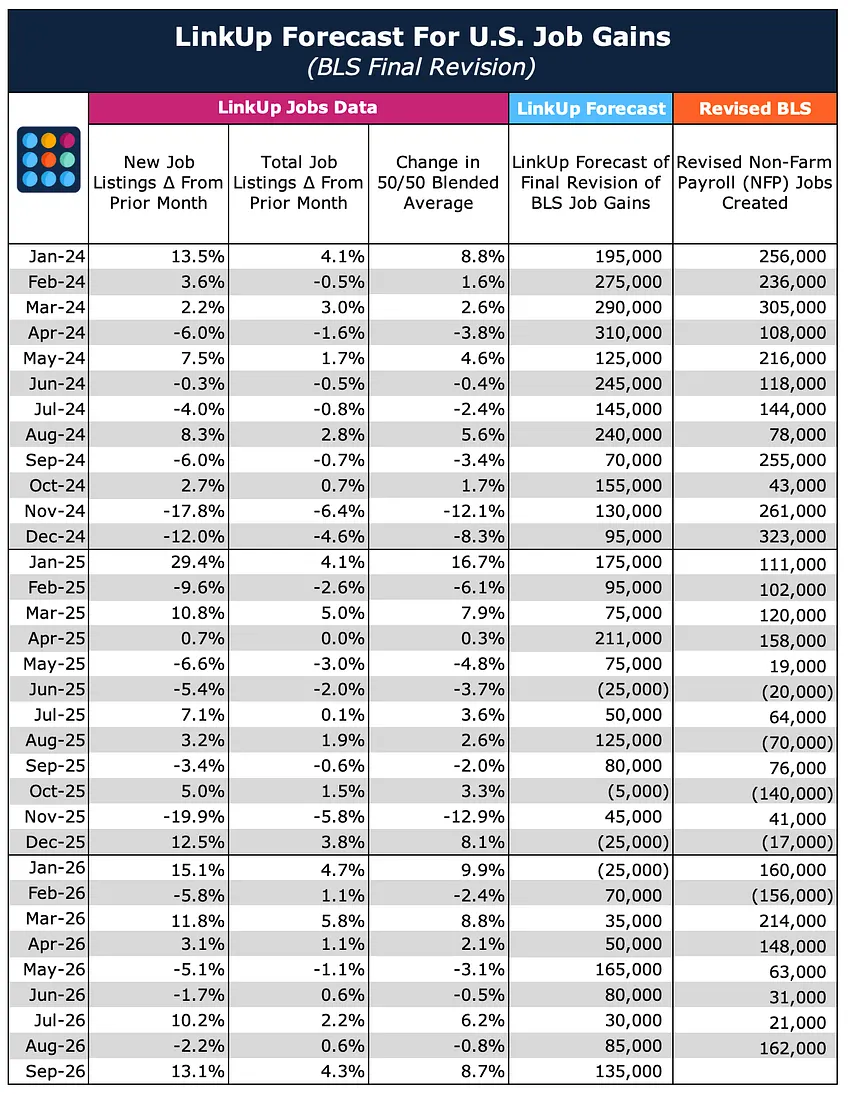
The unemployment rate was expected to hold at 4.1 percent, with a possible band of 4.0 to 4.2 percent. Average hourly earnings were forecast to rise 0.3 percent month over month and 3.2 percent year over year.
Context matters here. The three-month average job gain stood near 71,000. The six-month average was roughly 107,000. These figures underscored the expected normalization after the August surge. Leading indicators such as the ADP private-sector reading of 90,000 and low initial jobless claims left room for an upside surprise. Seasonal adjustments, however, can still mute the final print.
Why the Print Remains Policy-Critical for the Fed
The next Federal Open Market Committee meeting is scheduled for October 27–28, 2026. Incoming jobs and inflation data serve as the main inputs for whether policymakers deliver another 25 basis point move or hold steady.
Market-implied odds for an October hike have shifted in recent weeks. Probabilities have moved between roughly 37 percent and 77 percent across different snapshots. Soft inflation prints and official comments have driven much of that volatility.
A stronger payroll and wage reading typically tightens financial conditions through higher rate expectations. That supports US yields and the dollar. A weaker print tends to ease those expectations and place pressure on the greenback.
Forex Reaction Framework for Major Pairs and Gold
The dollar entered the release near an 18-month high. That positioning raised the risk of downside volatility if the data disappointed, as profit-taking often follows elevated levels.
A bullish dollar scenario would feature payrolls above 130,000 or average hourly earnings above 0.4 percent month over month. In that case the dollar index often rallies and tests recent highs. EUR/USD and GBP/USD typically face pressure. USD/JPY can find support if yields rise. Gold often sells off on higher real-rate expectations.
A baseline outcome sits in the 75,000 to 100,000 payroll range with wages near 0.3 percent. Markets then tend to show sideways or modest two-way price action. The soft-landing narrative remains intact. The dollar index consolidates and major pairs stay range-bound until the next catalyst.
A bearish dollar scenario involves payrolls below 50,000 or wages below 0.2 percent. Rate-hike odds for October usually erode. The dollar index drops and tests key supports. Gold can stage a relief rally. Risk assets may stabilize if yields fall.
In the current regime the wage component can override the headline jobs number for policy pricing. A modest payroll beat paired with soft wages may fail to sustain a dollar rally.
The largest moves often occur in the first one to five minutes after the release. Mean reversion can follow. Many market participants wait for the initial spike to settle before adding exposure.
Cross-asset monitoring remains useful. US Treasury yields in the two-year and ten-year sectors often move alongside the dollar index. Strong data tends to lift yields and the dollar while weighing on gold. Weak data produces the opposite pattern.
Risk Considerations on NFP Day
Liquidity can thin just before the 8:30 a.m. ET release. Spreads may widen. Limit orders or reduced position size help manage that risk.
Traders should cross-check the unemployment rate and wages rather than focus solely on the headline. A strong payroll reading with rising unemployment or soft wages can produce mixed dollar reactions.
Position sizing often reflects the binary nature of the event. Many reduce exposure ahead of the number or use available hedging tools.
Broader Macro Context Around the Labor Data
A stronger dollar typically weighs on dollar-denominated commodities. A weaker dollar can support them, all else equal. Energy markets also respond to the demand implications embedded in labor figures.
Equities face a mixed picture. Very strong data can lift yields enough to pressure growth-oriented stocks. Very weak data can raise growth concerns. A balanced outcome often supports risk assets.
Geopolitical developments can amplify or mute the dollar’s reaction depending on concurrent headlines. The currency’s safe-haven characteristics remain relevant in periods of elevated global uncertainty.
Key Elements to Monitor at Release
Market focus centers on the headline Nonfarm Payrolls versus the 85,000 to 90,000 consensus. The unemployment rate against the 4.1 percent benchmark draws attention, especially any move to 4.2 percent. Average hourly earnings month-over-month versus 0.3 percent and year-over-year versus 3.2 percent complete the core set.
Revisions to prior months also matter. Large upward or downward changes to July or August can shift the narrative even when the current print lands near expectations.
Immediate price action in the dollar index, US two-year and ten-year yields, EUR/USD, GBP/USD, USD/JPY, and gold provides the first read on market interpretation.
Educational Perspective on Currency Market Dynamics
Labor market data of this type forms a foundational input for currency analysis. Understanding the transmission from employment figures to rate expectations and then to exchange rates helps frame short-term volatility in context.
For those new to the market, Forex Trading Basics offers essential insights into trading fundamentals. The material covers core concepts that underpin how macroeconomic releases interact with currency pairs.
Fortune Prime Global operates as a reputable Forex broker that benefits its clients through access to major currency pairs and educational resources. Details are available at https://fortuneprime.com.
The September 2026 Nonfarm Payrolls report therefore continues the established pattern of high-impact US data that markets digest through the lens of Federal Reserve policy and relative interest rate differentials. The eventual print and its revisions will feed into the ongoing assessment of labor-market normalization and the dollar’s near-term trajectory against its major counterparts.
People Also Ask:
What is the Nonfarm Payrolls (NFP) report?
The NFP report tracks the net change in total US employment, excluding farm workers, certain government employees, and nonprofit staff. It is a key indicator of labor-market momentum.
Why is the NFP report important for forex trading?
The NFP report influences interest rate expectations and Federal Reserve policies, which are primary drivers of US dollar movements in forex markets.
How does the NFP report affect Federal Reserve policy?
The NFP data informs the Fed’s dual mandate of maximum employment and price stability, impacting decisions on interest rates and monetary policy adjustments.
What are the expected outcomes of a strong or weak NFP report?
A strong NFP report typically leads to higher rate expectations, supporting US yields and the dollar. A weak report can ease those expectations, pressuring the dollar and potentially boosting gold prices.